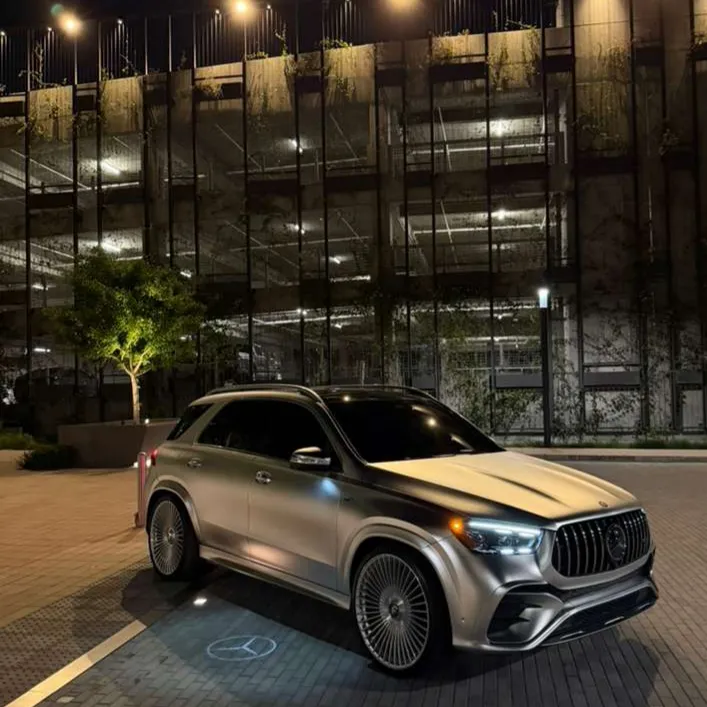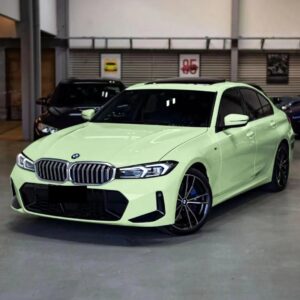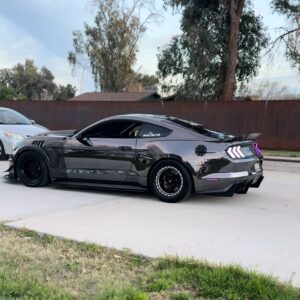
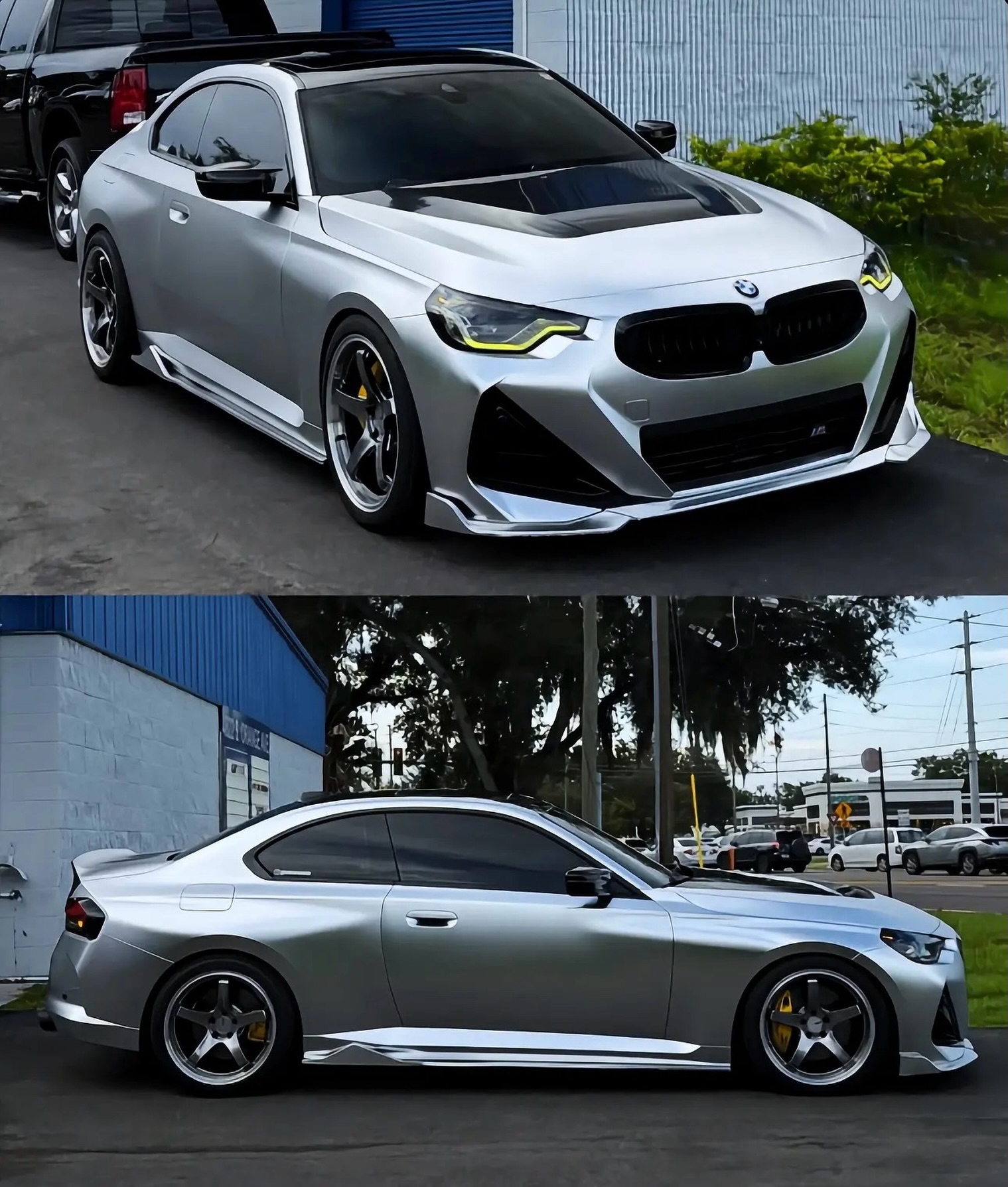
Some car colors demand attention with bright pigments, extreme color shifts, or mirror-like reflections. Satin silver chrome takes the opposite approach.
It does not need to shout.
Instead, satin silver chrome uses controlled metallic reflection, soft highlights, and a sophisticated silver tone to make the body of a vehicle look sharper, cleaner, and more architectural. Under overcast skies it can appear almost like satin aluminum. Move the same car into direct sunlight, and the chrome character becomes much more apparent, creating bright highlights along fenders, shoulders, and body creases.
That balance is exactly what makes the finish interesting.
For enthusiasts who find gloss silver too conventional, matte silver too muted, and mirror chrome too dramatic, satin silver chrome wrap occupies an unusually attractive middle ground.
This guide explores what satin silver chrome actually looks like, why it works so well on modern cars, how it differs from conventional silver finishes, what installers should know before working with it, and whether it is the right choice for a daily-driven vehicle.
What Is Satin Silver Chrome?
Satin silver chrome is a specialty automotive vinyl finish that combines the metallic reflectivity associated with chrome with a softer satin surface. Unlike mirror chrome, it diffuses some of the reflected light, producing a smoother aluminum- or titanium-like appearance. It is more reflective than ordinary satin silver but considerably less mirror-like than traditional gloss chrome.
In simple terms:
| Finish | Visual Character | Reflection | Overall Style |
|---|---|---|---|
| Matte Silver | Flat, muted silver | Low | Stealth |
| Gloss Silver | Paint-like silver | Medium | OEM / Classic |
| Satin Silver | Soft metallic silver | Medium-low | Refined |
| Satin Silver Chrome | Soft chrome / metallic aluminum | Medium-high | Quiet exotic |
| Mirror Silver Chrome | Highly reflective | Very high | Show car |
That makes satin silver chrome especially appealing to drivers who want their vehicle to look unmistakably customized without turning it into a rolling mirror.
Why Satin Silver Chrome Feels Different From Ordinary Silver
Silver is already one of the most familiar automotive colors in the world. That familiarity is precisely what makes satin chrome silver interesting.
From a distance, the car still reads as silver.
Up close—or as the viewing angle changes—the finish reveals much more depth.
The difference comes primarily from how the surface handles light.
Traditional matte finishes scatter light heavily, which suppresses reflections and makes body panels appear visually flatter. Gloss finishes create sharper reflections similar to clear-coated automotive paint. Chrome surfaces sit at the other extreme, producing intense specular reflection.
Satin chrome moderates that effect.
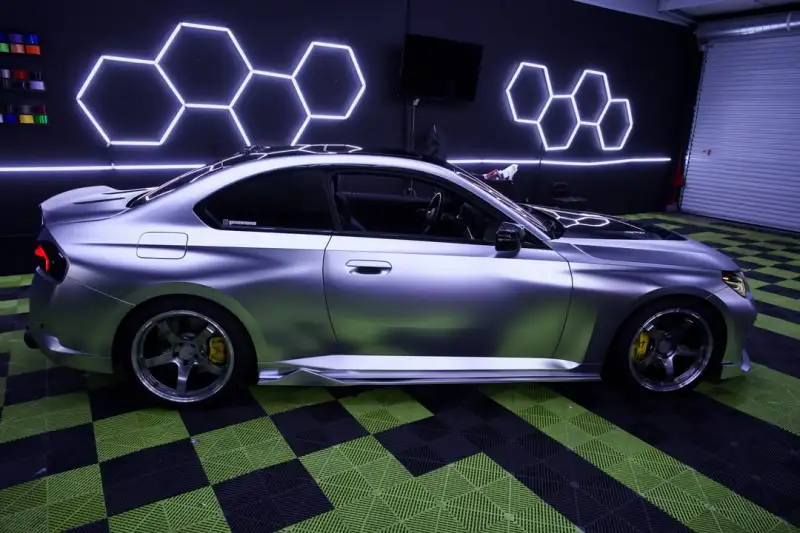
Instead of giving you a perfect mirror image, it creates broad, diffused highlights. The result can resemble machined aluminum, satin-finished metal, or titanium rather than conventional painted silver.
This is why photographs alone do not always communicate the finish accurately. Lighting, camera exposure, viewing angle, and even the screen displaying the photograph can significantly change the perceived brightness of specialty silver films. Specialty wrap retailers consequently recommend viewing samples before ordering because digital images may not accurately represent the physical material.
Satin Silver Chrome and the Rise of “Quiet Luxury” Automotive Styling
Automotive customization has historically been associated with standing out: louder colors, larger wheels, aggressive aero packages, racing graphics, or highly reflective chrome.
But premium styling does not always require maximum visual intensity.
A satin silver chrome car can attract attention through surface quality rather than color saturation.
Consider the visual vocabulary associated with high-end industrial design: machined aluminum, titanium watch cases, brushed metal electronics, exposed aerospace materials, and satin-finished architectural hardware.
These materials look expensive partly because their surfaces interact with light in sophisticated ways.
Satin silver chrome creates a similar effect on a vehicle.
A Porsche 911 wrapped in fluorescent green immediately announces that it has been customized. The same 911 in satin silver chrome may initially look restrained—until sunlight travels across the rear quarter panel and suddenly exposes the metallic depth of the finish.
That delayed visual impact is the appeal.
Understated does not mean invisible.
What Does Satin Silver Chrome Look Like in Different Lighting?
One reason this finish works particularly well on vehicles is that it rarely looks exactly the same throughout the day.
Direct Sunlight
Bright sunlight reveals the chrome character most clearly.
Raised body lines develop strong silver highlights while panels facing away from the sun become darker. The contrast makes sculpted bodywork appear more pronounced.
Unlike full mirror chrome, however, the satin surface reduces the sharpness of reflections.
The car shines without becoming a literal mirror.
Overcast Conditions
Under soft daylight, satin silver chrome becomes calmer.
The finish can resemble satin aluminum or titanium, creating a clean and almost OEM-concept-car appearance.
This is arguably where the “quiet luxury” character is most obvious.
Indoor and Garage Lighting
Directional LED lighting can create dramatic highlight bands across the body.
Performance cars with muscular fenders and complex surfaces particularly benefit because the changing reflections emphasize their geometry.
Night
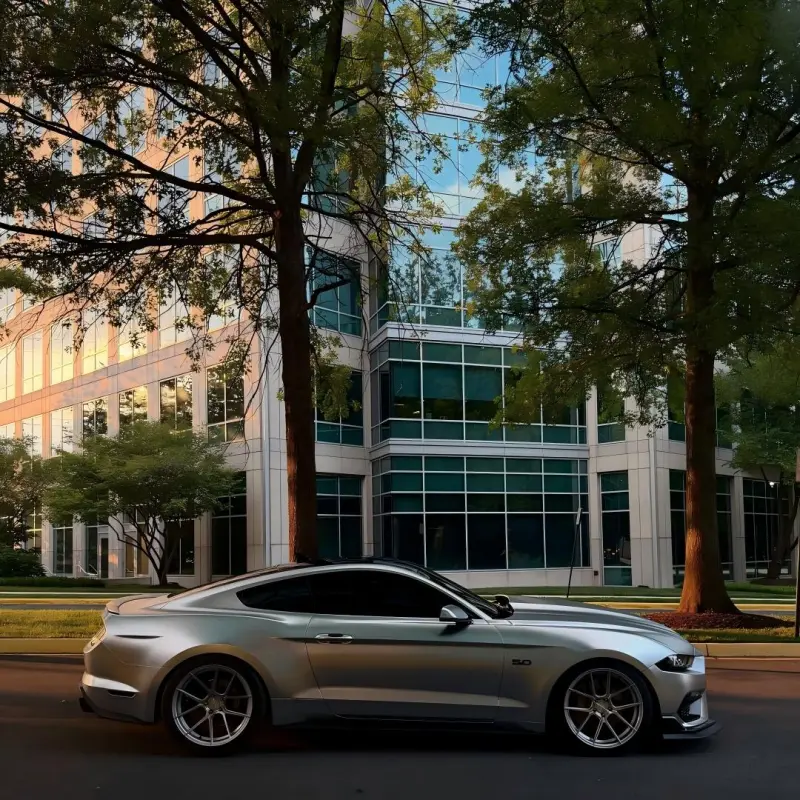
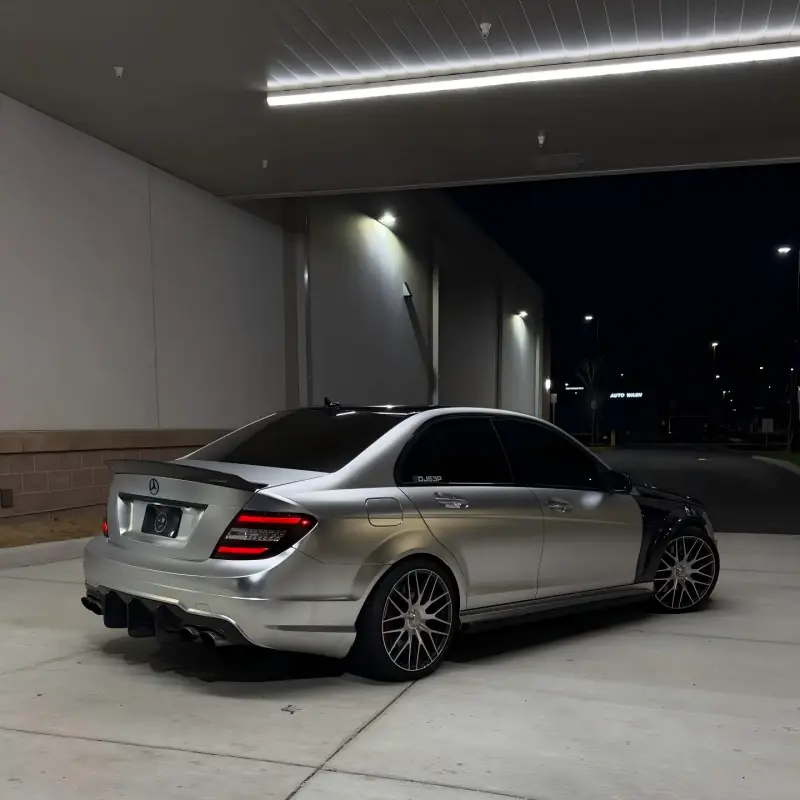
Streetlights, storefronts, headlights, and parking-garage LEDs produce isolated highlights rather than illuminating the entire surface equally.
The result is a darker, more technical-looking silver with sharp areas of metallic brightness.
This light-sensitive character is one of the biggest reasons satin silver chrome looks more dynamic than conventional silver paint or vinyl.
Why Satin Silver Chrome Works So Well on Modern Cars
Vehicle design has become increasingly dependent on complex surface transitions.
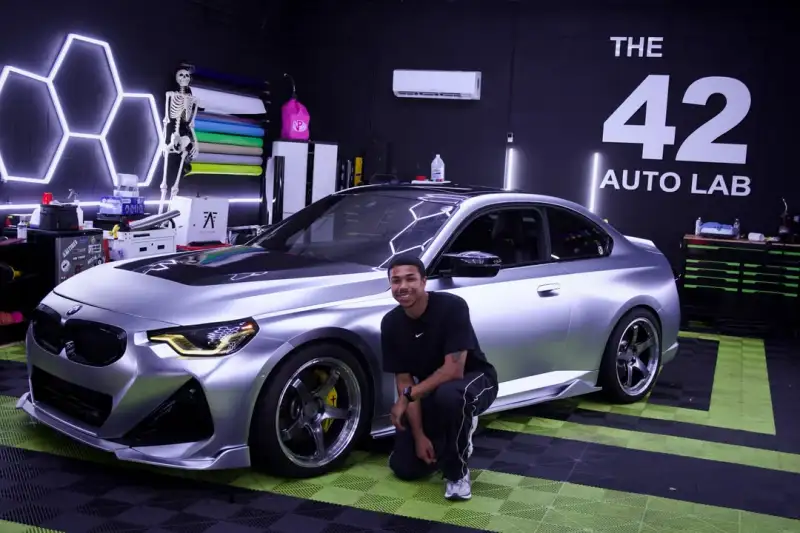
Modern cars use sharp shoulder lines, recessed doors, muscular wheel arches, aerodynamic channels, and highly sculpted bumpers to manipulate both airflow and visual proportion.
A finish that responds strongly to light can make those elements easier to see.
Imagine light traveling across the front fender of a Porsche 911.
A matte finish produces relatively little variation. Gloss paint gives you a recognizable reflection. Satin chrome produces a broader metallic highlight that moves across the curvature of the panel.
The body itself becomes part of the visual effect.
That is why this finish tends to work particularly well on performance coupes, modern EVs, luxury sedans and SUVs with strongly defined shoulders.
It can make simple shapes look more architectural while giving complicated shapes additional depth.
Satin Silver Chrome vs. Regular Satin Silver
These two finishes are sometimes confused, but they should not be treated as interchangeable.
Regular satin silver is essentially a silver color with a low-to-medium sheen. Its appearance is closer to satin automotive paint.
Satin silver chrome introduces a much stronger metallic or reflective foundation underneath that subdued surface character.
The difference becomes particularly obvious outdoors.
| Characteristic | Satin Silver | Satin Silver Chrome |
| Metallic depth | Moderate | High |
| Reflection | Soft | Strong but diffused |
| OEM appearance | High | Medium |
| Exotic appearance | Moderate | High |
| Changes with lighting | Moderate | Significant |
| Installation sensitivity | Normal to moderate | Higher |
| Visual impact | Refined | Refined + dramatic |
Interestingly, major premium-film manufacturers also separate satin, satin metallic and specialty finishes in their product portfolios rather than treating “satin” as a single appearance category. Avery Dennison, for example, currently lists standard Satin and Satin Metallic finishes separately in its Supreme Wrapping Film range.
That distinction matters when shopping for a silver wrap.
If you simply want an elegant low-gloss silver, regular satin silver may be enough.
If you want silver that becomes dramatically more metallic as the lighting changes, satin silver chrome is the more distinctive choice.
Satin Silver Chrome vs. Mirror Chrome
Mirror chrome is designed around maximum reflection.
That creates spectacular visual impact, especially for promotional vehicles and show builds. But maximum reflection is not always desirable on a daily-driven car.
Satin silver chrome reduces the mirror effect without eliminating the metallic brilliance underneath.
Think of the relationship this way:
Mirror Chrome → maximum spectacle
Satin Silver Chrome → controlled spectacle
The second option often integrates more naturally with black trim, carbon fiber, forged wheels, dark glass, and factory bodywork.
It is therefore possible to build a visually dramatic car without making the wrap itself dominate every other component.
Satin Silver Chrome vs. Gloss Silver
Gloss silver is the safer choice.
That is not necessarily a criticism.
A high-quality gloss silver wrap can closely resemble conventional automotive paint, making it appropriate for drivers seeking a clean OEM-style color change.
Satin silver chrome deliberately moves away from that appearance.
The metallic response is more pronounced, the finish feels more customized, and lighting has a greater effect on how the vehicle looks.
Choose gloss silver when the goal is “factory, but different.”
Choose satin silver chrome when the goal is “factory concept car.”
The Pros and Cons of Satin Silver Chrome
| Pros | Cons |
| Distinctive without being excessively colorful | More installation-sensitive than conventional wrap |
| Highlights body lines extremely well | Excessive stretching can alter the finish |
| Less mirror-like than full chrome | Heat must be controlled carefully |
| Looks different as lighting changes | Surface contamination and fingerprints require care |
| Pairs naturally with black and carbon-fiber accents | Specialty chrome films may have different durability expectations than standard vinyl |
| Creates an exotic, premium appearance | Usually less beginner-friendly |
| Silver remains relatively timeless | Repairs can reveal batch differences if material is purchased much later |
The key point is that satin silver chrome should be purchased for its appearance—not because it is the easiest vinyl category to install or maintain.
That distinction is important when evaluating specialty films fairly.
Is Satin Chrome Harder to Install?
Generally, yes.
Specialty chrome constructions require more careful installation than ordinary gloss or matte vinyl.
The reason is visual consistency.
When an ordinary solid-color film is stretched slightly, small changes may be difficult to notice. With chrome-derived films, excessive stretching or heating can alter how the reflective structure interacts with light.
The affected area can then appear lighter, darker, or simply different from the surrounding panel.
This is not unique to one manufacturer.
Specialty chrome products across the wrap industry routinely carry more restrictive handling or durability considerations than conventional color-change films. For example, one Hexis Satin Silver Super Chrome listing describes the film as a multi-layer cast product but specifically identifies it as fragile and requiring particular care. Avery specialty Frozen Satin Silver Conform Chrome is likewise classified as a specialty film with a stated lifespan of up to two years by its retailer.
That contrasts with mainstream premium wrap-film families. 3M lists an expected performance life of eight years for Series 2080 colors and textures under its specified vertical, Northern European reference conditions, while Avery publishes durability figures of up to 12 years for parts of its Supreme Wrapping Film range, with metallic films carrying different ratings.
These figures should not be interpreted as direct apples-to-apples warranties. They demonstrate something more useful: finish, film construction, orientation, climate, and product family all matter when discussing durability.
A specialty chrome wrap should therefore never be assumed to have the same real-world service life as a conventional premium cast color simply because both products are called “vehicle wrap.”
Professional Installation Tips for Satin Silver Chrome
Chrome-based finishes reward technique.
The first priority is minimizing unnecessary stretch. Instead of forcing material deep into complicated geometry, installers should plan panel placement and tension carefully.
Heat should also be controlled. More heat is not automatically better. Excessive temperature combined with excessive tension increases the chance of visible distortion.
For ALUKO’s Satin Chrome Silver material specifically, the installation guidance advises against overstretching and overheating because either can cause discoloration or surface damage. Gloves are recommended to reduce fingerprints and oil contamination, and the film should be allowed to cool slightly after heating before final squeegee pressure is applied.
This is especially important around bumpers, mirrors, deep recesses, compound curves, and aggressive fender transitions.
For a full vehicle, professional installation is the safer recommendation unless the installer already has meaningful experience with specialty chrome films.
A Useful Industry Benchmark: ALUKO vs. Conventional Premium Wrap Films
It is useful to compare products by category, rather than declaring that one brand automatically “beats” another.
3M describes Wrap Film Series 2080 as a multi-layer cast, adhesive-backed film using Controltac and Comply technologies to support repositioning and air evacuation. The film is offered in 1.52-meter rolls and is designed for full vehicle color changes, partial wraps and accents.
Avery Dennison’s Supreme Wrapping Film similarly emphasizes Easy Apply RS technology, repositionability, air egress, conformability and long-term removability. Avery’s current technical literature describes Supreme Wrapping Film as a cast film designed for color-change applications, including cars and vans.
ALUKO’s Satin Silver Chrome takes a different position: its primary attraction is a specialty satin-chrome appearance. The current product specification lists a matte metallic satin chrome finish, acrylic-based repositionable and slideable adhesive, dry application, and a 1.52-meter-wide format.
So the more useful comparison is:
| Priority | What to Look For |
| Maximum established long-term performance | Conventional premium cast wrap systems |
| Installer familiarity and technical documentation | Major established cast-film platforms |
| Specialty visual effect | Satin chrome / specialty chrome films |
| Softer silver OEM appearance | Conventional satin metallic |
| Maximum reflectivity | Gloss/mirror chrome |
| Balance of chrome impact and refinement | Satin silver chrome |
This is also why buyers should avoid comparing films solely by headline lifespan.
A customer choosing satin chrome is often prioritizing an effect that ordinary wrap films cannot reproduce.
How Long Does Satin Silver Chrome Last?
There is no responsible single-number answer for every satin chrome film.
Real-world wrap life depends on material construction, UV exposure, climate, horizontal versus vertical panel orientation, installation quality, cleaning, storage, mileage, and how frequently the vehicle is parked outdoors.
ALUKO currently lists 5–7 years expected durability in the specifications for its Satin Chrome Silver product. At the same time, the product’s material notice explicitly states that satin chrome has a shorter lifespan than standard finishes and recommends conventional gloss, matte, or satin colors when maximum longevity is the priority.
Those two statements should be understood together.
“Expected durability” is a product specification—not a promise that every hood, roof, bumper, and door will remain visually identical for that entire period in every climate.
This distinction is supported by how established manufacturers describe durability. 3M’s published eight-year expected performance figure for Series 2080, for example, specifies a flat, vertical outdoor surface under Northern European climate conditions.
A roof sitting horizontally in intense sun is not experiencing the same conditions as a vertical door.
For customers who prioritize the longest possible service interval above appearance, a conventional gloss, matte, or satin wrap is therefore usually the more conservative choice.
For customers specifically chasing the satin chrome effect, the trade-off can be worthwhile.
How to Maintain a Satin Silver Chrome Wrap
Maintenance should be gentle rather than aggressive.
Hand washing is preferable when practical. Use a pH-neutral automotive shampoo, clean microfiber towels, and non-abrasive wash techniques. Bird droppings, insects, tree sap, road contaminants, and similar residues should be removed promptly rather than allowed to remain on the surface.
Avoid abrasive polishing, harsh solvents, and products designed to create a glossy waxed finish unless the film manufacturer explicitly approves them.
ALUKO’s current aftercare specification recommends pH-neutral cleaning and advises avoiding waxes and solvents.
Indoor parking or covered storage can also reduce prolonged UV and environmental exposure.
Most importantly, remember that a satin finish should remain satin. Trying to “polish out” imperfections can create localized glossy patches that are more noticeable than the original mark.
Does Satin Silver Chrome Protect the Paint?
A vinyl wrap creates a physical layer between the painted surface and the outside environment, so it can help isolate the factory finish from light contamination and minor superficial contact.
However, vinyl wrap should not be marketed as equivalent to paint protection film (PPF).
Color-change vinyl is primarily an aesthetic material.
PPF is specifically engineered around impact and paint-protection performance.
If rock-chip resistance, thicker physical protection, or self-healing performance is the primary objective, a dedicated PPF product is generally the more appropriate solution.
This distinction helps customers choose the right material for the right reason—and strengthens trust rather than overstating what ordinary vinyl can do.
Which Cars Suit Satin Silver Chrome Best?
The finish is remarkably versatile because silver itself is neutral.
On a Porsche 911, satin chrome can emphasize the curvature of the rear quarter panels and give the car an almost machined-metal appearance.
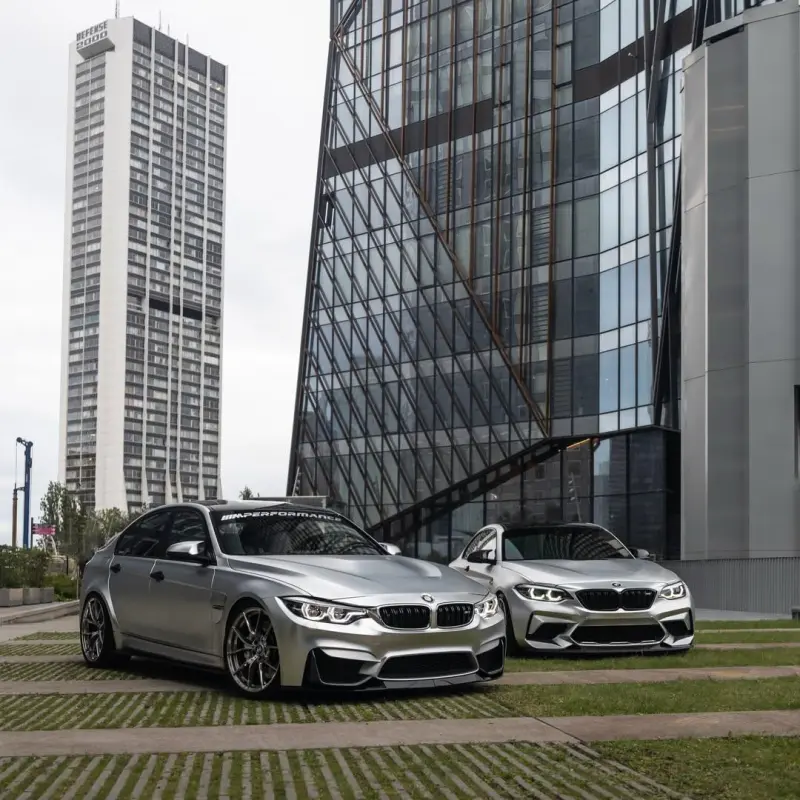
On a BMW M3 or M4, the stronger shoulder lines and angular body surfaces produce more aggressive transitions between bright and dark silver.
A Mercedes-AMG GT can take on a concept-car character, especially when satin silver is paired with black trim and carbon-fiber components.
On the Audi RS6 or RS7, the color reinforces the technical, industrial design language already present in the bodywork.
Modern EVs also make particularly good candidates. A Tesla Model 3 or Model S, Porsche Taycan, or Lucid Air can look almost futuristic because the metallic finish complements their relatively clean body surfaces.
Even SUVs can benefit. Satin silver chrome on a Range Rover, Mercedes G-Class, Porsche Cayenne, or Lamborghini Urus creates a very different effect from the same finish on a sports car: less futuristic supercar, more armored luxury.
The common denominator is body shape.
The better the vehicle manipulates light, the more interesting satin silver chrome becomes.
A Real-World Styling Formula
One of the easiest ways to make satin silver chrome look sophisticated rather than excessive is to keep the surrounding modifications simple.
Consider this combination:
Satin Silver Chrome body + gloss black roof + carbon-fiber accents + dark wheels + factory-style trim.
The silver remains the focal point while black elements visually frame the vehicle.
Alternatively, silver wheels can create a more monochromatic, high-end European aesthetic.
The important principle is restraint.
Because the wrap already generates considerable surface movement through reflected light, the car does not necessarily need complicated graphics, multiple accent colors, or excessive exterior accessories.
That is the strength of this finish.
Is Satin Silver Chrome Worth It?
For the right owner, absolutely.
But it is not automatically the best wrap for everyone.
Choose satin silver chrome when your priorities are metallic depth, premium appearance, changing reflections, strong body-line definition, and a finish that looks custom without relying on a loud color.
Consider a conventional satin or gloss film instead if your highest priorities are easier installation, maximum durability, simpler repairs, or the lowest-maintenance ownership experience.
This is an important distinction.
The appeal of satin silver chrome is not that it eliminates compromise.
It is that the visual result can justify the compromise.
FAQ About Satin Silver Chrome
Is satin silver chrome actually chrome?
It belongs to the specialty chrome-style family of automotive finishes, but its satin surface diffuses reflection. As a result, it does not look like traditional mirror chrome. Visually, it sits somewhere between satin metallic silver and highly reflective silver chrome.
Is satin silver chrome too flashy for a daily driver?
For many drivers, no. Its silver color remains neutral and sophisticated while the satin surface controls the intensity of the reflection. It is considerably more restrained than mirror chrome or brightly colored chrome finishes.
Does satin silver chrome look different in sunlight?
Yes. Lighting is one of its defining characteristics. Direct sunlight reveals stronger metallic highlights, while overcast conditions make the finish look softer and closer to satin aluminum or titanium.
Is satin silver chrome harder to install than normal vinyl?
Generally, yes. Chrome-derived specialty films can be more sensitive to stretching, creasing, heat, and surface contamination. Installation experience becomes particularly important on bumpers and compound curves.
Can I use a heat gun on satin chrome vinyl?
Heat is part of professional wrap installation, but excessive heat should be avoided. ALUKO specifically recommends avoiding overheating and overstretching Satin Chrome Silver because they can cause discoloration or surface damage.
Can satin silver chrome be polished?
Conventional abrasive polishing is not recommended. Polishing can alter the satin surface and create inconsistent glossy areas.
Should I choose satin silver chrome or regular satin silver?
Choose regular satin silver if you want a subtle OEM-inspired appearance and easier ownership. Choose satin silver chrome if you want greater metallic depth, stronger light interaction, and a more exotic finish.
Does satin silver chrome hide dirt?
Silver generally disguises light dust better than very dark colors, but the specialty surface still requires careful maintenance. Oils, fingerprints, road film, and contaminants can affect the uniformity of the finish.
Is satin silver chrome good for luxury cars?
Yes. In fact, luxury and performance vehicles are among the strongest applications because the finish emphasizes sophisticated body surfacing without relying on a bright color.
Should I order a sample first?
Yes. This is particularly important with specialty metallic and chrome finishes because cameras and screens cannot reproduce their reflection accurately. A physical sample lets you evaluate the film outdoors, indoors, in direct sunlight, and next to your vehicle’s existing trim and wheels.
Final Verdict: Understated, Yet Unmistakable
The most interesting thing about satin silver chrome is its contradiction.
It is neutral—but not ordinary.
Reflective—but not mirror-like.
Modern—but not trendy enough to immediately date a build.
Dramatic—but capable of looking surprisingly restrained.
That makes it an unusual option in a market where customization often equates visibility with success.
Satin silver chrome takes another route.
Instead of changing dramatically from red to gold or blue to purple, it allows light itself to create the transformation. The curves of the vehicle become brighter or darker depending on where you stand. Fender lines become more pronounced. Flat surfaces appear smoother. Complex bodywork becomes easier to read.
It makes the shape of the car the centerpiece.
And that is exactly why satin silver chrome can be understated while remaining unmistakable.
Discover ALUKO Satin Silver Chrome
If you want the presence of chrome without the extreme mirror effect, ALUKO Satin Silver Chrome offers a distinctive middle ground between traditional silver and full chrome.
Explore the ALUKO Matte Metallic Satin Chrome Silver Car Vinyl Wrap and see how a softer metallic reflection can completely change the character of your vehicle.
For the best result, view a physical sample before committing to a full wrap, use an experienced installer for complex vehicles, avoid excessive heat or stretching during application, and maintain the surface with gentle, pH-neutral cleaning.