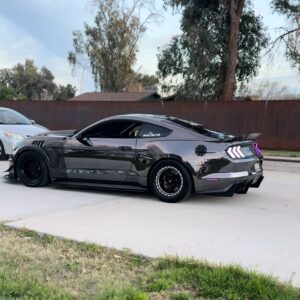
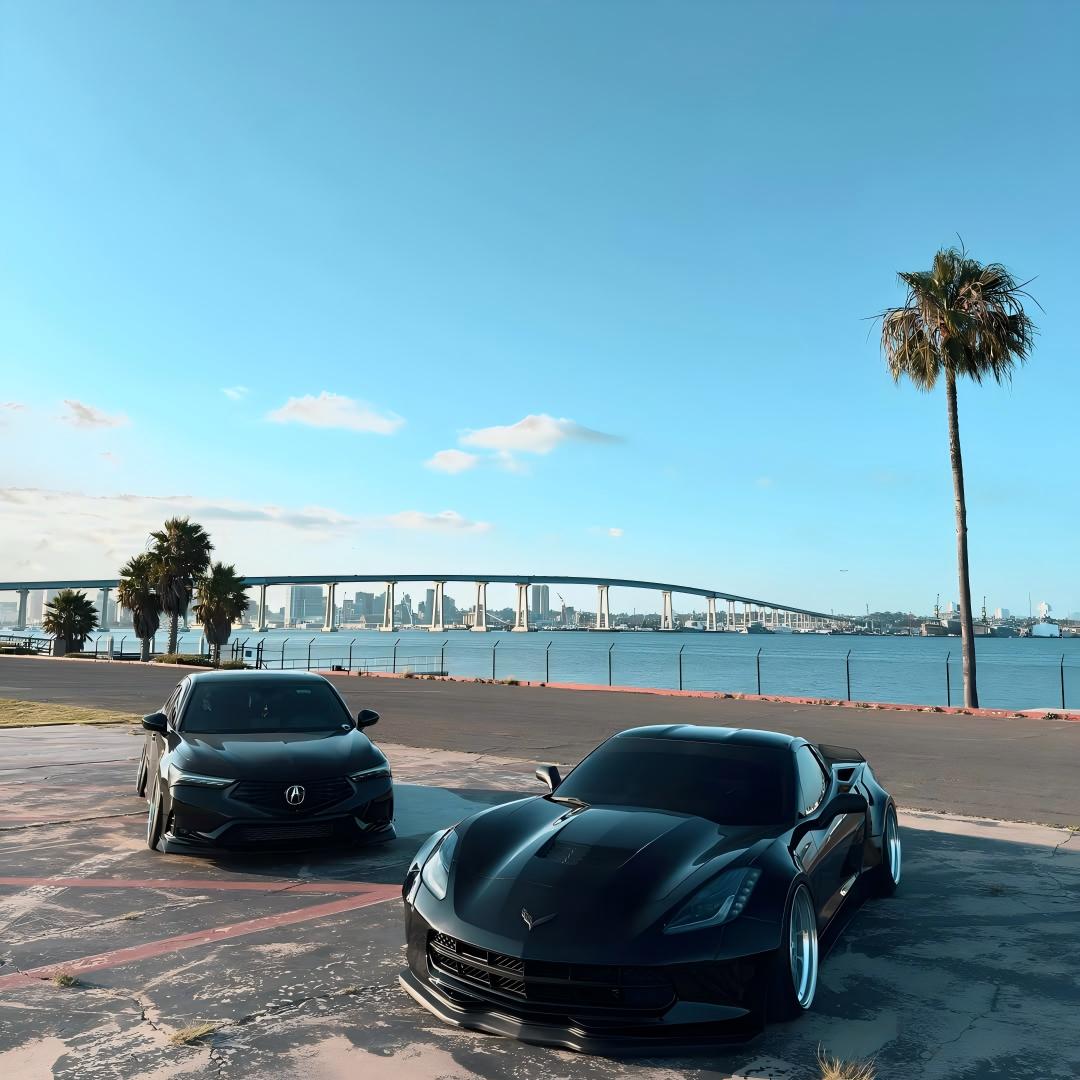
Few automotive finishes expose surface quality as brutally as piano black.
When the surface is clean and properly installed, piano black PPF can produce a deep, reflective black appearance that visually resembles polished black automotive paint while adding a TPU protective layer over the original finish. But that mirror-like appearance has a trade-off: dust, fingerprints, water spots, installation defects and surface contamination are often easier to see on black than on lighter or textured finishes.
That makes the real buying question more complicated than “Does piano black PPF look good?”
A better question is:
Does piano black PPF provide enough additional protection and finish quality to justify choosing it over gloss black vinyl or applying clear PPF over factory black paint?
This guide examines that question using current manufacturer specifications, published technical data from established PPF manufacturers, installation considerations, and a transparent comparison of the strengths and weaknesses of each material.
Disclosure: ALUKOVINYL manufactures and sells automotive films, including the Piano Black PPF discussed in this article. Product-specific ALUKOVINYL specifications below are manufacturer-reported data unless otherwise stated. Independent technical data from other manufacturers is included as an industry benchmark—not as proof that different products perform identically.
That distinction matters when evaluating any automotive film.
What Is Piano Black PPF?
Piano black PPF is an opaque, high-gloss paint protection film that combines a deep black color-change finish with the protective structure of polyurethane PPF. Unlike gloss black vinyl, which is primarily a styling film, piano black PPF is designed to change the vehicle’s color while also helping protect the underlying paint from stone chips, scratches, road contamination and everyday surface wear.
In practical terms:
Gloss black vinyl = primarily styling
Clear PPF = primarily protection
Piano black PPF = black styling + PPF protection
That does not automatically make piano black PPF the best choice. Material cost, installation difficulty, desired appearance and how long the owner intends to keep the finish all matter.
Why Is It Called “Piano Black”?
“Piano black” describes an aesthetic rather than a standardized technical specification.
The name refers to the extremely deep, highly reflective black associated with polished piano lacquer. In automotive applications, the objective is a black surface with minimal visual texture and strong, clean reflections.
This distinction matters because terms such as:
- Piano Black
- True Black
- Jet Black
- Gloss Black
- Ultra Gloss Black
do not represent universal industry specifications.
Two manufacturers can market films using similar names while producing different gloss levels, undertones, surface textures, TPU constructions and adhesive systems.
For this reason, buyers should evaluate a physical sample rather than assuming that every “piano black” product will look identical.
Why Piano Black Is Harder to Get Right Than Most Colors
Black sounds simple because it lacks the obvious color complexity of metallic purple, chameleon blue or pearlescent white.
From an installer and detailing perspective, however, black can actually be less forgiving.
A high-gloss black surface creates strong contrast between the dark background and reflected light. As a result, defects that interrupt the reflection can become visually obvious.
These may include:
- Dust contamination
- Adhesive distortion
- Stretch marks
- Water spots
- Scratches
- Swirl marks
- Edge contamination
- Surface texture
- Uneven gloss
This leads to an important professional insight:
The quality of piano black should be judged by the quality of its reflections—not simply by how black the material looks.
Under diffused lighting, two black films may look similar.
Under long LED inspection lights, sunlight or a detailing light, differences in orange peel, adhesive disturbance and surface texture become much easier to identify.
That is one reason physical samples and real installation photographs are more useful than digitally rendered color swatches.
Piano Black PPF vs Gloss Black Vinyl vs Clear PPF
These products solve different problems.
| Factor | Piano Black PPF | Gloss Black Vinyl | Clear PPF |
|---|---|---|---|
| Changes vehicle color | Yes | Yes | No |
| Deep black appearance | Excellent | Excellent–varies by film | Depends on paint |
| Stone-chip protection | Designed for it | Limited compared with PPF | Designed for it |
| Self-healing top coat | Available on many products | Not equivalent to TPU PPF | Available on premium PPF |
| Preserves factory color visually | No | No | Yes |
| Material thickness | Generally higher | Generally thinner | PPF-class |
| Custom graphics | Poor choice | Excellent | No |
| Installation difficulty | Higher | Moderate | Higher |
| Best use | Black color + protection | Styling/color change | Preserve factory paint |
If your only goal is to make the vehicle black at a lower material cost, a car wrap is usually the more logical starting point.
If the factory paint already has the color you want and protection is the priority, clear PPF film makes more sense.
Piano black PPF occupies the space between those two applications.
What Does Current PPF Technology Actually Support?
One of the problems with PPF marketing is that broad statements such as “scratch-proof,” “maximum protection” or “self-healing” can sound more absolute than the evidence supports.
A useful external benchmark is 3M’s current Scotchgard Paint Protection Film Pro Series 200.
3M states that its Pro Series 200 is designed to protect vehicle paint from rock chips, scratches and environmental exposure. The gloss product incorporates a hydrophobic surface, self-healing technology for minor marks and optimized adhesive for repositioning. The current product also carries a 10-year consumer warranty under the manufacturer’s applicable conditions.
More useful for technical comparison is 3M’s published Technical Data Sheet.
For Pro Series 200 Gloss, 3M reports a film-with-adhesive thickness of approximately 7.8 mil (0.20 mm). Its technical documentation identifies a polyurethane clearcoat, polyurethane film and acrylic pressure-sensitive adhesive construction.
3M’s 2025 Series 150 Gloss documentation similarly describes protection against stone chips, scratches, bugs, road tar and UV exposure, alongside self-healing and low-orange-peel characteristics.
These figures are useful because they establish what a major PPF manufacturer publicly documents.
But they do not validate another manufacturer’s PPF.
That distinction is essential.
What Does ALUKOVINYL Report for Its Piano Black PPF?
ALUKOVINYL currently publishes the following specifications for its Ultra Gloss Black Color PPF:
| Manufacturer-reported property | ALUKOVINYL specification |
|---|---|
| Base material | Covestro |
| Hardness | 93A |
| Glossiness | 94 |
| UV resistance | 98.5% |
| Tensile strength | 22.32 MPa |
| Elongation at break | 370.23% |
| Coating fracture elongation | 112% |
| Tearing strength | 68.52 kN/m |
| Expected durability | 5–7 years |
| Product warranty | 8 years |
These numbers come from ALUKOVINYL’s own product documentation.
They should therefore be interpreted as manufacturer-reported specifications, not independent laboratory certification.
The same applies to manufacturer statements about hydrophobicity, UV resistance and self-healing unless a corresponding independent test report is supplied.
This may sound less promotional, but it gives a buyer a much more useful framework for evaluating the product.
How Does Piano Black PPF Compare With Another Color-PPF Manufacturer?
A useful market comparison comes from TeckWrap’s current True Black Color PPF.
TeckWrap reports an aliphatic TPU construction, fluorocarbon polyurethane top coat, approximately 357 ± 10 μm total thickness, 207 ± 10 μm application-layer thickness, tensile strength of 22 MPa, elongation at break of 360–430%, and a five-year manufacturer warranty.
Its Luxe Black PPF is similarly specified at approximately 343 ± 10 μm total thickness, with a 193 ± 10 μm application layer.
Interestingly, TeckWrap also explicitly warns that hue or gloss can vary slightly between production batches and recommends using material from the same batch for a complete vehicle.
That is good practical advice for any full-body colored PPF project.
Important comparison limitation
The numbers above should not be turned into a simplistic ranking such as:
“ALUKOVINYL has X MPa while Brand B has Y MPa, therefore ALUKOVINYL is better.”
That would be technically weak.
Tensile strength, elongation, thickness and hardness measure different material characteristics. Test methods and sample construction may also differ.
A credible comparison requires standardized test conditions.
Therefore, these figures are better used to understand the engineering range of current PPF products, not to declare a winner based on one specification.
Piano Black PPF Pros and Cons
Advantages
1. Black color and paint protection in one layer
This is the fundamental advantage.
Instead of installing black vinyl for appearance and then adding clear PPF over it, an opaque black color PPF can combine both functions in one material.
That can simplify the overall material stack.
2. Extremely deep visual appearance
A good piano black finish can create strong reflections and visual depth.
This works particularly well on vehicles with sculpted panels because body lines become visible through reflected light rather than metallic particles.
3. Better physical protection than ordinary decorative vinyl
PPF is engineered specifically around paint protection.
Current products from major manufacturers are designed to address hazards including road debris, stone chips, scratches and environmental contamination. 3M’s current products are one documented example.
4. Self-healing can reduce minor visible marks
Black surfaces expose fine scratches particularly easily.
A functional self-healing top coat is therefore especially useful on piano black.
But “self-healing” should be understood correctly: it typically concerns minor top-surface marks, not punctures, deep cuts or severe impacts.
5. Useful for changing a non-black vehicle to black
Clear PPF cannot turn a white, silver or red vehicle black.
Piano black PPF can.
This makes it particularly relevant to customers who want both a full color transformation and paint protection.
Disadvantages of Piano Black PPF
This section is just as important as the advantages.
1. Piano black shows contamination easily
Dust, fingerprints, dried water and pollen can be conspicuous on a highly reflective black surface.
Customers who dislike frequent exterior maintenance may find silver, gray, satin or lighter colors easier to live with.
2. Water spots can be visually obvious
Hydrophobic does not mean water-spot-proof.
If mineral-rich water dries on a dark glossy surface, deposits may remain visible.
Removing water before it evaporates is particularly important on piano black.
3. Installation defects are less forgiving
An imperfection that is difficult to notice on a patterned or satin finish can be obvious under reflected light on gloss black.
Dust control, adhesive management and stretch technique therefore matter significantly.
4. It costs more than conventional black vinyl
If the customer’s primary goal is simply “make my car black,” conventional gloss black vinyl is generally the more economical category.
The extra cost of piano black PPF makes sense only if its protective function is valuable to the owner.
5. Black absorbs more solar energy than lighter colors
Dark exterior surfaces generally absorb more incident solar radiation than highly reflective light surfaces.
That does not mean black PPF will damage a correctly specified vehicle by itself, but customers in hot climates should understand that exterior color influences solar heat absorption.
6. Self-healing has limits
A stone impact that penetrates the film, a deep key scratch or torn material will not simply disappear in the sun.
Calling PPF “scratch-proof” would therefore be misleading.
7. Full-body installation is demanding
Complex bumpers, mirrors, deep recesses and sharp body lines can require significant installer skill.
The more expensive the film, the more costly installation errors become.
Is Piano Black PPF Better Than Putting Clear PPF Over Black Paint?
This depends on what color the vehicle is already.
Imagine two cars.
Car A: Factory Black Porsche 911
The owner already likes the OEM black paint and simply wants protection.
In this situation, a high-quality clear PPF may be the more logical solution because there is no need for an opaque color layer.
Car B: White Tesla Model 3
The owner wants the vehicle to become deep gloss black while also gaining paint protection.
Here, piano black PPF becomes much more compelling because it accomplishes both goals simultaneously.
This gives us a useful rule:
If you already love the factory color, protect it with clear PPF. If you want to change the color and add protection, consider color PPF.
Which Cars Suit Piano Black PPF Best?
Piano black is remarkably vehicle-independent, but certain designs exploit the finish particularly well.
Porsche 911
The curved fenders and smooth body surfaces create long reflections that emphasize the depth of a high-gloss black finish.
BMW M3 / M4
Aggressive body lines and wide arches create strong light-to-dark transitions.
Mercedes-AMG GT
The long hood and sculpted panels suit the “liquid black” aesthetic particularly well.
Tesla Model 3 / Model Y
The relatively clean body design makes surface quality highly visible, making a low-texture glossy finish especially important.
Range Rover
Large, flat surfaces make black visually imposing, although those same large panels make dust and water spotting easy to notice.
Porsche Taycan
Its combination of smooth curves and sharp lighting signatures makes reflected highlights particularly prominent.
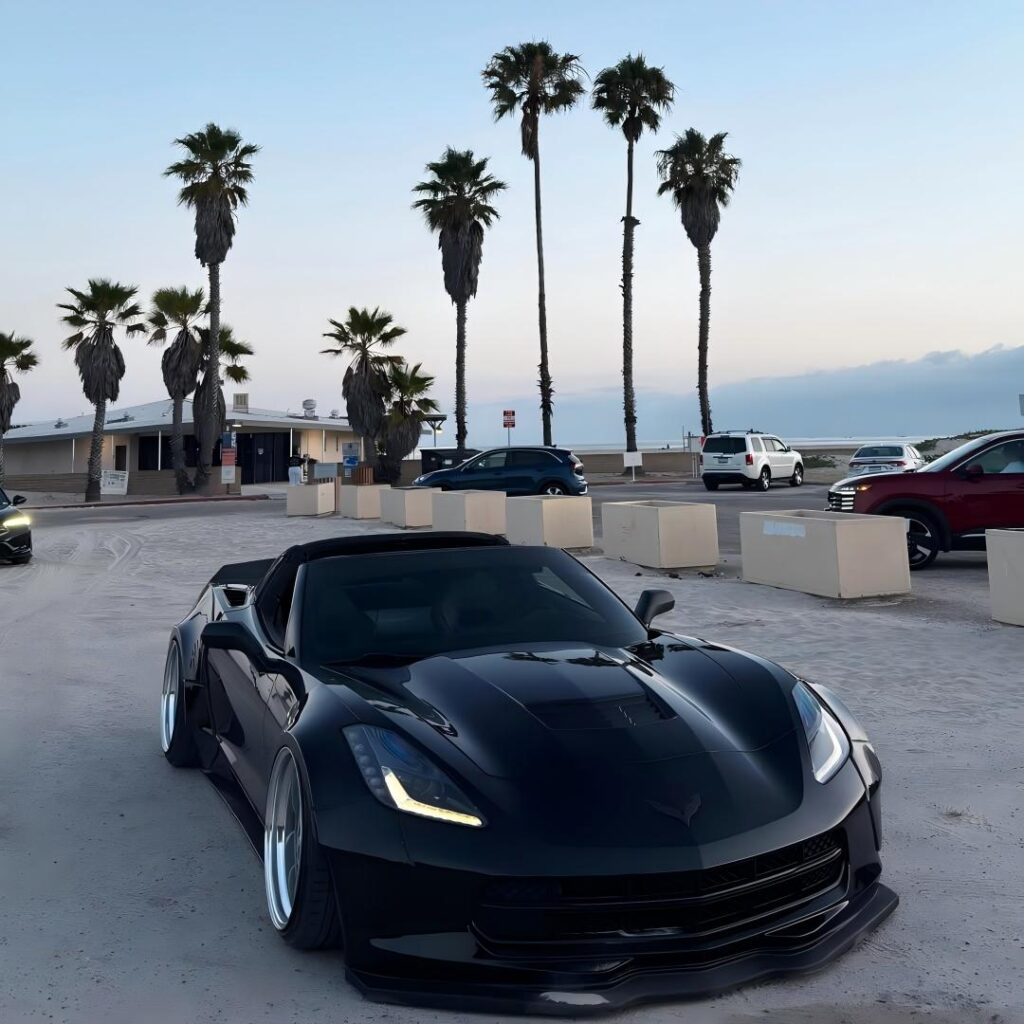
Installation: What Matters Most With Piano Black PPF?
A successful black PPF installation begins before the film touches the car.
1. Inspect the paint first
PPF does not repair damaged paint.
Check for:
- Rock chips
- Clear-coat failure
- Repainted panels
- Deep scratches
- Rust
- Previous coating residues
Questionable aftermarket paint should be evaluated before installation or removal because adhesion behavior may differ from factory paint.
2. Decontaminate thoroughly
A visually clean vehicle is not necessarily clean enough for PPF.
Wash and decontaminate the surface according to the film manufacturer’s installation process.
Any particle trapped beneath piano black can distort reflected light.
3. Control the environment
Dust control matters.
For a premium black installation, a clean indoor environment is much more appropriate than an uncontrolled outdoor installation.
4. Avoid unnecessary stretching
Stretching changes film thickness and can influence gloss, adhesive appearance and color consistency.
Use the minimum tension necessary to conform the film.
5. Inspect with directional lighting
This is especially important.
Do not judge the finished installation only under general ceiling lights.
Use long, directional LED reflections across the panels to expose:
- Stretch distortion
- Contamination
- Adhesive marks
- Texture
- Edge problems
This is where piano black reveals installation quality.
Wet vs Dry Installation: Why You Should Follow the Specific Film
There is no universal rule that every PPF must be wet installed.
For example, 3M’s Pro Series 200 technical bulletin specifies wet application for that particular product. Its recommended application range is 60–85°F (16–30°C), with 70–79°F (21–26°C) identified as optimal.
Meanwhile, TeckWrap currently markets its True Black Color PPF as a dry-application film using air-release channels.
ALUKOVINYL’s current Ultra Gloss Black product documentation states that the film supports both dry- and wet-install approaches.
This illustrates an important point:
Do not apply generic “PPF installation rules” to every film.
Follow the technical instructions for the exact adhesive and liner system being installed.
How to Maintain Piano Black PPF
Piano black rewards careful maintenance.
Wash regularly
Allowing road film, bird contamination or insects to remain on the surface makes cleaning more difficult.
Use pH-neutral products
Avoid aggressive solvents unless explicitly approved by the film manufacturer.
Use clean microfiber towels
Dirty towels can introduce fine marks—the exact type of defect black makes easiest to see.
Dry the vehicle
Do not simply allow hard water to evaporate on the panels.
Avoid aggressive pressure washing at edges
Pressure directed closely at a film edge can contribute to lifting.
Treat bird droppings and bug residue promptly
Organic contamination can become more difficult to remove after prolonged exposure.
ALUKOVINYL currently recommends avoiding washing or heavy rain exposure for approximately 72–120 hours following installation and notes that real-world service life can vary with installation, climate and maintenance.
How Long Does Piano Black PPF Last?
There is no credible universal answer for every piano black PPF.
ALUKOVINYL currently reports an expected durability of 5–7 years for its Ultra Gloss Black Color PPF and separately publishes an eight-year product warranty. The company also explicitly notes that actual service life varies with surface preparation, environmental exposure and maintenance.
For comparison, TeckWrap currently backs its True Black Color PPF with a five-year manufacturer warranty, while 3M’s Pro Series 200 clear PPF carries a 10-year consumer warranty subject to its warranty conditions.
These warranty periods should not be interpreted as a direct durability ranking.
Why?
Because warranty terms, exclusions, products, constructions and covered failures differ.
A more responsible expectation is:
Real-world PPF life depends on the film, installation quality, UV exposure, climate, mileage, storage, maintenance and contamination—not simply the number printed on a warranty.
What We Can—and Cannot—Conclude From Manufacturer Data
This is important for anyone researching PPF online.
We can reasonably conclude that modern TPU PPF is an established automotive protection technology, supported by technical documentation from major manufacturers such as 3M.
We can also compare published specifications from ALUKOVINYL and competitors.
What we cannot responsibly claim without equivalent independent testing is that:
- One film provides exactly X% more stone-chip protection.
- One black PPF definitively lasts longer than every competitor.
- A manufacturer-reported UV figure guarantees a specific outdoor lifespan.
- Self-healing means a film cannot be permanently scratched.
- One tensile-strength number proves superior real-world protection.
Those conclusions require controlled, comparable testing.
This distinction between published specification and independently demonstrated performance is important when evaluating any PPF manufacturer—including ALUKOVINYL.
Who Should Choose Piano Black PPF?
Piano black PPF makes the most sense for an owner who:
- Wants to change the vehicle to deep gloss black
- Also values stone-chip and surface protection
- Wants more protection than ordinary decorative vinyl
- Accepts the higher material and installation cost
- Is willing to maintain a black finish properly
- Values strong gloss and reflection quality
Who Should Choose Something Else?
Consider gloss black vinyl if:
- Cost is more important than protection
- You change colors frequently
- The project is temporary
- Graphics or printed elements are required
Consider clear PPF if:
- Your vehicle is already the desired color
- Preserving OEM paint appearance is the goal
- You don’t want an opaque color change
Consider satin or lighter PPF film if:
- You dislike visible dust and fingerprints
- You prefer lower-maintenance aesthetics
- Mirror-like gloss isn’t important
FAQ About Piano Black PPF
What is piano black PPF?
Piano black PPF is an opaque high-gloss polyurethane paint protection film designed to create a deep black appearance while providing a protective layer over the original automotive paint.
Is piano black PPF better than gloss black vinyl?
For physical paint protection, PPF is generally the more appropriate material category. For lower-cost color changes, graphics and styling flexibility, vinyl can be more practical. “Better” therefore depends on the objective.
Does piano black PPF scratch?
Yes. PPF is not scratch-proof. A self-healing top coat can reduce certain minor surface marks when activated by heat, but deep scratches, cuts and punctures can remain permanent.
Does piano black PPF show swirl marks?
Gloss black makes fine surface defects visually obvious. A functional self-healing top coat can help reduce minor marks, but correct washing remains important.
Can piano black PPF go over a white car?
Yes, an opaque black color PPF can transform the appearance of a lighter-colored vehicle while covering the original paint. Edge coverage and installation quality become especially important because exposed original paint can be visually obvious.
Is piano black PPF hydrophobic?
Many modern PPF products incorporate hydrophobic top coats, but hydrophobic performance is product-specific. It should not be assumed from the term “TPU” alone.
Can piano black PPF prevent rock chips?
PPF is engineered to reduce paint damage from common road debris and stone impacts, but no film can guarantee protection against every impact. Speed, stone size, angle, film construction and impact energy all matter.
Does piano black PPF have orange peel?
Surface texture varies by film. High-end glossy PPF products increasingly emphasize low-orange-peel surfaces; for example, 3M specifically lists low orange peel as a feature of Pro Series 200. Physical samples under directional lighting are still the best way to evaluate a particular black film.
How long does ALUKOVINYL Piano Black PPF last?
ALUKOVINYL currently lists expected durability of 5–7 years for its Ultra Gloss Black Color PPF. This is manufacturer-reported rather than an independent prediction, and actual service life varies with installation, climate, storage and maintenance.
Final Verdict: Is Piano Black PPF Worth It?
Piano black PPF makes the strongest case when you want two things simultaneously: a deep black color transformation and meaningful paint protection.
If you only want a black car, conventional gloss black vinyl is difficult to ignore because it accomplishes the visual transformation at a lower material cost.
If your car already has a factory black finish you love, clear PPF may be the more rational option because there is little reason to cover the existing color with another opaque black layer.
But when the vehicle is currently another color—and the owner wants black appearance + TPU protection + self-healing surface technology in one material system—piano black PPF occupies a useful middle ground.
The deciding factor should not be marketing language.
Evaluate the physical sample. Examine reflection quality under LED lighting. Compare technical data. Ask what is covered by the warranty. Understand the installation method. And distinguish manufacturer specifications from independently verified performance.
ALUKOVINYL publishes specifications for its piano black PPF, including its TPU construction, gloss, elongation and other technical properties.
For shoppers still deciding between materials, compare those specifications with conventional car wrap, protective PPF film, and other color PPF options before committing to a full vehicle.
The best choice isn’t automatically the glossiest or most expensive film. It’s the material whose appearance, protection, installation requirements and maintenance burden fit the way the vehicle will actually be used.