Matte blue has evolved far beyond the simple flat-blue wraps that dominated modified cars a decade ago. Today, drivers can choose from deep navy tones, pale flat blues, satin finishes, metallic pigments and even satin-chrome effects.
That variety creates a new problem: which matte blue car wrap actually looks best on your vehicle?
For drivers searching for matte blue metallic, the answer depends on more than choosing a shade from a screen. Metallic particle size, surface sheen, vehicle body shape, sunlight and surrounding colours can dramatically change how a blue wrap appears in the real world.
In this guide, we compare five distinctive ALUKOVINYL matte blue finishes:
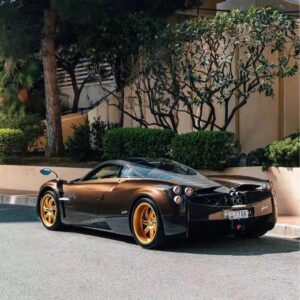
- Satin Blueberry Wrap
- Matte Dark Blue Wrap
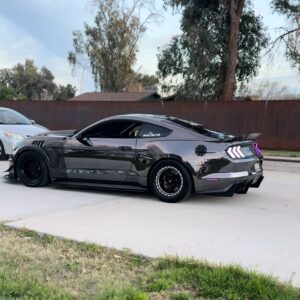
- Satin Chrome Blue Wrap
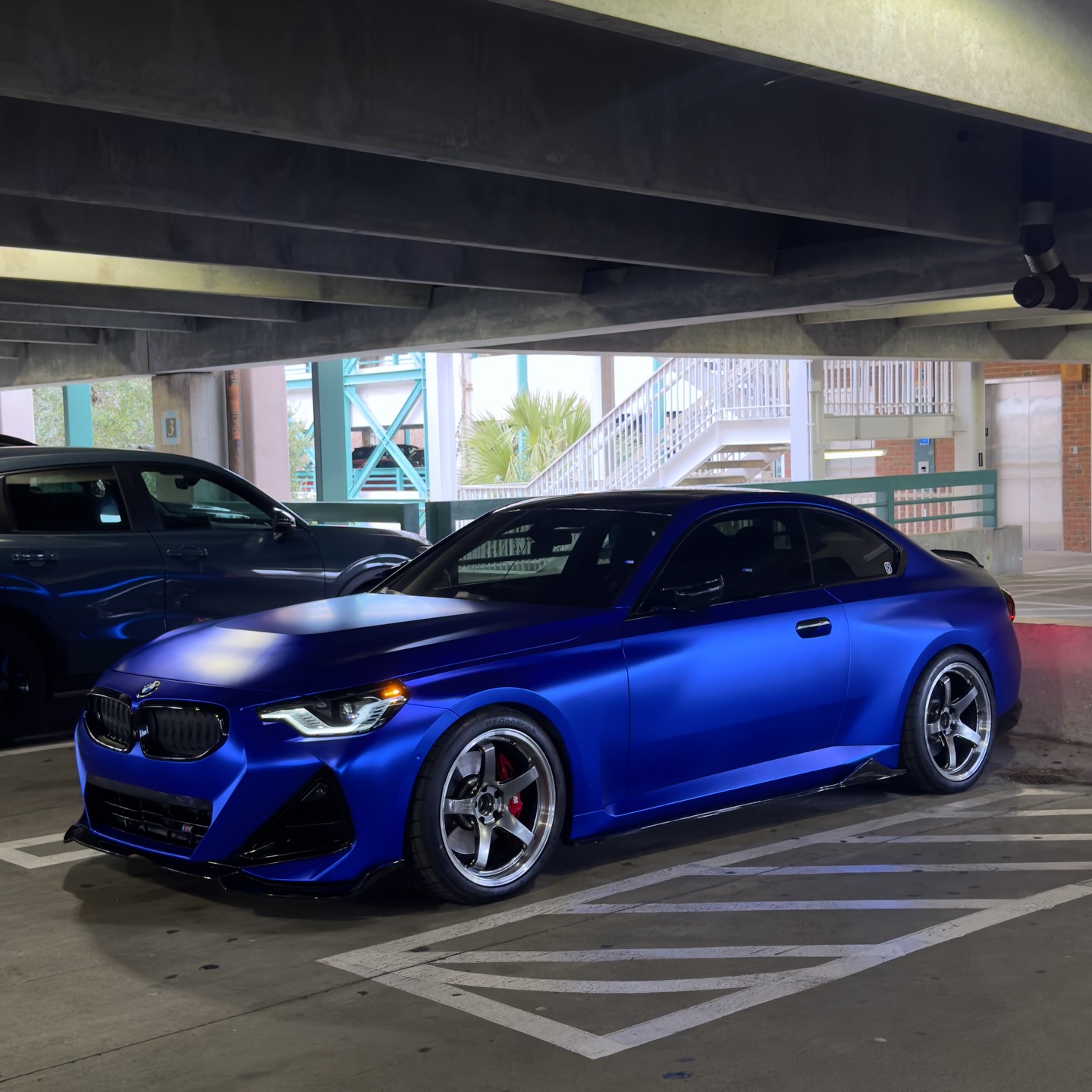
- Matte Metallic Azure Blue Wrap
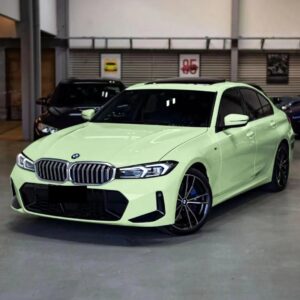
- Ultimate Flat Light Blue Wrap
Rather than simply ranking colours, we’ll examine how each finish behaves visually, which vehicles suit it, and the trade-offs you should understand before ordering a full roll.
Manufacturer Disclosure: ALUKOVINYL manufactures and sells automotive vinyl wrap products, including the products discussed in this article. Product-specific observations are therefore based partly on our own specifications, installation experience and customer projects. For broader industry context, this guide also references published technical information from independent wrap manufacturers including Avery Dennison and ORAFOL.
What Is the Best Matte Blue Car Wrap?
The best matte blue car wrap depends on the look you want rather than one colour being universally better.
| Wrap | Visual Character | Best For |
|---|---|---|
| Satin Blueberry | Rich blue-purple metallic depth | Performance and luxury cars |
| Matte Dark Blue | Deep, understated blue | Luxury sedans and executive builds |
| Satin Chrome Blue | Brighter metallic/chrome effect | Show and modified cars |
| Matte Metallic Azure Blue | Medium blue with metallic depth | Sports cars and modern coupes |
| Ultimate Flat Light Blue | Soft, non-metallic flat blue | Minimalist and retro-inspired builds |
If you specifically want matte blue metallic, Satin Blueberry and Matte Metallic Azure Blue offer two particularly interesting interpretations: Blueberry is deeper and richer, while Azure Blue is brighter and more visibly blue in daylight.
Why Matte Blue Metallic Looks Different From Ordinary Matte Blue
The phrase matte blue metallic sounds contradictory at first.
Traditional matte vinyl suppresses reflections. Metallic vinyl uses reflective particles to create depth. Combining them produces an unusual optical balance: the surface does not generate the strong mirror-like reflection of gloss vinyl, yet metallic pigment still reacts to directional light.
That means the colour can appear relatively subdued in shade and considerably more dimensional under direct sunlight.
This distinction matters when shopping online.
A conventional flat blue is primarily defined by its base pigment. A metallic blue has another variable: how the metallic particles interact with the surrounding light.
That is why two blue wraps with similar digital colour samples can look completely different once installed.
Avery Dennison’s current Supreme Wrapping Film portfolio similarly includes matte-metallic finishes, including Matte Metallic Oasis Blue introduced among its 2026 colours. Avery also separates durability classifications for standard colours and metallic/pearlescent films in its technical documentation, illustrating that finish construction is more than an aesthetic distinction.
1. Satin Blueberry Wrap — Deep, Rich and Colour-Shifting in Character
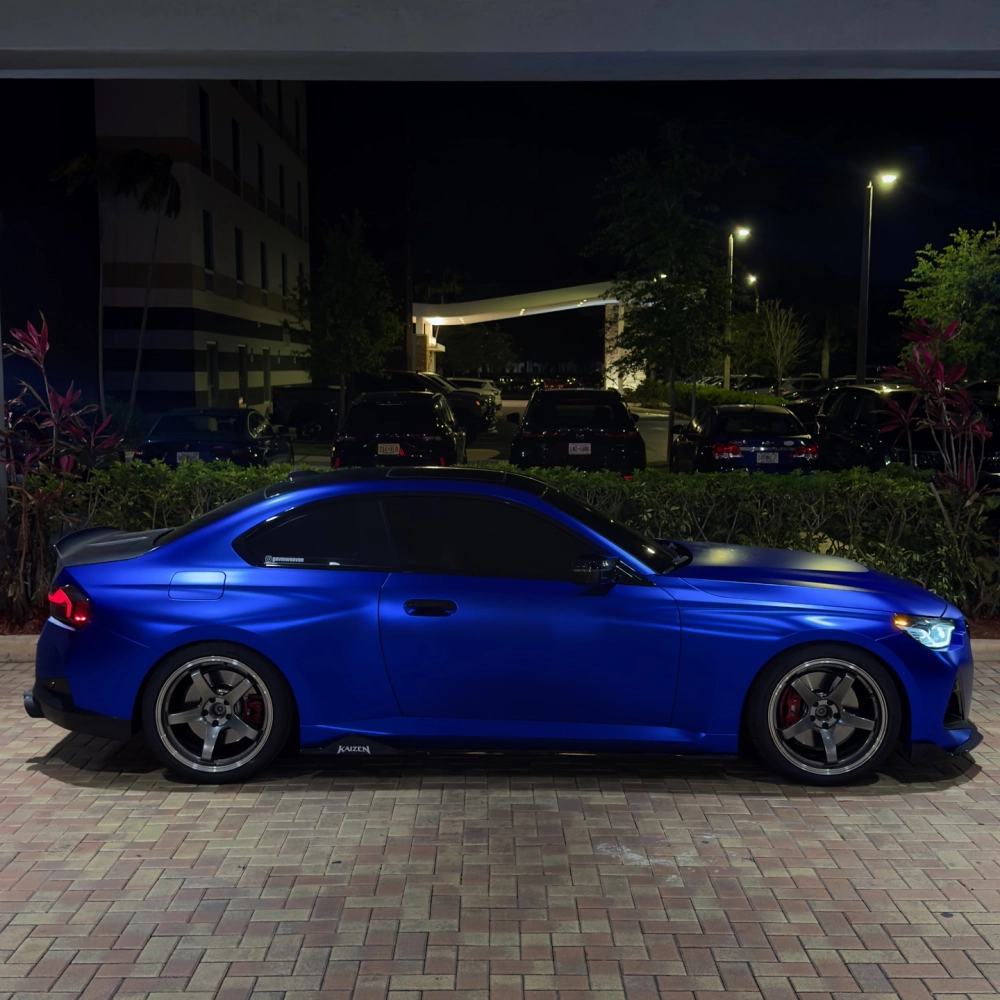
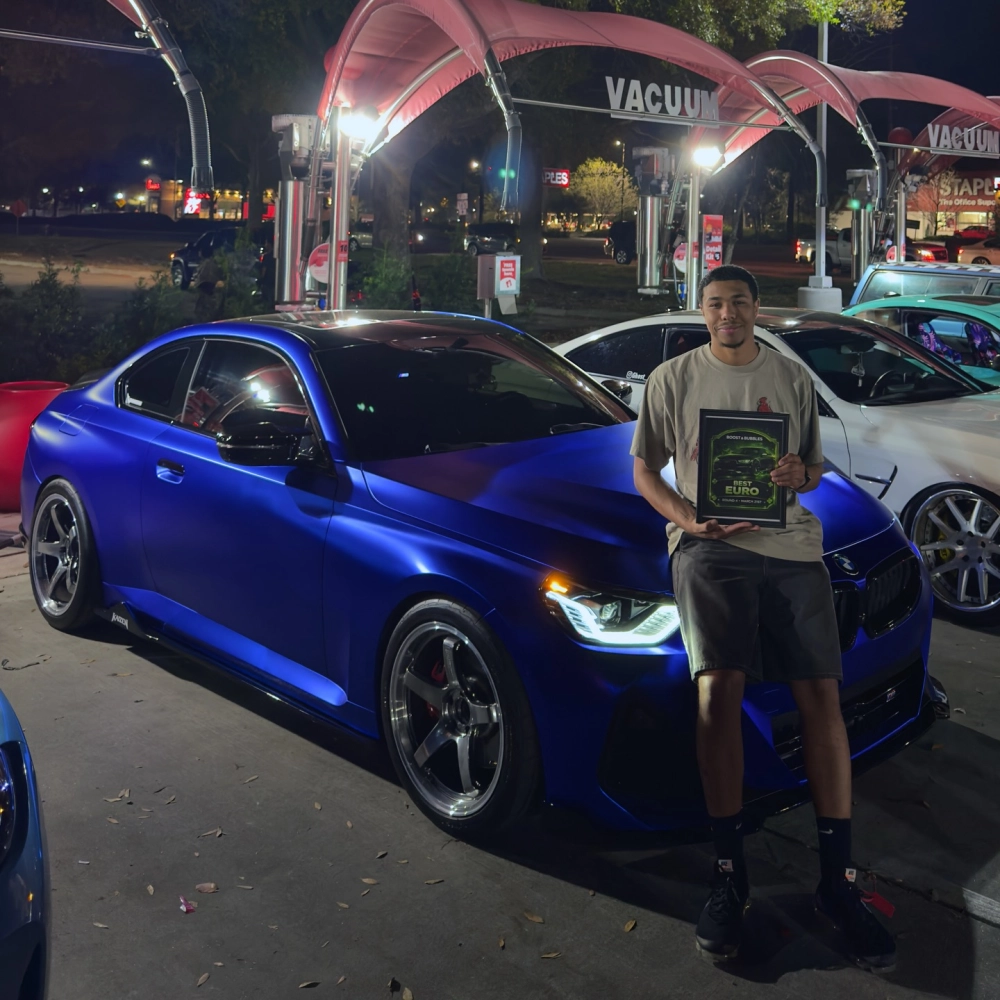
The Satin Blueberry Wrap sits somewhere between traditional blue and blue-purple.
Instead of presenting one completely uniform blue tone, its metallic satin construction creates noticeably different impressions depending on lighting.
What Does Satin Blueberry Look Like?
Under soft or overcast lighting, Blueberry can appear dark and relatively restrained.
Move the same vehicle into direct sunlight and the metallic component becomes more apparent, producing a richer blue with subtle violet undertones.
This makes Blueberry particularly useful on cars with pronounced body lines.
Think:
BMW M3 / M4 → Nissan GT-R → Toyota Supra → Porsche 911 → Mercedes-AMG GT
Strong shoulders, wide rear quarters and sculpted doors give directional light more surfaces to interact with.
[IMAGE: Satin Blueberry wrap photographed in sunlight and shade]
Why Choose It?
Pros
- Stronger visual depth than ordinary matte blue
- Blue-purple character changes subtly with lighting
- Satin surface avoids an excessively glossy appearance
- Works particularly well with black or carbon-fibre accents
- Suitable for aggressive performance-car styling
Cons
- Colour is harder to judge accurately from a computer monitor
- Metallic finishes require careful panel orientation during installation
- Repairs should ideally use material from the same production batch
- More visually expressive than a conventional dark blue, which may not suit minimalist builds
ALUKOVINYL currently specifies this product as a matte-metallic Blueberry finish with an expected durability of 5–7 years under its stated product conditions. That figure should be treated as a manufacturer specification rather than a universal service-life guarantee because climate, installation, orientation and maintenance affect real-world longevity.
2. Matte Dark Blue Wrap — The Understated Alternative
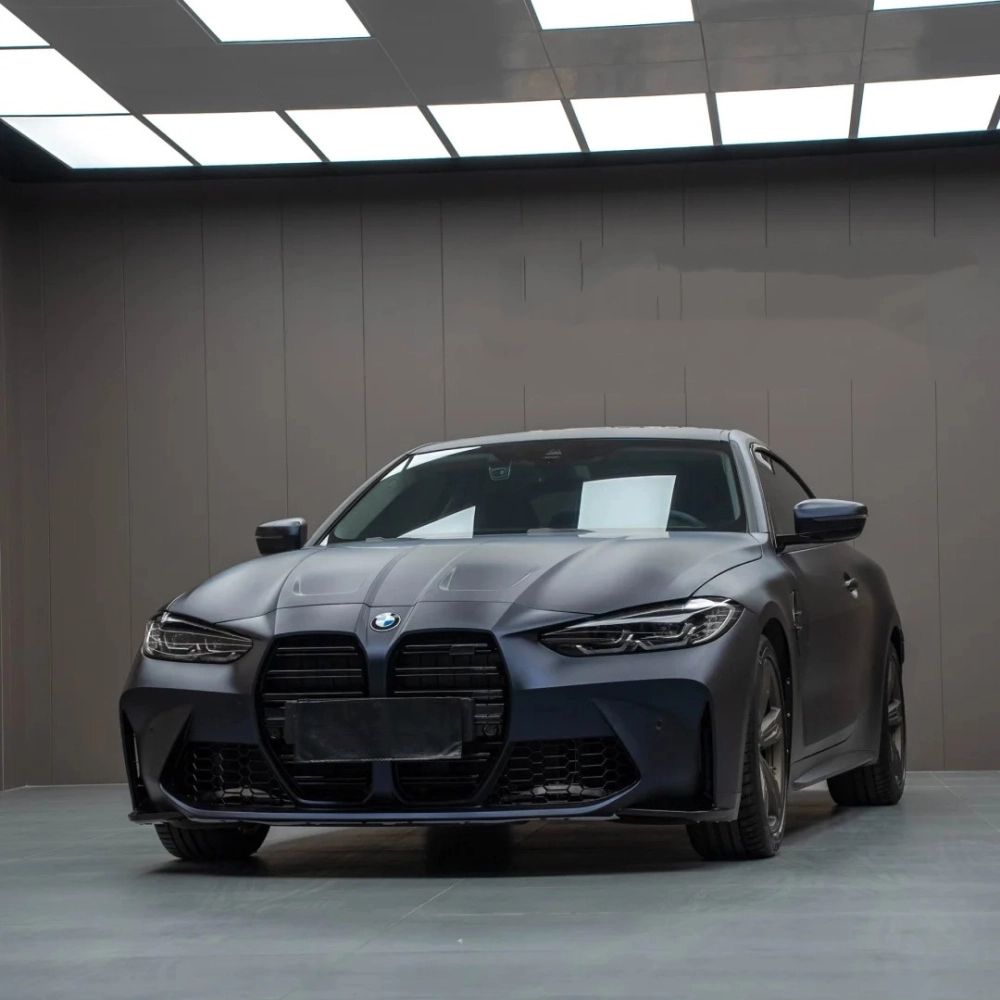
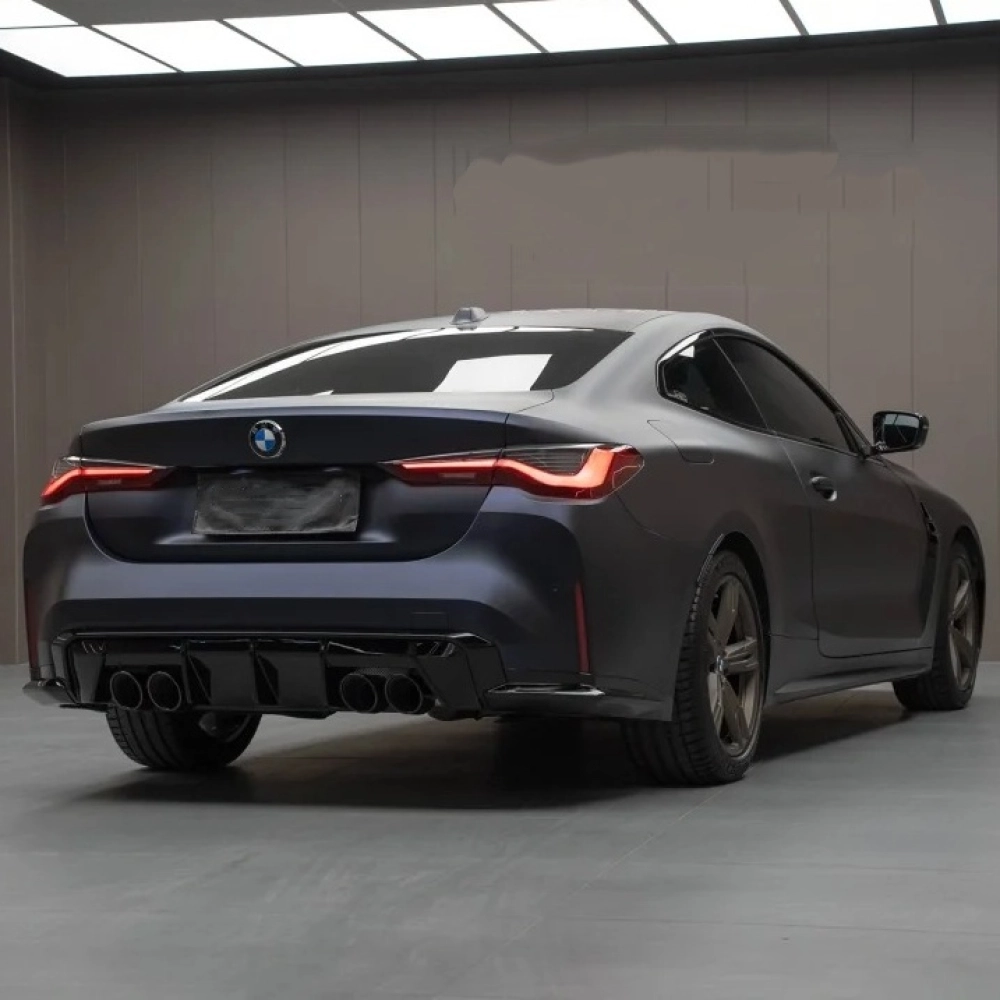
Not every matte blue car needs metallic sparkle.
The Matte Dark Blue Wrap takes the opposite approach.
Instead of trying to maximise light response, Dark Blue emphasises colour density and restraint.
From a distance, the vehicle may initially appear almost navy. As lighting improves, the blue becomes easier to distinguish.
That behaviour makes dark matte blue particularly interesting for owners who like black vehicles but want something less conventional.
Cars That Suit Matte Dark Blue
This colour works especially well on vehicles where the design already communicates luxury:
Mercedes-Benz E-Class
BMW 5 Series
Audi A6/A7
Range Rover Sport
Porsche Cayenne
Chrome delete and dark wheels can push the build toward a stealth aesthetic, while silver wheels can make the blue itself more obvious.
Pros
- Sophisticated and relatively understated
- Easier to coordinate with wheel colours
- Works across sedans, SUVs and coupes
- Provides an alternative to common matte black builds
- Body contours remain visible without intense reflections
Cons
- Can look almost black in poor lighting
- Does not provide the sparkle of matte blue metallic
- Matte surfaces can reveal oily fingerprints and inconsistent cleaning
- Less dramatic for owners building a show-oriented vehicle
That last maintenance point deserves attention.
Avery Dennison specifically warns in its Supreme Wrapping Film technical documentation that matte finishes can experience colour and gloss changes when exposed to unsuitable cleaners, waxes or polishes. That is a useful industry-wide reminder: matte vinyl should not automatically be maintained like conventional glossy automotive paint.
3. Satin Chrome Blue Wrap — When Matte Blue Is Not Bold Enough
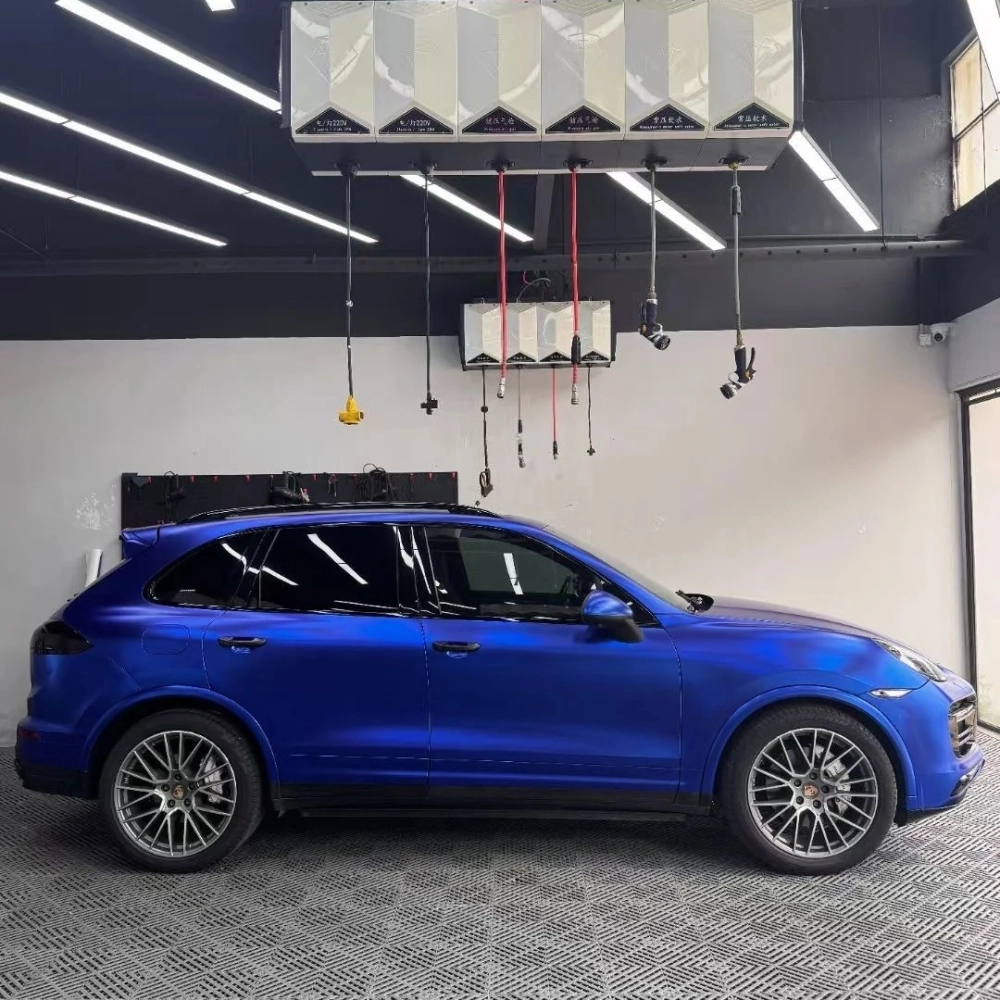
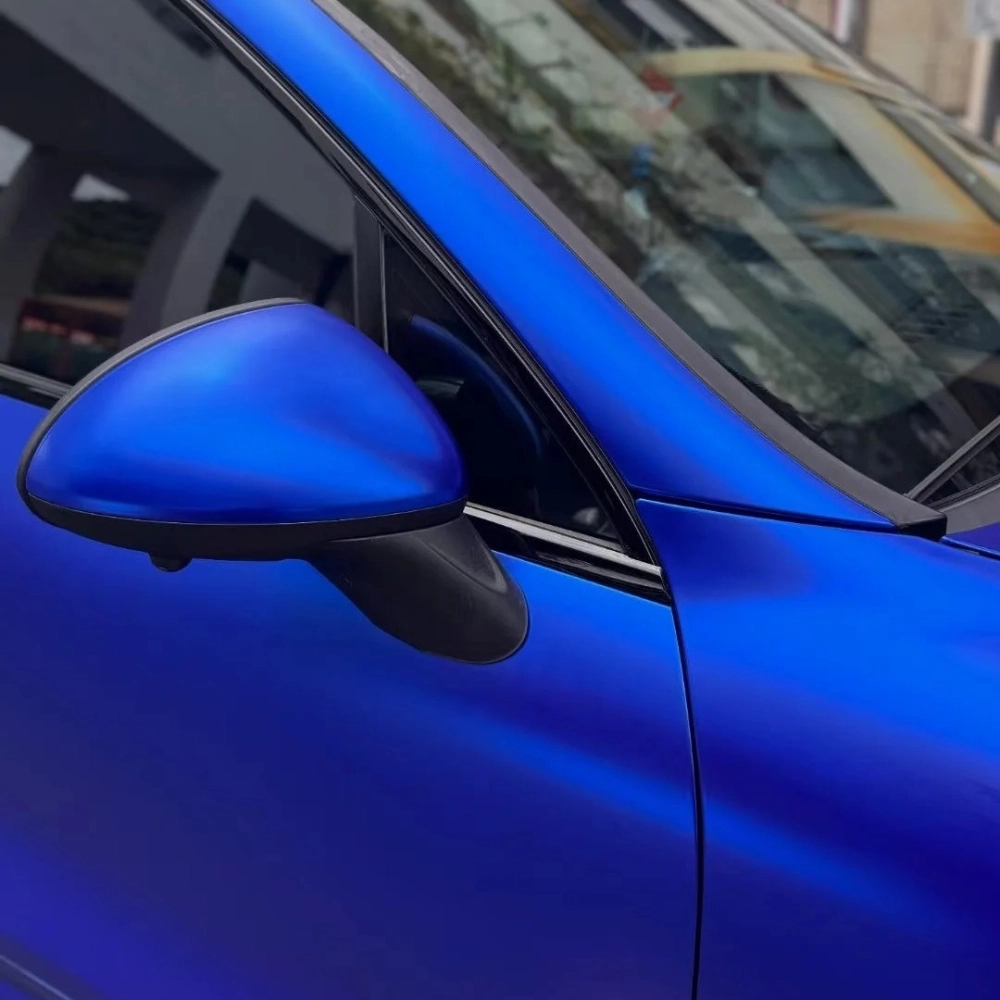
The Satin Chrome Blue Wrap is the most visually aggressive option in this group.
It occupies the territory between satin metallic and chrome.
Instead of a completely mirror-like chrome surface, the satin finish diffuses reflections while retaining significantly more brightness than conventional matte blue.
Where Satin Chrome Works Best
We would primarily consider it for:
- show cars
- widebody builds
- modified coupes
- exotic cars
- promotional vehicles
- weekend/project cars
A Lamborghini Huracán, Corvette, Nissan GT-R or widebody BMW can exploit the stronger highlights particularly well.
Pros
- Strong visual impact
- More reflective than conventional matte blue
- Highlights complex body geometry
- Distinctive at meets and automotive events
- Creates a more exotic finish without full mirror chrome
Cons
- More installation-sensitive than standard colours
- Excessive stretching can alter the appearance of satin-chrome material
- Excessive heat should be avoided
- Fingerprints can be more noticeable during installation
- Not our first choice when maximum service life is the main purchasing priority
Important Installation Note
Satin chrome should be treated differently from conventional colours.
Avoid aggressive stretching and excessive heating because either can alter the finish. Installers should wear gloves where practical to reduce fingerprints, and after heating a section, allow the material to cool before applying final squeegee pressure.
These characteristics are important enough that buyers should choose satin chrome for its visual effect, rather than assuming it behaves identically to ordinary matte vinyl.
4. Matte Metallic Azure Blue — The Balanced Choice
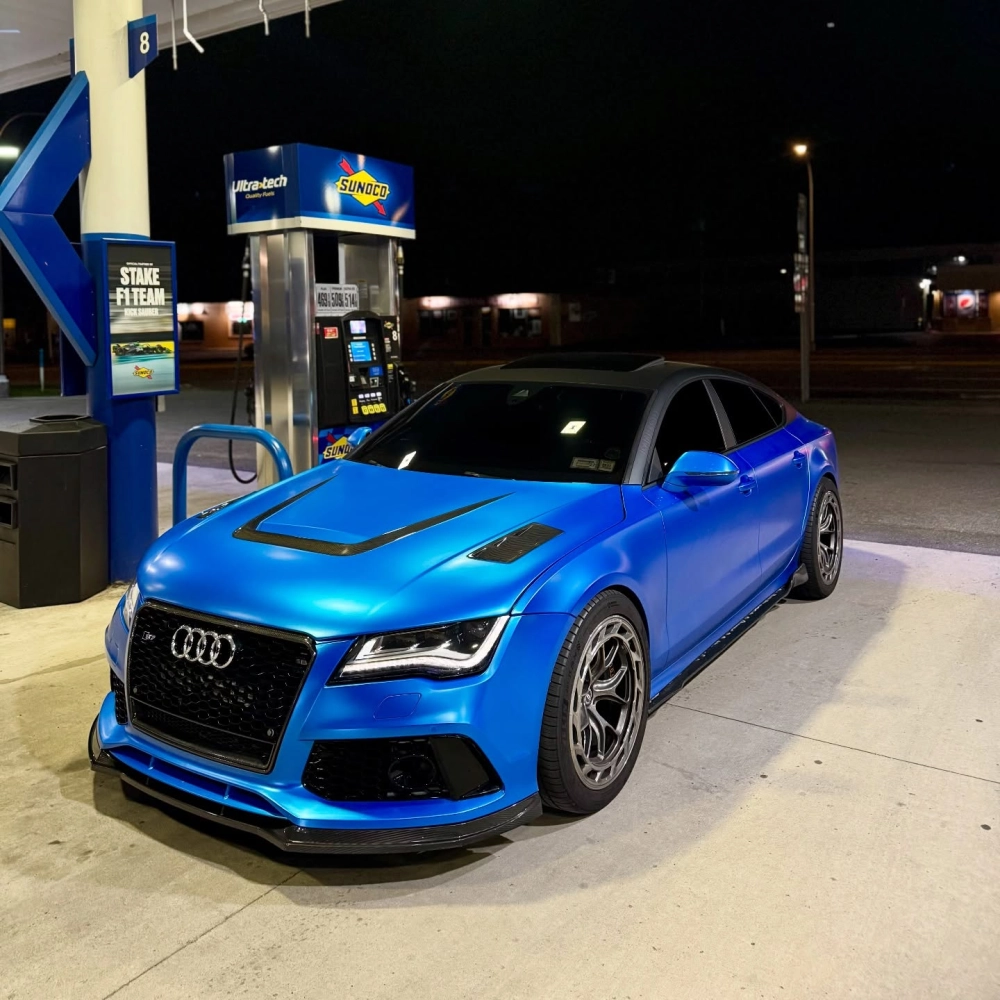

If Blueberry is deep and Satin Chrome is dramatic, Matte Metallic Azure Blue Wrap occupies the middle ground.
Azure is recognisably blue even before direct sunlight hits it.
The matte surface controls glare while metallic pigment prevents the finish from looking completely flat.
This balance makes it one of the easiest shades in this group to pair with modern sports cars.
Real-World Case: Chevrolet Corvette C6
ALUKOVINYL has documented a customer Chevrolet Corvette project using Matte Metallic Azure Blue PET vinyl.
On the C6, the colour interacts particularly well with the Corvette’s broad front fenders and long curved rear quarter panels. The customer build also pairs the blue with bronze wheels, yellow brake calipers and carbon-fibre components, providing a useful real-world example of how a muted metallic blue can support contrasting details rather than overpower them.
[IMAGE: Real Matte Metallic Azure Blue Corvette customer build]
Vehicles We Would Pair With Azure Blue
Chevrolet Corvette C6/C8
BMW M2/M4
Toyota GR Supra
Porsche Cayman
Audi RS3/RS5
Pros
- Clear blue identity
- Metallic particles create depth without chrome-level reflection
- Works well on curved sports-car panels
- Easy to coordinate with black, bronze or carbon-fibre accessories
- Good middle ground between subtle and aggressive
Cons
- Metallic orientation requires installation consistency
- Sunlight makes the finish appear brighter than shade
- Digital photographs may not reproduce the exact colour
- Flat-matte enthusiasts may find it too reflective
This is an important distinction when choosing between matte blue and matte blue metallic.
The latter is not simply matte blue with glitter added. Its biggest advantage is dimensionality.
5. Ultimate Flat Light Blue — Matte Without Metallic Distraction
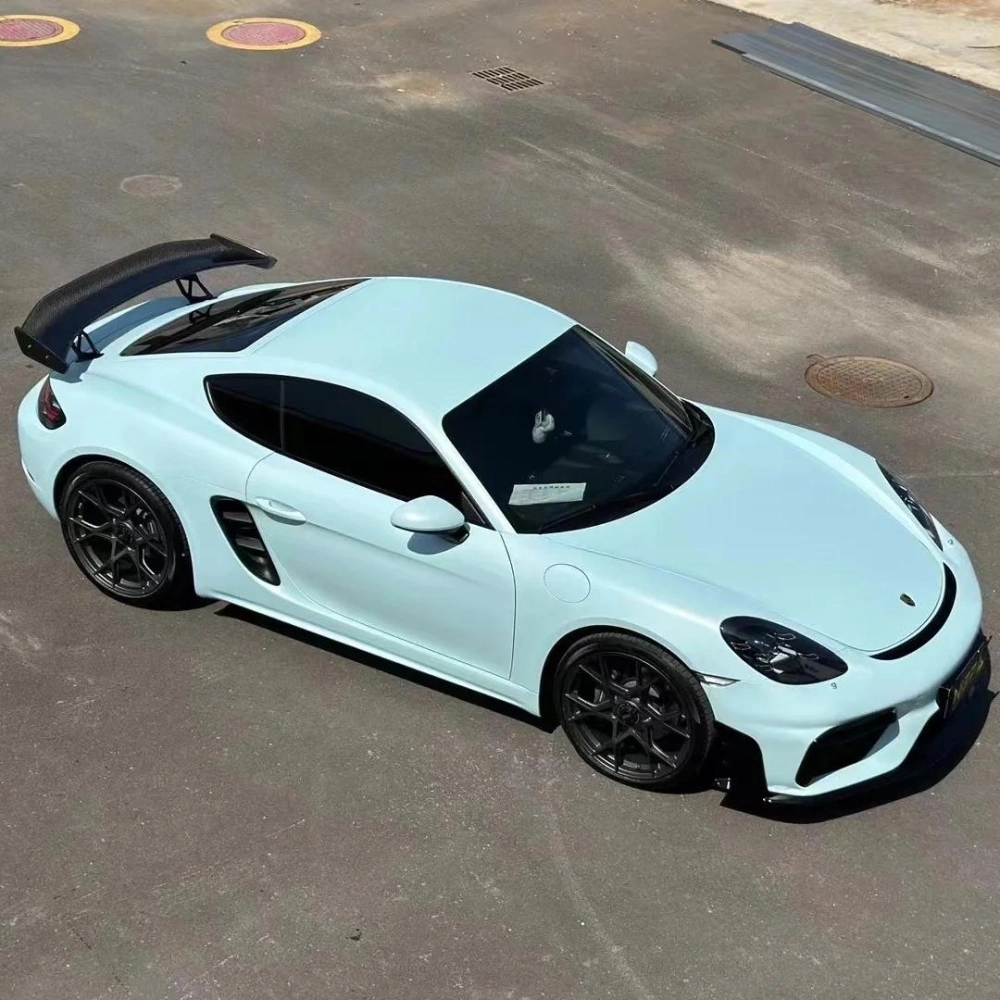
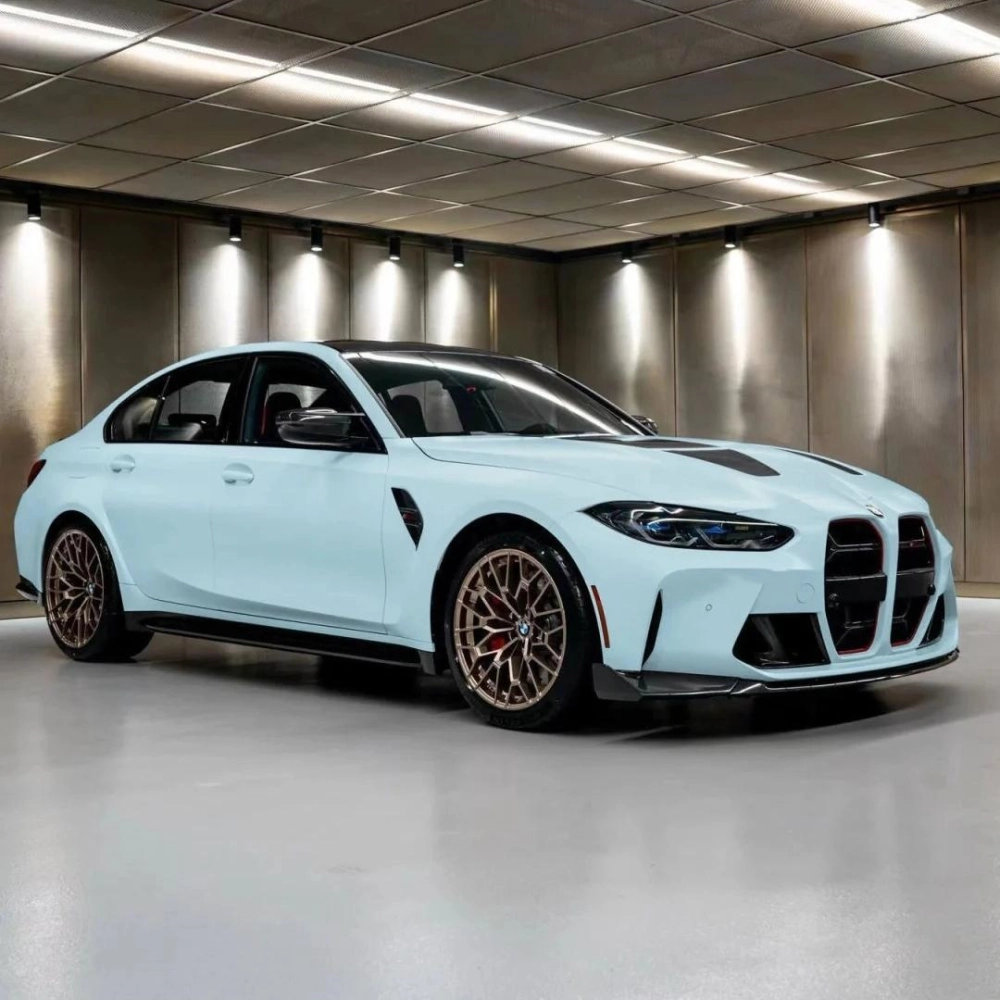
Finally, there is the opposite end of the spectrum.
The Ultimate Flat Light Blue Wrap removes most of the metallic visual complexity and focuses on a clean, soft colour.
Light blue changes the visual mass of a vehicle.
Dark colours tend to visually compress large body panels. Pale blue makes surfaces easier to distinguish, which can make a small sports car look playful and a boxier SUV look cleaner and more contemporary.
Best Vehicle Matches
Consider it for:
Porsche Cayman / 911
Toyota GR86
Subaru BRZ
Volkswagen Golf GTI
Tesla Model 3
Mini Cooper
[IMAGE: Ultimate Flat Light Blue compact sports car]
Pros
- Clean, minimalist appearance
- Very different from common dark matte wraps
- Strong contrast with black trim
- Works especially well on compact cars
- Flat finish keeps the colour visually simple
Cons
- Lacks metallic depth
- Light surfaces can make contamination more visible
- May appear less dramatic under artificial lighting
- Not ideal if your goal is specifically a metallic finish
ALUKOVINYL lists the product as an Ultimate Flat finish and specifies an expected 5–7-year durability under its product conditions. As with the Blueberry product, real service life can differ substantially according to exposure and maintenance.
Side-by-Side: Which Matte Blue Should You Choose?
| Feature | Blueberry | Dark Blue | Satin Chrome | Azure Blue | Flat Light Blue |
|---|---|---|---|---|---|
| Colour Depth | Very High | High | High | High | Medium |
| Metallic Effect | High | Low | Very High | Medium–High | None/Minimal |
| Visual Boldness | High | Low | Very High | Medium–High | Medium |
| Light Sensitivity | High | Medium | Very High | High | Low |
| Stealth Build | ★★★ | ★★★★★ | ★ | ★★★ | ★★ |
| Show Build | ★★★★★ | ★★★ | ★★★★★ | ★★★★ | ★★★ |
| Luxury Styling | ★★★★ | ★★★★★ | ★★★ | ★★★★ | ★★★ |
| Sports Cars | ★★★★★ | ★★★★ | ★★★★★ | ★★★★★ | ★★★★ |
These stars describe styling compatibility, not product-quality rankings. A darker or less reflective finish is not inherently better or worse.
ALUKOVINYL vs Avery Dennison vs ORAFOL: What Can Buyers Actually Compare?
A useful brand comparison should go beyond saying that one wrap is “premium.”
The more meaningful differences involve film construction, finish range, adhesive system, installation characteristics, published durability and price positioning.
Avery Dennison’s Supreme Wrapping Film uses Easy Apply RS adhesive technology designed for repositionability and air egress, and Avery currently advertises more than 140 colours in its broader Supreme Wrap range.
ORAFOL’s ORACAL 970RA is a multi-layer cast PVC wrap using RapidAir technology. ORAFOL describes the film as 4.25 mil thick and specifically designed for vehicle wrapping, including curved surfaces.
ALUKOVINYL approaches the market differently, with a particularly broad catalogue of colour and effect combinations, including PET-based matte metallic, satin, chrome and specialty blue finishes. Its current matte-blue category alone contains dozens of variations spanning dark blue, Azure, Blueberry, satin chrome and light blue.
The practical takeaway is not that one manufacturer automatically wins.
Instead, ask:
Does the brand make the exact colour you want?
Is its adhesive system appropriate for your installer?
Is the finish suitable for your expected exposure?
Does the manufacturer publish realistic technical specifications?
Can you obtain replacement material from a matching production batch?
Those questions are more useful than choosing solely by brand recognition.
A Technical Point Most Buyers Miss: Horizontal Panels Age Differently
One of the most useful lessons from established wrap manufacturers is that a quoted durability number should never be interpreted as a universal countdown timer.
Avery Dennison’s technical data distinguishes vertical surfaces from non-vertical or horizontal exposure and notes that factors such as sun angle, environment, installation method, cleaning and maintenance can reduce durability. Metallic and specialty finishes can also have different durability classifications from conventional colours.
This matters enormously on a real car.
Your doors spend much of their time close to vertical.
Your hood, roof and trunk are much closer to horizontal.
Those panels can receive considerably more direct solar exposure.
So instead of asking only:
“How many years does this vinyl last?”
A more useful question is:
“How will this specific finish perform on my vehicle, in my climate, with my parking and maintenance habits?”
That is a much more realistic way to evaluate any vinyl wrap.
Matte Blue Metallic vs Gloss Blue: Which Looks Better?
There is no universal winner because they emphasise different characteristics.
Gloss blue reflects the environment strongly and can resemble automotive clear coat.
Matte blue suppresses those reflections and emphasises silhouette.
Matte blue metallic sits between them.
Metallic particles recover some visual depth without creating the mirror-like surface of conventional gloss.
This makes matte metallic particularly effective on cars with complex body geometry.
A Corvette fender, BMW M4 shoulder line or Porsche 911 rear quarter panel can reveal subtle changes in metallic intensity as the viewing angle changes.
That is precisely where a matte metallic finish earns its visual advantage.
How to Choose the Right Blue Before Buying a Full Roll
Never make the final decision from a single product photograph.
Screens differ in brightness, white balance and colour calibration. Photography introduces another variable, while studio lighting can make metallic particles look stronger than they do outdoors.
A better selection process is:
- Narrow your choice to two or three colours.
- Obtain physical samples where possible.
- View them outdoors around midday.
- Check them again near sunset.
- Examine them under garage or street lighting.
- Hold the sample against your wheel, trim and carbon-fibre colours.
- Only then choose the full roll.
For metallic finishes, rotate the sample while viewing it.
You are not only choosing a colour.
You are choosing how that colour responds to light.
Installation Tips for Matte Blue Metallic Vinyl
Matte and metallic films reward disciplined installation.
Keep panels clean and free from silicone, wax and polishing residue before installation. Maintain consistent film orientation on adjacent panels because directional metallic finishes can show visual differences if material is rotated.
Avoid unnecessary stretching around recesses and edges. Stretching changes film thickness and can also alter how metallic particles are distributed, potentially creating visible inconsistencies.
For satin-chrome material in particular, minimise excessive heat and stretch.
After installation, use pH-neutral cleaning products compatible with the wrap manufacturer’s instructions rather than conventional abrasive polishes or aggressive solvents.
ORAFOL’s 970RA documentation similarly emphasises purpose-designed wrapping construction and application technology, while Avery explicitly warns that unsuitable cleaning products can alter matte colour and gloss.
FAQ About Matte Blue Car Wrap
Is matte blue metallic actually matte?
Yes, but it is not visually identical to a solid matte colour. The surface reduces strong reflections while metallic particles beneath or within the film respond to directional light, creating more depth.
Does matte blue metallic look different in sunlight?
Usually, yes. Metallic particles become more visible under strong directional light, while the same wrap can appear darker and flatter in shade.
What cars look good with matte blue wrap?
Matte blue is unusually versatile. Deep blue works particularly well on luxury sedans and SUVs, metallic blue complements sports cars and coupes, while lighter flat blue can suit compact sports cars, EVs and retro-inspired builds.
How long does a matte blue car wrap last?
There is no single reliable lifespan for every product or installation. ALUKOVINYL lists 5–7 years as the expected durability for several products discussed here under its stated conditions. Major industry manufacturers also show that durability varies by material, finish, climate and panel orientation. Avery, for example, publishes different durability periods for colours, metallics and different exposure orientations.
Can I wax a matte blue vinyl wrap?
Conventional automotive wax is generally not recommended unless specifically approved for that film. Some products can create uneven gloss or permanently change the appearance of matte vinyl. Avery’s technical documentation explicitly cautions about cleaners, waxes and polishes on matte materials.
Is matte metallic harder to install than normal matte vinyl?
It can require additional attention because panel orientation, stretching and heat can influence colour consistency. Specialty satin-chrome finishes require even greater care.
Should I order extra vinyl?
For a full wrap, additional material is useful for installation mistakes and later repairs. More importantly, retaining material from the original production batch helps minimise the risk of a visible colour mismatch if a panel needs replacing later.
Final Thoughts: There Is More Than One Kind of Matte Blue
“Matte blue” is no longer one finish.
Satin Blueberry creates deep blue-purple dimension. Matte Dark Blue offers an understated alternative to matte black. Satin Chrome Blue prioritises visual impact. Matte Metallic Azure Blue balances metallic depth with everyday usability. Ultimate Flat Light Blue strips the idea back to a clean, modern flat colour.
For buyers specifically searching for matte blue metallic, the most important factor is not simply finding the brightest blue.
Consider how the colour reacts to sunlight, how much metallic movement you want, the shape of your vehicle, your wheel and trim colours, installation difficulty and your willingness to maintain a matte surface correctly.
Explore Matte Blue Wraps
Compare the complete Matte Blue Car Wrap collection from ALUKOVINYL to see additional dark, light, satin and metallic blue finishes.
If you are deciding between several shades, start with samples whenever possible rather than relying entirely on screen images.