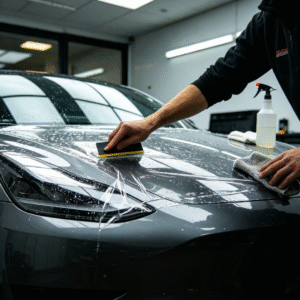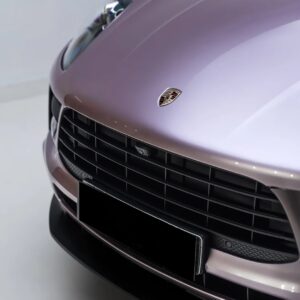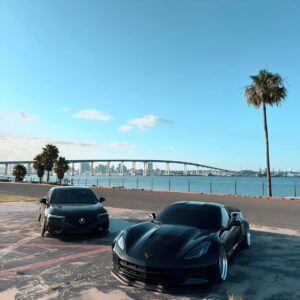
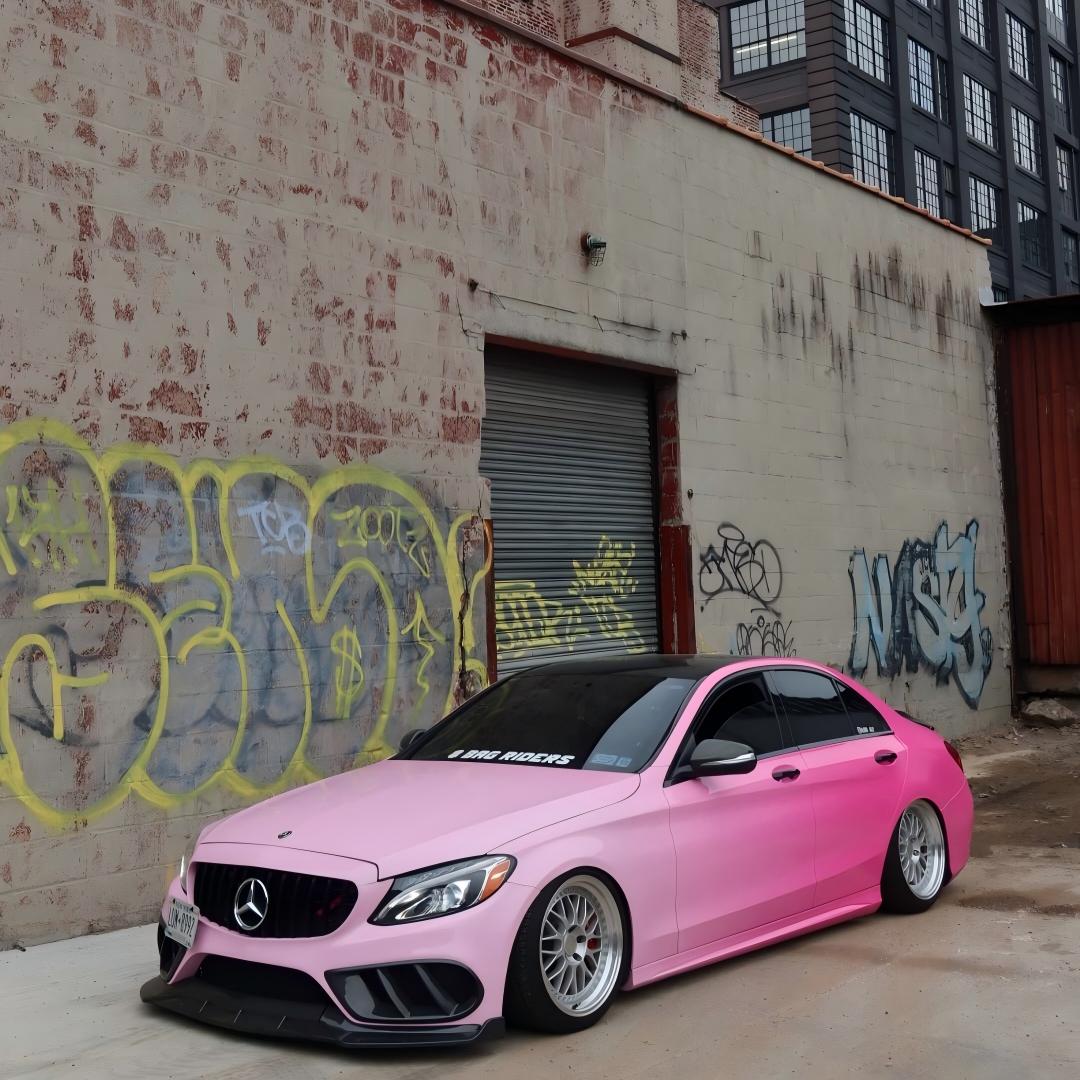
A factory paint color gives you one look. A custom car wrap design gives you almost unlimited creative freedom.
From smooth color gradients and marble textures to anime characters, camouflage graphics, racing liveries, business artwork, and completely personalised designs, modern digitally printed vinyl makes it possible to turn an idea on a screen into a full-scale vehicle design.
But designing a wrap is more complicated than simply uploading an image and enlarging it.
A successful custom wrap needs to account for the vehicle’s body lines, bumpers, doors, handles, wheel arches, panel gaps, curves, print resolution, viewing distance, and installation requirements.
This guide explains how to design your own car wrap online, what makes a design print-ready, and how six popular styles—Gradient, Marble, Anime & Itasha, Camo, Personalised, and Racing wraps—work on different vehicles.
Can You Design Your Own Car Wrap Online?
Yes. You can design your own car wrap online by choosing your vehicle, selecting a visual style, preparing your colors or artwork, creating a vehicle-specific digital mockup, reviewing the design from multiple angles, and then printing the approved artwork onto automotive wrap film.
A typical custom car wrap design process follows five stages:
- Choose your vehicle and coverage area.
- Select a design style, colors, graphics, or artwork.
- Create a vehicle-specific digital mockup.
- Review placement, scale, panel transitions, and important details.
- Approve the final artwork for printing and professional installation.
The key difference between a good custom wrap and a poor one is not simply image quality. The artwork must be designed for the three-dimensional geometry of the actual vehicle.
What Is a Custom Car Wrap Design?
A custom car wrap design is a digitally created graphic layout printed onto automotive vinyl and installed over some or all of a vehicle’s painted exterior.
Unlike a conventional single-color car wrap, a custom printed wrap can combine:
- Multiple colors
- Gradients
- Patterns
- Illustrations
- Photos
- Text
- Logos
- Racing graphics
- Camouflage
- Marble textures
- Anime artwork
- Original artwork
This makes custom wrapping especially useful when an off-the-shelf vinyl color cannot achieve the desired appearance.
For example, a purple-to-blue gradient cannot normally be recreated by simply choosing one roll of standard purple vinyl. A custom-printed design can control exactly where purple begins, where the transition occurs, and how blue appears across each vehicle panel.
That creative freedom is the primary advantage of custom printing.
How to Design Your Own Car Wrap Online
A professional workflow should begin with the vehicle rather than the artwork.
Step 1: Choose Your Vehicle
Start with the exact:
- Make
- Model
- Model year
- Body configuration
A 2026 BMW M3 and a Ford F-150 have dramatically different proportions. Artwork that looks balanced on a sedan may become stretched, empty, or visually disconnected when transferred to a pickup.
Vehicle dimensions also determine how much printable material is required.
Step 2: Decide How Much of the Vehicle You Want to Wrap
You do not necessarily need a complete full-body wrap.
Possible layouts include:
Full Wrap: Covers most visible painted exterior surfaces and offers maximum design freedom.
Partial Wrap: Uses selected areas such as the doors, rear quarter panels, hood, roof, or sides.
Accent Graphics: Adds smaller custom elements while leaving much of the original paint visible.
A partial design can sometimes be more visually effective than covering every available panel.
Step 3: Select Your Design Direction
Before creating artwork, define the visual identity.
Do you want the vehicle to look:
- Aggressive?
- Luxurious?
- Futuristic?
- Motorsport-inspired?
- Minimalist?
- Artistic?
- Anime-inspired?
- Promotional?
This decision should guide everything from typography and graphics to color contrast.
Step 4: Build a Vehicle-Specific Mockup
This is one of the most important stages.
The artwork should be mapped onto a vehicle template so that you can evaluate how graphics interact with:
- Door seams
- Wheel arches
- Windows
- Door handles
- Bumpers
- Body creases
- Spoilers
- Fender transitions
A design that looks excellent as a flat rectangle can fail once installed on a complex vehicle.
Step 5: Review and Approve Before Production
Do not judge the design from only one side view.
Whenever possible, inspect:
- Driver side
- Passenger side
- Front
- Rear
- Hood
- Roof
Pay particular attention to faces, logos, lettering, and other elements where distortion would be obvious.
Once the layout is approved, the artwork can move into print production.
6 Custom Car Wrap Design Styles Worth Considering
1. Gradient Custom Car Wraps
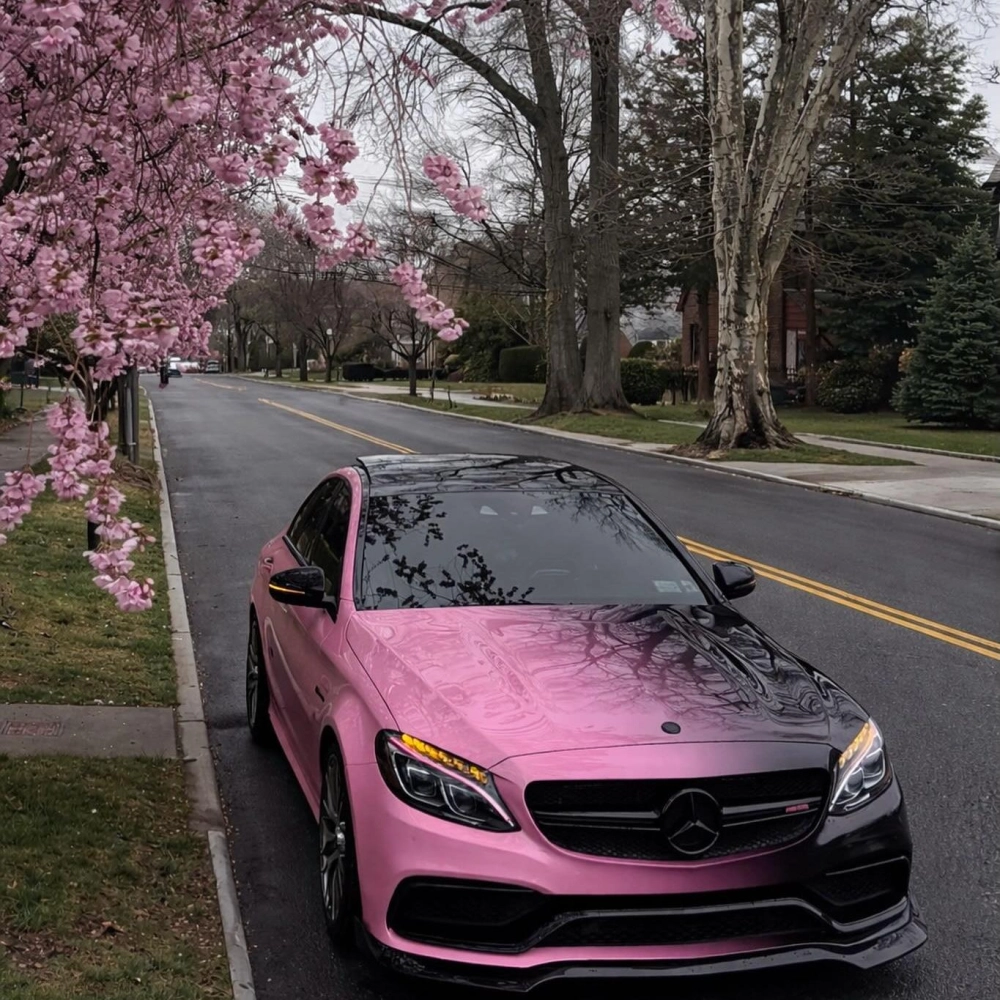
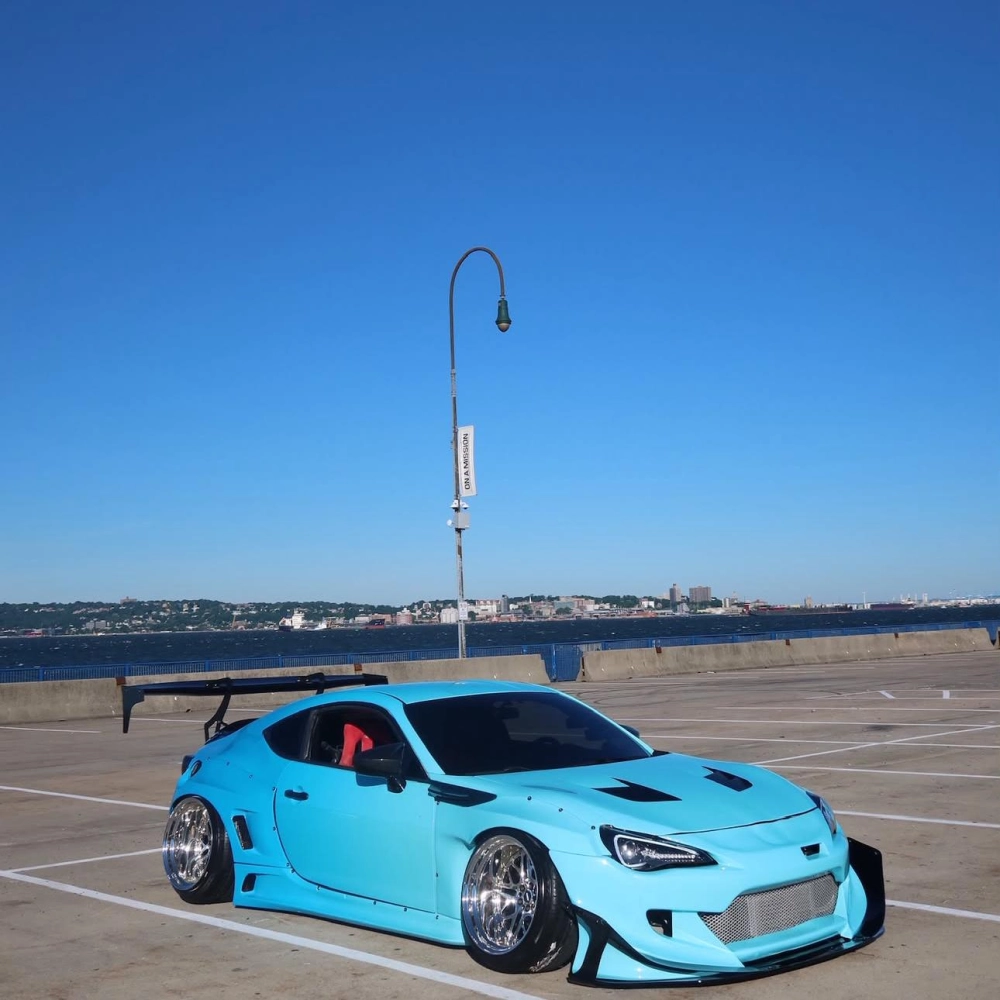
A Gradient Custom Car Wrap blends two or more colors progressively across the vehicle.
Popular combinations include:
- Purple → Blue
- Pink → Purple
- Orange → Red
- Black → Red
- Blue → White
- Green → Black
Why Gradients Work Well on Cars
Vehicle surfaces are naturally three-dimensional. Light already changes across fenders, doors, and quarter panels, so a carefully positioned gradient can enhance those shapes.
For example, placing a darker tone around the rear quarter panel and transitioning toward a brighter front section can visually lengthen a coupe.
Vehicles That Suit Gradient Wraps
Gradient designs work particularly well on:
Tesla Model 3 / Model Y — Smooth panels provide large uninterrupted areas for transitions.
Porsche 911 — Curved bodywork can make multi-tone transitions more dynamic.
BMW M3 / M4 — Aggressive body lines work well with stronger color contrasts.
Lamborghini Huracán — Low proportions can make horizontal gradients especially dramatic.
Design Tip
Avoid placing the most important color transition directly on a door seam. A slightly different alignment during installation can make the transition appear interrupted.
2. Marble Custom Car Wrap
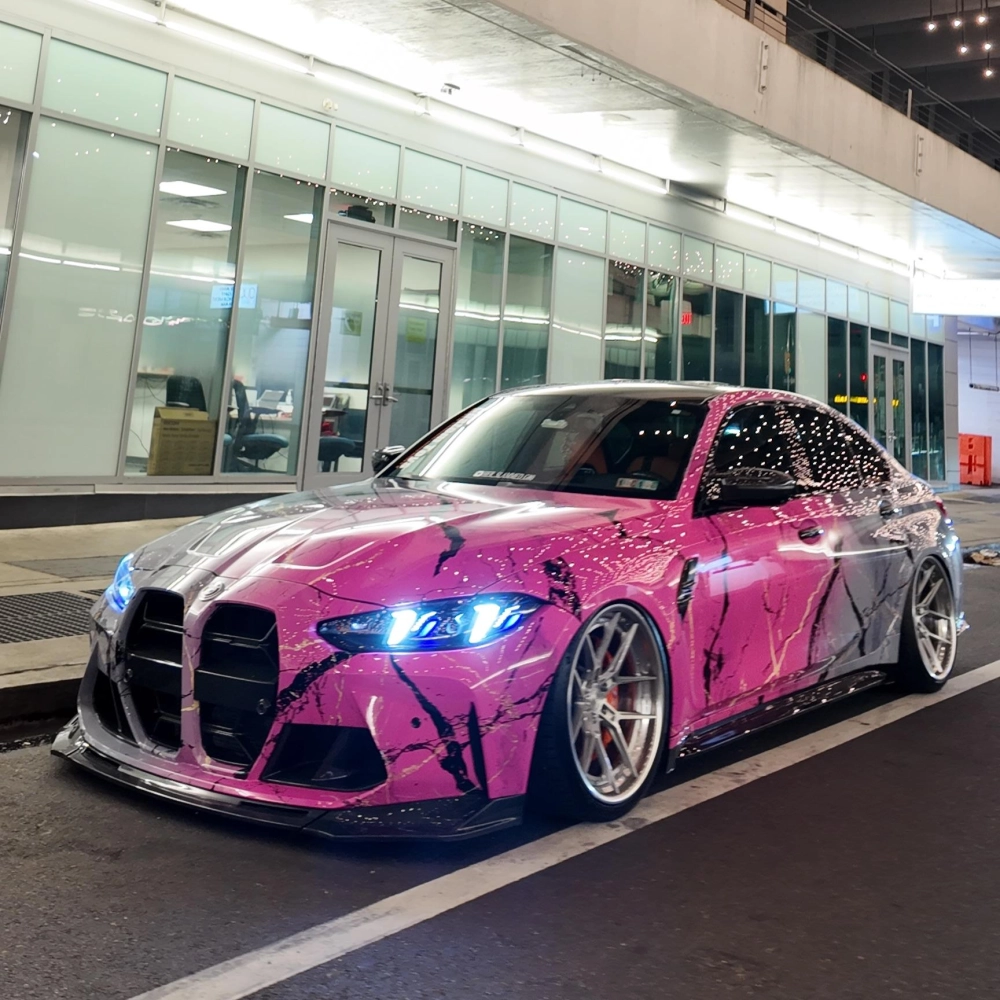
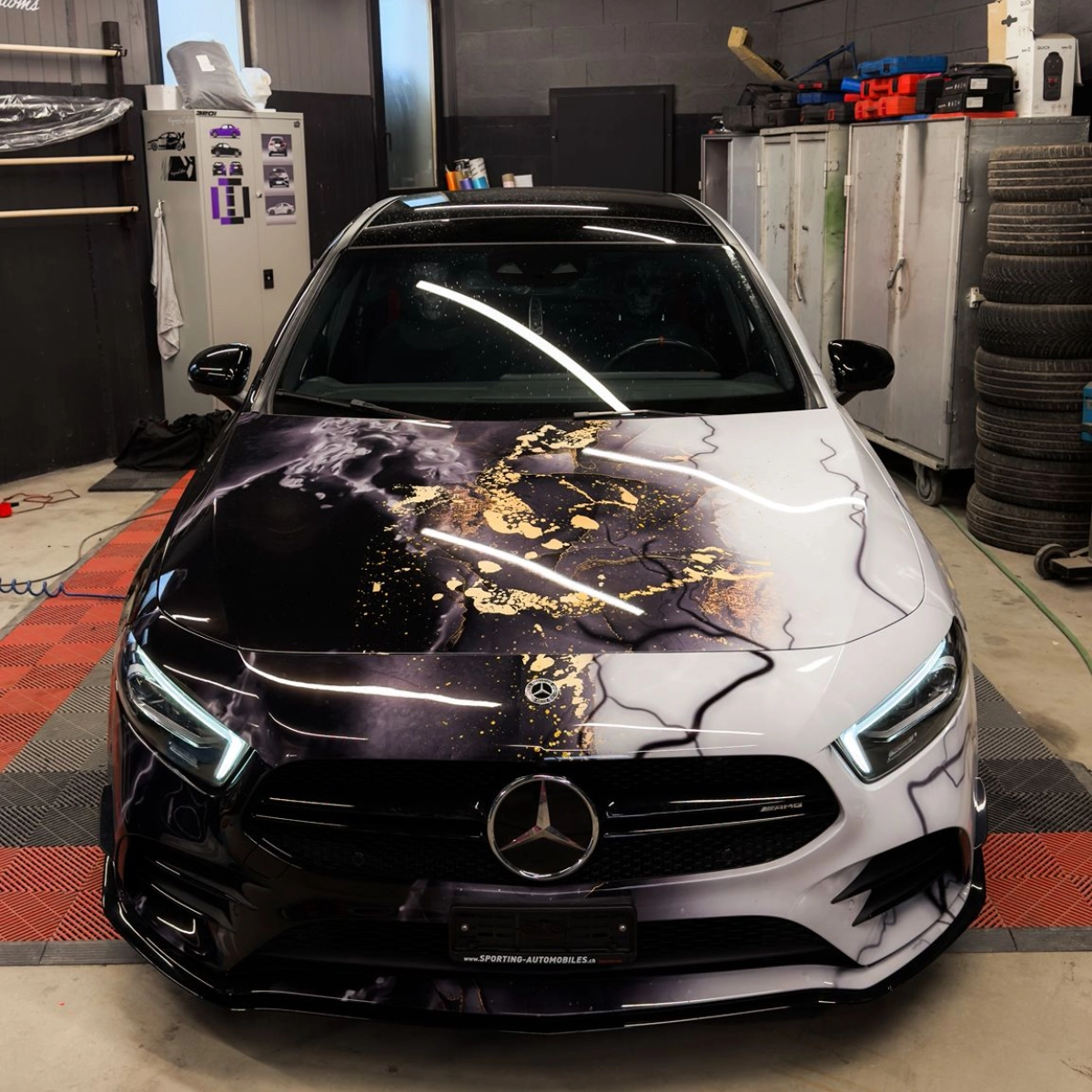
A Marble Custom Car Wrap recreates natural stone-inspired veins and textures across the vehicle.
Common styles include:
- White marble with grey veins
- Black marble with gold veins
- Black-and-white marble
- Blue marble
- Purple marble
- Rose-gold marble
Marble is particularly interesting because it allows the vehicle to look highly customised without relying on characters, logos, or large text.
Best Vehicles
Marble designs often suit vehicles with broad panels, including:
- Mercedes-Benz G-Class
- Range Rover
- Porsche Cayenne
- Tesla Model X
- BMW X5
Professional Design Tip
Avoid simply repeating the same marble texture across every panel.
Natural stone contains irregular patterns. Introducing controlled variation makes the printed result appear more organic and less like repeating wallpaper.
3. Anime & Itasha Custom Car Wrap
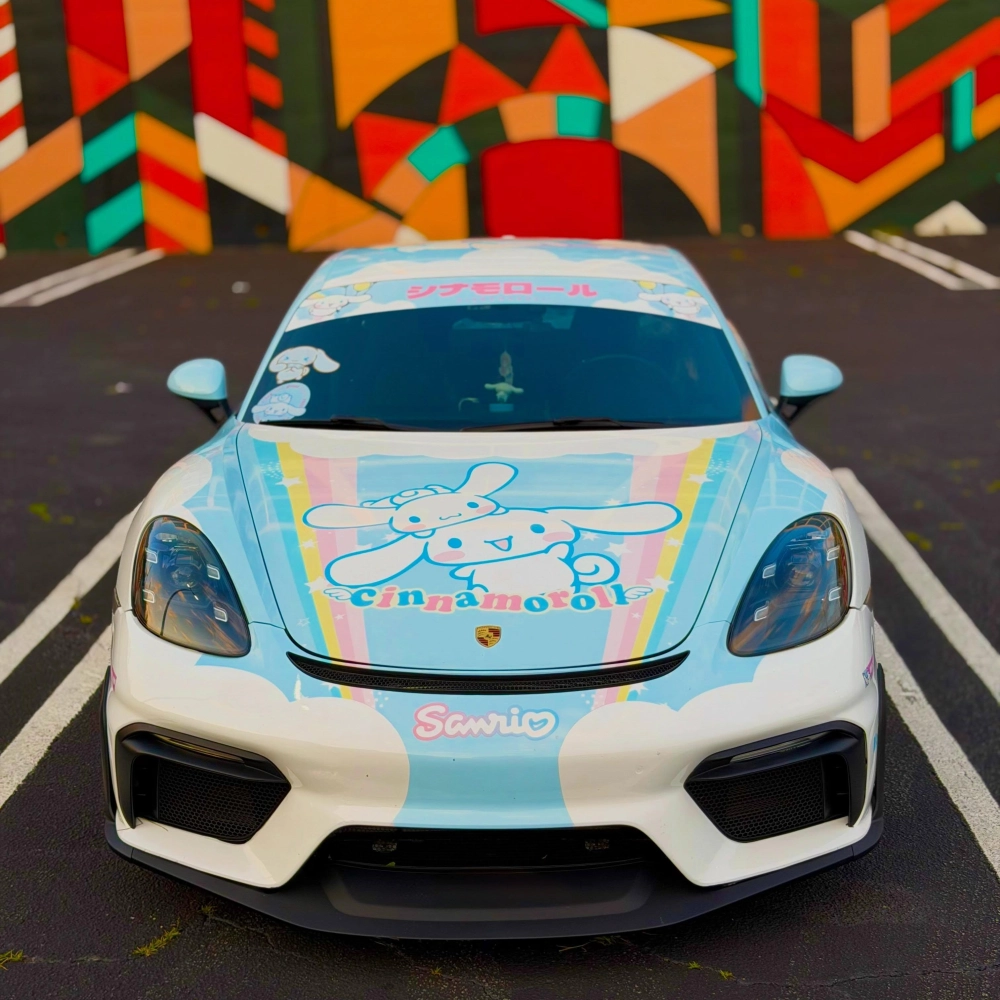
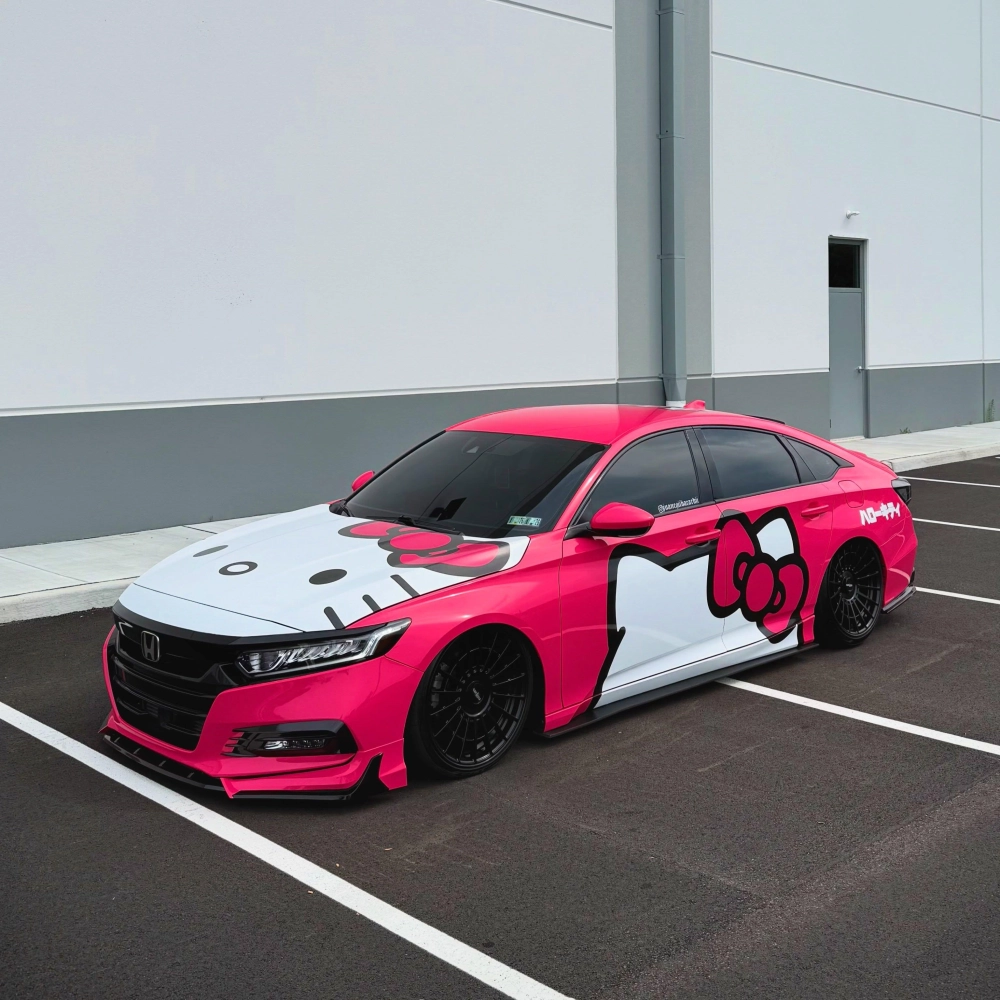
An Anime & Itasha Custom Car Wrap uses anime, manga, gaming, VTuber, or related Japanese pop-culture artwork as part of the vehicle design.
Itasha designs can range from small character graphics to extremely elaborate full-body compositions.
Common elements include:
- Large character artwork
- Manga panels
- Japanese typography
- Character-inspired color palettes
- Speed lines
- Graphic patterns
- Game artwork
- Custom illustrations
Competitor content from RAXTiFY similarly identifies artwork quality, panel placement, print clarity, installation skill, and long-term maintenance as important considerations for anime wraps.
The Biggest Itasha Design Mistake
One of the easiest mistakes is positioning a character’s face over:
- Door handles
- Door gaps
- Wheel arches
- Deep body recesses
The artwork may look perfect on the computer but become visually distorted after installation.
A better approach is to place the character’s face on the largest relatively flat section and allow secondary graphics, hair, effects, or background elements to extend into complex areas.
Vehicles That Work Well
Popular platforms include:
- Nissan GT-R
- Toyota GR86
- Subaru BRZ
- Honda Civic
- Toyota Supra
- Mazda MX-5
- BMW M4
These cars combine strong enthusiast communities with body shapes that provide useful areas for large-format graphics.
Important Copyright Note
If you are using copyrighted anime characters, game artwork, logos, or other intellectual property—particularly for commercial purposes—make sure you have the appropriate rights or permission to reproduce the artwork.
For a truly distinctive build, commissioned original artwork can be a better solution.
4. Camo Custom Car Wrap
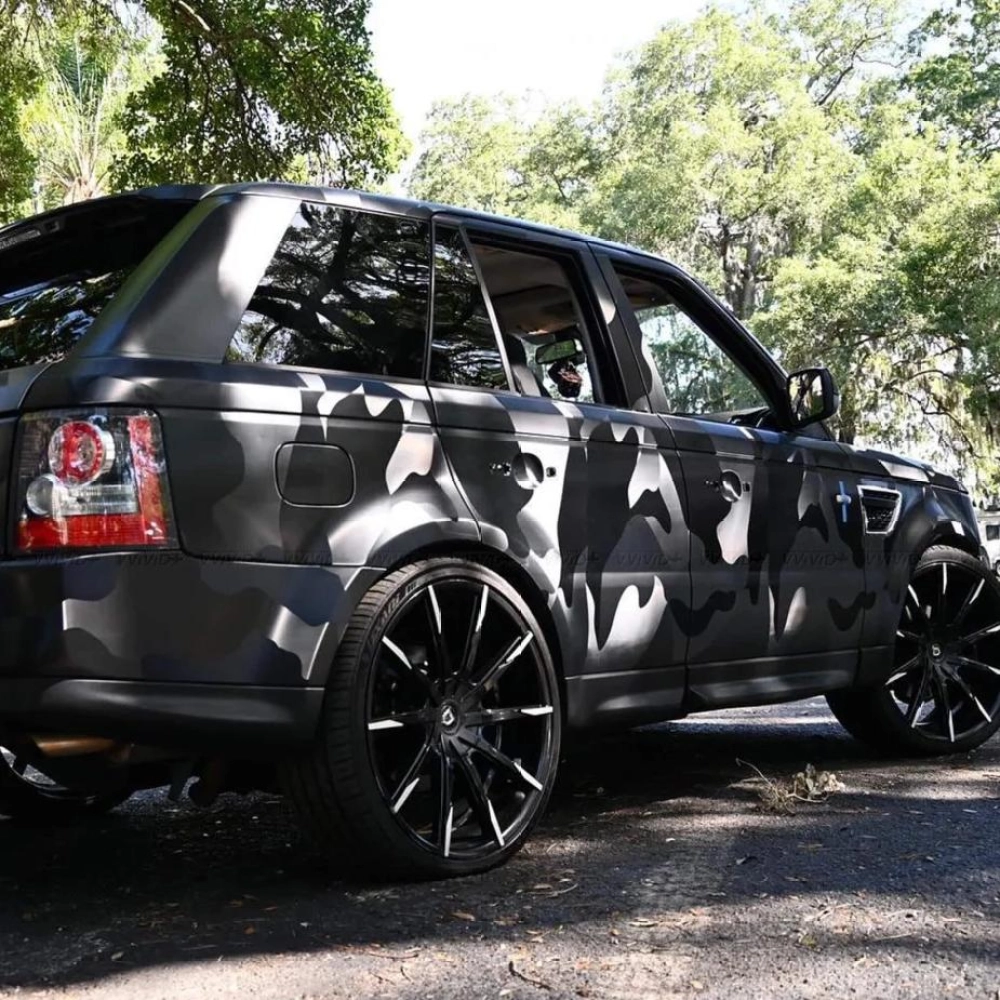
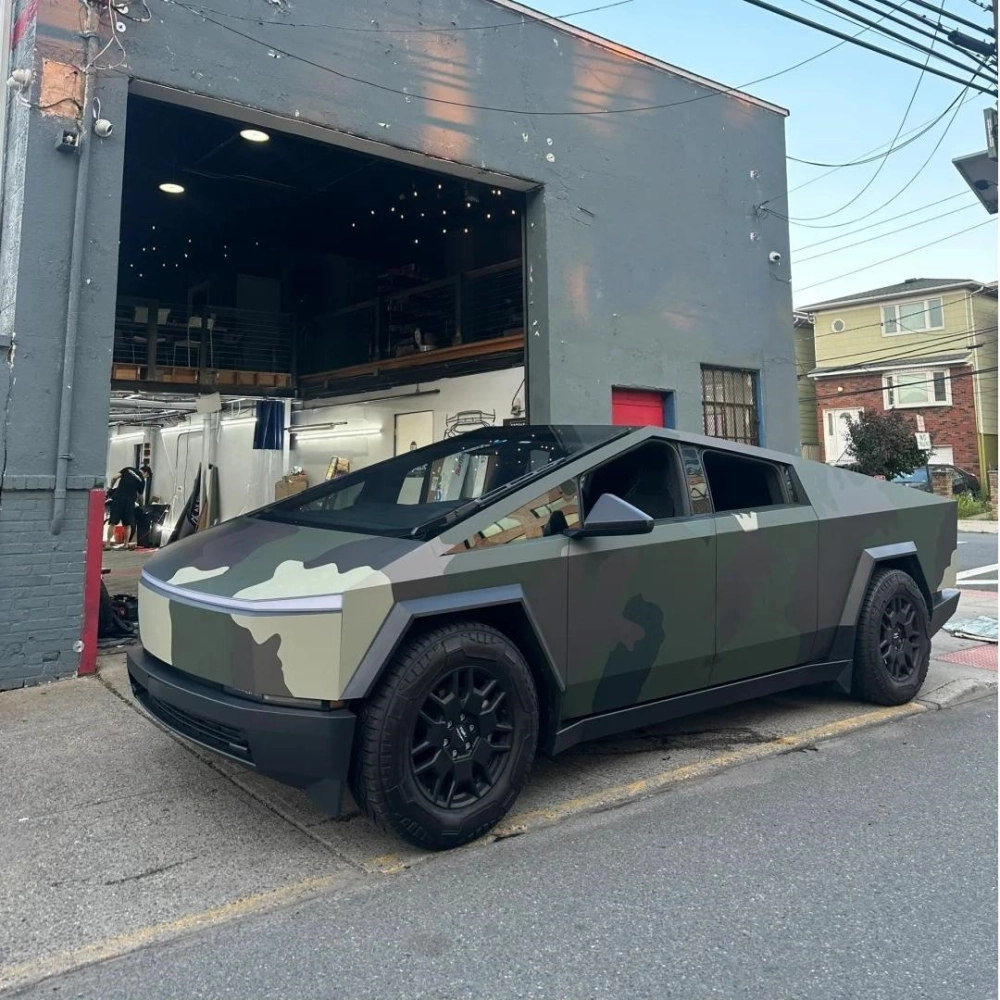
A Camo Custom Car Wrap uses overlapping shapes, colors, and textures inspired by camouflage patterns.
Modern automotive camo is not limited to military green.
Popular variations include:
- Urban Camo
- Black Camo
- Snow Camo
- Desert Camo
- Digital Camo
- Red Camo
- Blue Camo
- Purple Camo
Why Camo Works Particularly Well on Larger Vehicles
Camouflage patterns are scalable.
Large SUVs and trucks provide enough surface area for oversized patterns without making the design feel overcrowded.
Strong candidates include:
- Ford F-150
- RAM 1500
- Jeep Wrangler
- Toyota Tacoma
- Ford Bronco
- Mercedes G-Class
- Tesla Cybertruck
Design Tip
Pattern scale matters.
Very small camouflage elements can become visually noisy across a large pickup. Enlarging the shapes often produces a cleaner appearance when viewed from normal road distance.
5. Personalised Custom Car Wraps
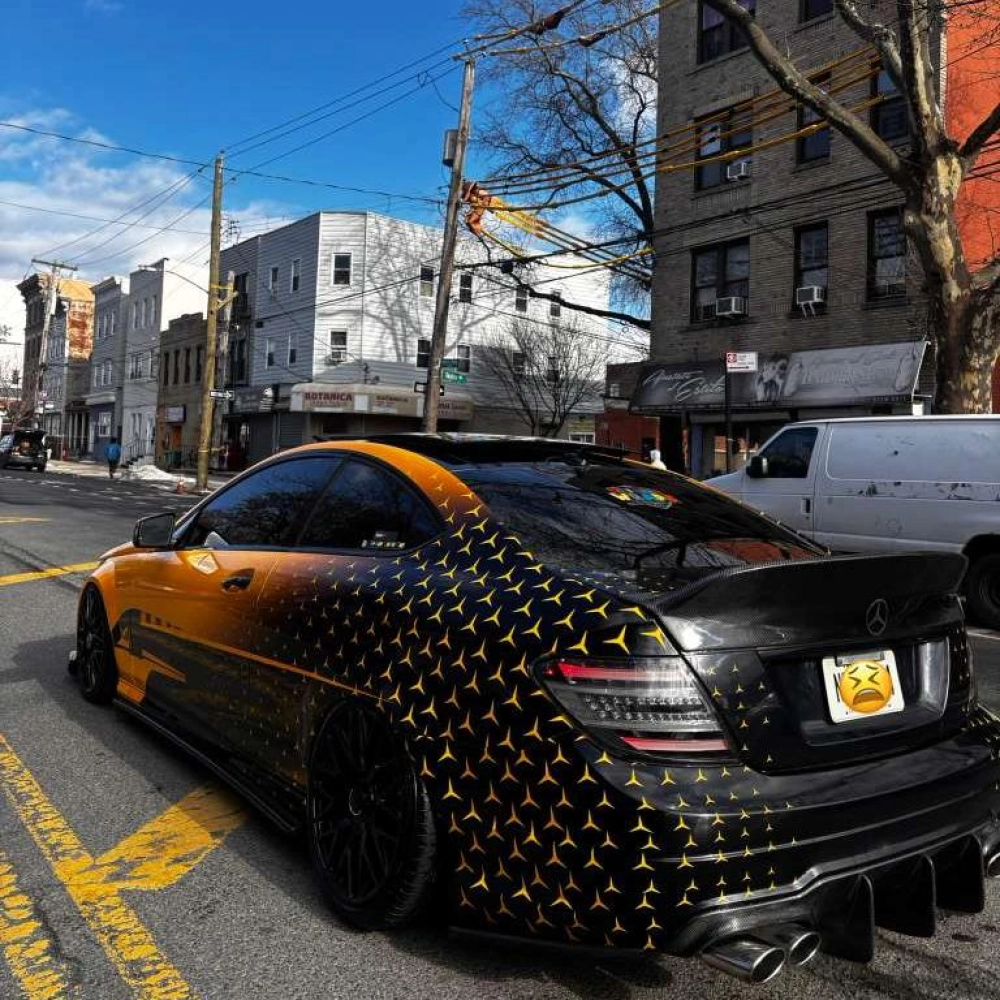
Personalised Custom Car Wraps offer the most creative freedom because the design does not need to belong to a predefined category.
A personalised design could combine:
- Your favorite colors
- Original illustrations
- Names
- Numbers
- Geometric patterns
- Abstract artwork
- Brand graphics
- Personal logos
- Photography
- Multiple wrap styles
For example, you could combine a black-to-purple gradient with geometric graphics and a personalised number on the rear quarter panel.
Or you could use a minimalist white base with a single custom illustration running across the doors.
Why Personalised Wraps Are Different
Color-change vinyl asks:
“Which color do you want?”
A personalised wrap asks:
“What do you want your car to become?”
That distinction is important.
A fully personalised wrap is less constrained by an existing vinyl catalog and more dependent on good graphic design.
6. Racing Custom Wrap
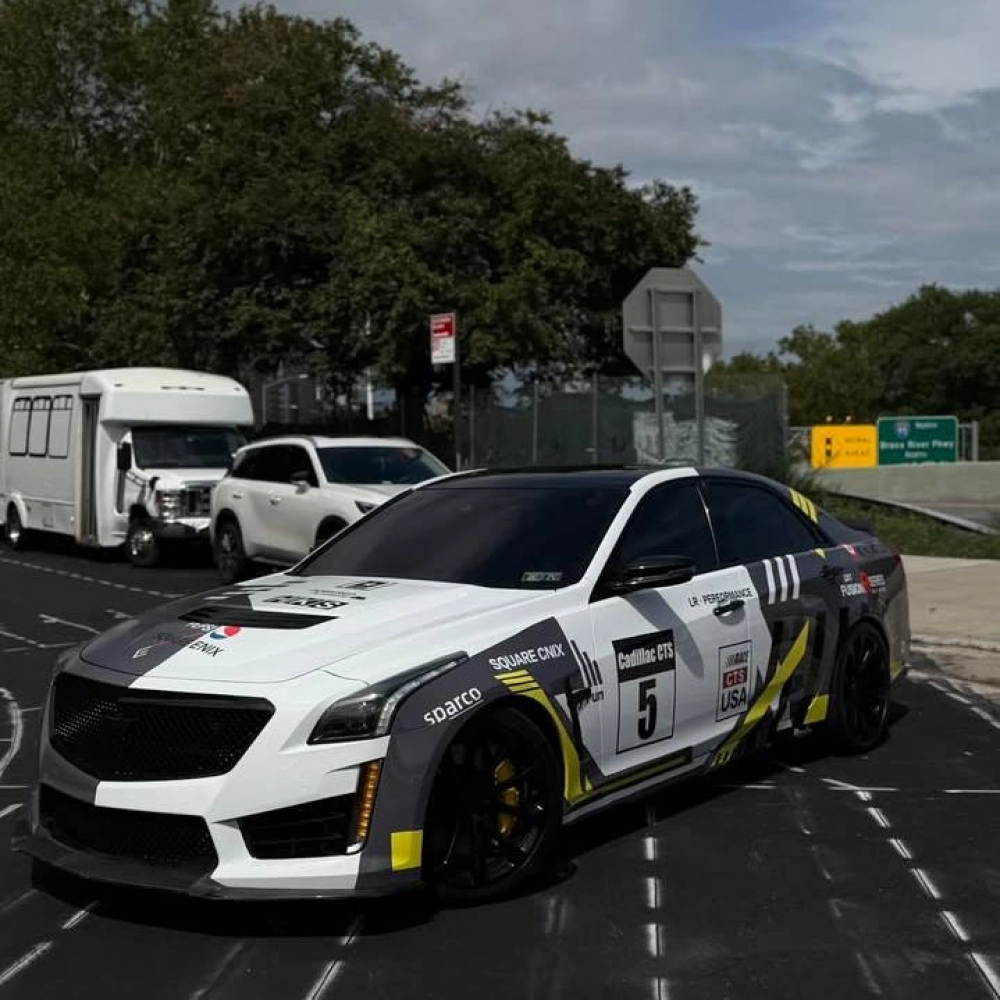
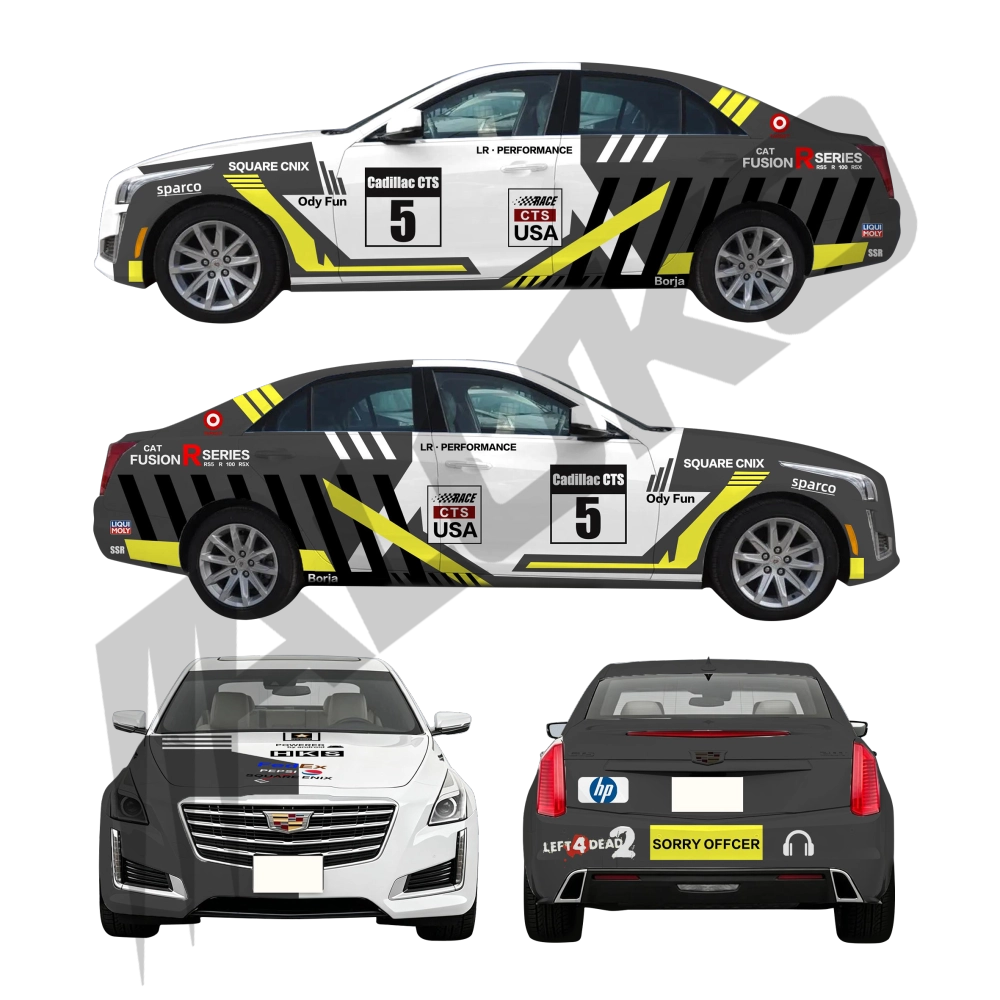
A Racing Custom Wrap takes inspiration from motorsport liveries.
Typical elements include:
- Racing stripes
- Competition numbers
- Sponsor-style graphics
- Checker patterns
- Angular graphics
- Contrasting panels
- Motorsport typography
- Retro racing themes
Modern vs. Retro Racing Designs
A modern racing wrap may use sharp geometric shapes, large numbers, and high-contrast colors.
A retro racing wrap might draw inspiration from classic endurance racing and touring cars with simpler stripes and period-style typography.
Cars That Suit Racing Wraps
Strong candidates include:
- Porsche 911
- Ford Mustang
- Chevrolet Corvette
- BMW M2
- BMW M3
- Toyota Supra
- Nissan Z
- Dodge Challenger
Professional Tip
Follow the body’s visual direction.
If the car has aggressive forward-moving lines, graphics angled in the same direction tend to reinforce a sense of speed. Graphics running against the vehicle’s natural lines can make the design appear visually disconnected.
Which Custom Car Wrap Style Should You Choose?
| Style | Visual Character | Particularly Suitable For | Design Complexity |
|---|---|---|---|
| Gradient | Smooth, modern | EVs, sports cars, sedans | Medium |
| Marble | Luxury, artistic | Luxury cars, SUVs | Medium |
| Anime & Itasha | Expressive, detailed | JDM cars, coupes, show cars | High |
| Camo | Aggressive, rugged | Trucks, SUVs, off-road vehicles | Medium |
| Personalised | Completely flexible | Almost any vehicle | Medium–High |
| Racing | Motorsport-inspired | Sports and performance cars | Medium–High |
There is no universal “best” style. The strongest design is usually the one that matches both the vehicle’s geometry and the owner’s intended visual identity.
Custom Printed Wrap vs. Standard Color-Change Vinyl
These products solve different design problems.
A standard color-change film is manufactured in a predefined color and finish. Premium products such as Avery Dennison Supreme Wrapping Film, for example, are engineered for vehicle wrapping and conformability, with the manufacturer listing a broad range of finishes and colors.
A printed custom wrap instead starts with digital artwork.
Professional printable automotive films can also be engineered specifically for complex vehicle surfaces. Avery Dennison, for example, describes its MPI 1105 wrapping series as offering 3D conformability, printability, air-egress/repositionable adhesive technology, and up to six years of maximum outdoor durability for the specified printed system. Avery also recommends compatible overlaminates to protect the print and enhance durability.
Therefore, the decision is primarily about design intent:
Choose standard color-change vinyl when the goal is a consistent solid, metallic, satin, matte, gloss, chrome, or color-shift finish.
Choose custom printed vinyl when the vehicle needs graphics, artwork, patterns, gradients, characters, logos, or a design that cannot be created using a single manufactured color.
Pros and Cons of Designing Your Own Car Wrap
Advantages
Almost Unlimited Design Freedom
A custom wrap is not limited to factory paint colors or existing vinyl colors.
Vehicle-Specific Design
Artwork can be adjusted around the actual geometry of your vehicle.
Easier to Create a One-Off Appearance
Original artwork, gradients, graphics, and personal details can make the finished vehicle difficult to replicate.
Reversible Compared With Permanent Custom Paint
Automotive wrap film is designed as a removable surface treatment when the correct film, installation, maintenance, and removal procedures are followed. For example, 3M states that its Wrap Film can be removed and recommends professional removal.
Disadvantages
More Design Work
Custom printing introduces artwork preparation, mockup review, color management, and print production.
Poor Artwork Becomes More Obvious at Vehicle Scale
Low-resolution graphics that appear acceptable on a computer monitor may look pixelated when enlarged across a door or hood.
Installation Still Requires Skill
Custom artwork does not eliminate installation complexity. 3M specifically recommends trained and experienced installers to help achieve appropriate adhesion, appearance, and durability.
Printed Wraps Still Require Maintenance
A wrap is not maintenance-free. Incorrect or infrequent maintenance can accelerate degradation. Avery Dennison’s vehicle-wrap maintenance guidance specifically warns that improper maintenance can cause graphics to degrade prematurely.
Expert Design Principles: What Makes a Custom Wrap Look Professional?
The biggest difference between an amateur-looking design and a professional one is often visual hierarchy.
A car should not become a canvas where every available space needs to be filled.
1. Design for Viewing Distance
A wrap may be viewed from 20–50 feet away while the vehicle is moving.
Large shapes and clear contrast generally survive that viewing environment better than tiny details.
2. Respect Panel Geometry
Important artwork should not depend on perfect alignment across multiple movable panels.
3. Create a Focal Point
Choose what viewers should notice first.
For an Itasha wrap, that may be the character.
For a racing wrap, it may be the race number.
For a personalised business vehicle, it may be the brand identity.
Everything does not need equal visual emphasis.
4. Check Both Sides
Simply mirroring artwork is not always the best solution.
Text will need correct orientation, characters may need repositioning, and asymmetric body features can change the composition.
5. Design Beyond the Visible Edge
Print production requires sufficient bleed so installers have material available around panel boundaries.
This is why the final print file should be prepared for installation rather than exported directly from a basic visual mockup.
What Vehicles Are Best for Custom Car Wrap Designs?
Almost any vehicle can be customised, but different shapes favor different designs.
Sports Cars: Gradient, racing, anime, geometric
Sedans: Gradient, marble, personalised, racing
SUVs: Marble, camouflage, personalised graphics
Pickup Trucks: Camo, racing, branded graphics
EVs: Futuristic gradients, geometric patterns, minimal graphics
JDM Cars: Anime/Itasha, racing liveries, cyberpunk, personalised graphics
Large, relatively smooth panels provide more freedom for complex artwork, while heavily sculpted vehicles require more careful composition.
How Long Can a Custom Car Wrap Last?
There is no responsible single lifespan number for every custom wrap.
Actual service life depends on the film system, ink, laminate, installation, vehicle orientation, climate, UV exposure, cleaning habits, storage, and how heavily the vehicle is used.
This distinction matters because even major manufacturers specify different durability or warranty conditions.
For example, 3M states that exposure angle affects its wrap-film warranty and lists up to eight years for vertical exposure and up to three years for horizontal exposure in its consumer support information.
Avery Dennison lists up to six years maximum outdoor durability for its MPI 1105 printed wrapping series under its specified conditions.
These figures should not be interpreted as universal guarantees for every custom printed wrap. Always check the specification of the exact film, ink, laminate, installation, and climate involved.
How to Maintain a Custom Printed Car Wrap
After investing time into your design, maintenance matters.
3M recommends cleaning contaminants such as fuel spills promptly, storing wrapped vehicles indoors or in shade when possible, avoiding abrasive cleaning, and hand washing whenever practical. It also notes that brush car washes can dull or scratch film and potentially lift edges.
A sensible routine therefore includes:
- Remove bird droppings, bugs, fuel, and tree sap promptly.
- Use wrap-compatible cleaners.
- Avoid abrasive brushes.
- Hand wash where practical.
- Keep the vehicle shaded or garaged when possible.
- Inspect edges periodically.
- Ask the installer about the care requirements of the specific printed film and laminate.
Maintenance becomes particularly important on horizontal areas such as hoods and roofs because they typically receive more direct environmental exposure.
FAQ About Custom Car Wrap Design
Can I design my own car wrap online?
Yes. You can develop your colors, artwork, graphics, or concept digitally and have it adapted to a vehicle-specific template before printing.
Can I upload my own artwork?
Yes, provided the artwork has sufficient quality and you have the right to reproduce it. High-resolution or vector artwork is generally preferable for large-format printing.
Can I create any color combination?
Digital printing allows significantly more freedom than choosing a single manufactured vinyl color. Gradients, multi-color graphics, camouflage, marble, and complex patterns are all possible.
Can I make an anime car wrap?
Yes. Anime and Itasha wraps can range from small accent graphics to complete vehicle designs. Pay special attention to character placement around doors, wheel arches, handles, and body curves.
Can I design a racing livery?
Yes. Racing-style wraps can combine stripes, numbers, geometric shapes, typography, and custom graphics to create either modern or retro motorsport-inspired designs.
Can I create a camouflage wrap in custom colors?
Yes. Camo patterns can use virtually any color palette rather than traditional military colors.
Does a custom wrap protect the original paint?
Vinyl creates a physical layer over the covered surface and can reduce direct exposure to some everyday contaminants and light abrasion. However, standard vinyl wrap should not be marketed as equivalent to paint protection film (PPF), which is specifically engineered for impact and paint-protection applications.
Should I install a complex custom wrap myself?
Simple panels may be approachable for experienced DIY users, but complex full-vehicle graphics require accurate alignment and installation around curves and recesses. 3M recommends trained and experienced installers for its vehicle wraps.
Design Your Own Car Wrap with ALUKOVINYL
Your vehicle does not have to be limited to someone else’s color palette.
With ALUKOVINYL custom wraps, you can develop a design around your vehicle, your colors, and your ideas—from subtle gradients to complete rolling artwork.
Explore possibilities including:
Gradient Custom Car Wraps
Create smooth multi-color transitions designed around the shape of your vehicle.
Marble Custom Car Wrap
Build a luxury-inspired surface using custom stone textures and color combinations.
Anime & Itasha Custom Car Wrap
Turn original or appropriately licensed character artwork into a vehicle-specific composition.
Camo Custom Car Wrap
Choose the pattern scale, colors, and visual intensity rather than relying on standard camouflage.
Personalised Custom Car Wraps
Combine your own artwork, graphics, colors, numbers, patterns, or branding.
Racing Custom Wrap
Create a modern or retro motorsport-inspired livery built specifically around your vehicle.
Your Idea → Digital Mockup → Approval → Production
A strong custom wrap begins before the vinyl reaches the car.
Start with the exact vehicle, define the visual direction, create a vehicle-specific mockup, review the artwork carefully, and approve the final design before production.
Ready to design your own car wrap online?
Explore ALUKOVINYL custom car wrap design options and turn your concept into a print-ready vehicle wrap.
Whether your idea is a gradient, marble pattern, Itasha build, camouflage design, personalised graphic, or racing livery, the goal is the same:
Create a wrap that looks like it was designed for your car—not simply printed and placed on it.