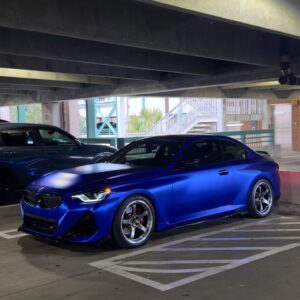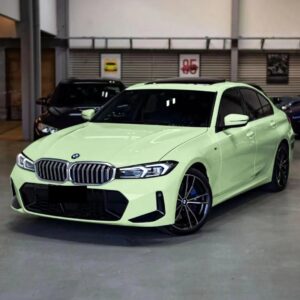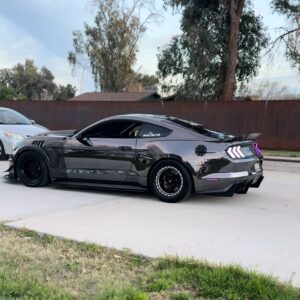

Automotive styling is moving beyond simple color changes. Drivers now want finishes that communicate performance, individuality, and craftsmanship at the same time. That is why green carbon wrap has become such an exciting option for enthusiasts, installers, and everyday owners who want a distinctive upgrade without the cost or permanence of repainting. By combining the motorsport-inspired texture of carbon fiber with a bold green tone, this finish gives a vehicle a high-tech appearance that feels aggressive, modern, and premium.
The growth of vehicle wrapping also supports this trend. The global automotive wrap films market continues to expand as more drivers choose reversible customization, paint protection, and premium finishes over traditional paint changes. At the same time, the carbon fiber market is growing because lightweight, high-strength materials remain closely associated with aerospace, racing, performance engineering, and advanced design. A carbon-look wrap captures that performance language visually, making it accessible for hoods, roofs, mirrors, spoilers, interior trims, and full custom projects.
What Makes Green Carbon Wrap Different?
A standard gloss green wrap changes color. A carbon fiber finish changes character. Green carbon wrap adds depth, texture, and directional reflection, creating a layered appearance that looks more technical than a flat color film. On dark vehicles, it creates a sharp contrast. On white, silver, or gray cars, it becomes a strong performance accent. On black vehicles, green carbon elements can transform the car from understated to track-inspired without overwhelming the original design.
For owners researching a car vinyl wrap, this finish is especially useful because it works in both subtle and bold applications. A full green forged carbon exterior makes a show-car statement, while smaller applications such as a hood, roof, trunk, mirror caps, dashboard panels, center console, or door trims can add a custom touch at a lower cost.
Why ALUKOVINYL Green Forged Carbon Wrap Stands Out
ALUKOVINYL’s Gloss Green Forged Carbon Fiber Car Vinyl Wrap PET is designed for buyers who want a premium forged carbon pattern rather than a traditional woven carbon look. Forged carbon has a fragmented, marble-like structure that feels more exotic and contemporary. It is often associated with supercars, concept cars, and high-end performance parts, making it ideal for drivers who want something more distinctive than ordinary carbon fiber styling.
The product also provides practical installation advantages. ALUKO lists a high-performance calendered film construction, a 3.7–4.1 mil film thickness, a 1.6 mil adhesive thickness, and a low-tack solvent acrylic adhesive. These details matter because installers need a film that can be positioned, adjusted, and applied cleanly across curved panels. Compared with a cheap decorative film, a purpose-built carbon fiber wrap should offer better surface definition, more predictable adhesion, and stronger visual consistency after squeegee pressure and post-heating.
ALUKO also publishes useful adhesion data, including release force of 0.13 N/25mm, initial tack of 903 g/25mm, peel strength of 4.5 N/25mm, and holding power of 75.09 hours. The wrap is listed for dry application and removable up to 3 years. For customers, this transparency is a major advantage because it helps set realistic expectations before purchase. The main practical limitation is that textured and glossy specialty films require careful surface preparation; dust, overstretching, or poor edge sealing can affect the final appearance.
Key Benefits for Vehicle Owners
| Benefit | How Green Carbon Wrap Helps | Why ALUKO Is a Strong Option |
|---|---|---|
| Performance Aesthetic | Creates a motorsport-inspired forged carbon look with a bold green personality. | Gloss green forged pattern delivers visual depth and a premium custom effect. |
| Paint Protection | Adds a physical film layer over factory paint against light scratches, dust, and daily wear. | Suitable for smooth, hard, non-porous automotive surfaces when installed correctly. |
| Reversible Customization | Allows color and texture changes without permanent repainting. | Listed removability up to 3 years supports future style changes. |
| Interior and Exterior Use | Works on hoods, roofs, mirrors, trim, dashboards, consoles, and accent panels. | ALUKO’s carbon wrap category offers multiple carbon-style finishes for different projects. |
| Value | Achieves a high-end carbon appearance without replacing real body panels. | Strong balance of specialty design, published specifications, and accessible pricing. |
First-Hand Installation and Durability Validation Process
Before wrapping a full vehicle, a smart installer should validate the film on a test panel. Start with a 60 cm x 60 cm hood or fender section. Wash the panel thoroughly, clay the surface, remove tar or iron contamination if needed, and wipe with 70% isopropyl alcohol. The panel must be fully dry, smooth, and free of wax or ceramic residue.
Next, cut the green forged carbon film with at least 5 cm of extra material on each side. Place the film lightly on the panel and check the pattern direction under natural light. Because forged carbon has a visible surface effect, orientation should be planned before final pressure is applied. Use dry installation, anchor the center, and squeegee outward with overlapping strokes. Apply mild heat only where necessary to relax the film over curves. Avoid excessive stretching, especially on glossy textured areas, because overstretching may reduce pattern clarity or create uneven reflection.
After installation, post-heat edges, corners, and recessed areas according to professional wrap practice. Let the test panel rest indoors for 24 hours. Then inspect it after 24 hours, 7 days, 14 days, and 30 days. Record edge lift, bubble formation, gloss stability, adhesive movement, scratch visibility, cleaning response, and texture consistency. A successful result should show stable edges, no tunnel bubbles, no major pattern distortion, and no adhesive residue during a controlled heated removal test on a small sample area.
Testing Standards and Parameters to Consider
When comparing a forged carbon fiber wrap, buyers should look for measurable performance indicators. Film thickness can be evaluated using ASTM D6988 guidance for plastic film thickness. Surface hardness or indentation behavior can be referenced through ASTM D2240 or ISO 48-4 durometer methods where applicable. Weathering resistance can be studied with ASTM D4329 or ISO 4892-3 fluorescent UV exposure methods. For clear PET or protective layers, ASTM D1003 can help evaluate haze and luminous transmittance, which are important for gloss clarity and yellowing control.
In practical terms, these standards answer the questions buyers actually care about: is the film consistently thick, does it resist handling marks, will sunlight accelerate fading or yellowing, and will the glossy forged carbon surface stay visually clean over time? ALUKO’s published specifications give customers a useful starting point for evaluating these factors.
Final Takeaway
A green carbon wrap is more than a color change. It is a performance-inspired design upgrade that adds depth, texture, protection, and individuality to a vehicle. ALUKOVINYL’s Gloss Green Forged Carbon Fiber Car Vinyl Wrap PET stands out because it combines a bold forged carbon look with practical installation data, published adhesive parameters, and reversible customization. For drivers who want their vehicle to look sharper, sportier, and more unique, green carbon wrap is one of the most compelling styling choices available today.