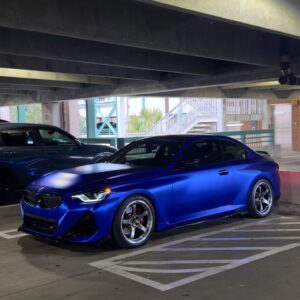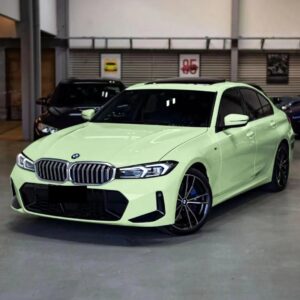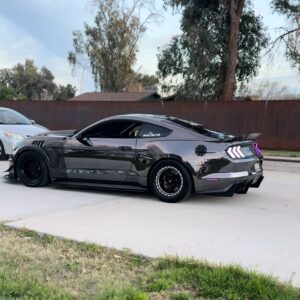

Blue has always carried a special place in automotive design. It feels calm, technical, youthful, and performance-oriented at the same time. In 2025, that appeal is still measurable: Axalta’s latest Global Automotive Color Popularity Report shows blue holding a 6% global share and remaining the strongest chromatic automotive color. For car owners, installers, and custom shops, this makes Zandvoort Blue more than a passing style. It is a modern color direction with real market relevance.
Choosing an automotive wrap is also becoming a more practical alternative to repainting. According to Grand View Research, the global automotive wrap films market was valued at USD 3.54 billion in 2024 and is projected to reach USD 15.32 billion by 2033. This growth reflects rising demand for vehicle customization, paint protection, and reversible styling. A Zandvoort Blue finish fits perfectly into this trend because it offers bold personality while staying clean, refined, and daily-drivable.
Why Zandvoort Blue Works for Modern Vehicle Projects
Zandvoort Blue is a bright yet controlled shade. It has more energy than navy, more depth than sky blue, and a more premium appearance than basic pastel blue. On compact performance cars, it highlights aggressive lines and wide fenders. On EVs, it creates a futuristic and clean identity. On sedans, SUVs, coupes, and commercial display vehicles, it adds instant recognition without looking chaotic.
Color psychology also works in its favor. Blue is often associated with trust, clarity, technology, and freshness. For a personal project, that means the car feels expressive but not extreme. For a business or fleet project, it can communicate professionalism while still standing out from ordinary black, white, gray, or silver vehicles.
ALUKOVINYL Gloss Zandvoort Blue: Product Benefits
ALUKOVINYL’s Gloss Zandvoort Blue Car Vinyl Wrap PET is designed for full vehicle wraps and detailed styling work, including bumpers, hoods, roofs, mirrors, decals, stripes, accents, trim, electronics, watercraft, and commercial graphics. For buyers browsing a blue vehicle wrap, this product stands out because it combines a vivid color with a high-gloss PET-backed surface that is promoted as having no orange peel, helping the final result look closer to a refined paint finish.
ALUKO lists several useful technical details. The wrap has an expected durability of 5–7 years, a film thickness of 3.7–4.1 mil, adhesive thickness of 1.6 mil, high-performance calendered film construction, dry application, and a low-tack solvent acrylic adhesive. It also provides application temperature guidance from +15℃ to +40℃, pH-neutral aftercare, breaking strength above 200%, peel strength of 4.5 N/25mm, holding power of 75.09 hours, and removability up to 3 years.
These specifications give ALUKO a strong advantage for planning. Installers can estimate handling behavior, adhesion, removal expectations, and aftercare before beginning the project. The brand’s main strength is transparency: the product page shares film structure, adhesive style, tack, peel, holding power, aging tests, shelf life, and surface-care guidance. A practical limitation is that high-gloss light blue films require careful preparation. Dust, stretch marks, poor squeegee technique, or contamination can be more visible than on darker matte wraps.
Best Uses for a Zandvoort Blue Project
| Project Type | Why Zandvoort Blue Works | ALUKO Advantage |
|---|---|---|
| Full Car Wrap | Creates a complete transformation with a fresh, sporty, high-visibility finish. | Available in multiple roll sizes for full-body planning and panel replacement needs. |
| Performance Accent | Works well on hoods, roofs, mirror caps, spoilers, and trim details. | Gloss PET-backed finish helps accent panels look clean and paint-like. |
| Fleet or Business Vehicle | Blue communicates trust, clarity, and professionalism while improving recognition. | Consistent color styling supports branded vehicle projects and graphics. |
| DIY Test Panel | Allows beginners to test a bold color without wrapping the entire vehicle first. | Low-tack adhesive and dry application support controlled positioning. |
First-Hand Installation and Durability Validation Case
For a practical validation process, begin with a 60 cm x 60 cm hood or fender test panel. Wash the panel thoroughly, clay the surface, remove tar or iron contamination if needed, and wipe with 70% isopropyl alcohol. The surface must be clean, dry, smooth, and free of wax, ceramic coating, silicone dressing, or polishing oil. Confirm that the panel temperature is within ALUKO’s recommended +15℃ to +40℃ application range.
Cut the film with at least 5 cm of excess material on every side. Position the film lightly and check the gloss direction under natural and shop lighting. Anchor the center first, then squeegee outward with overlapping 45-degree strokes. Use firm but controlled pressure. Because a gloss light blue car wrap can show pressure marks more easily than dark colors, avoid dragging a hard squeegee across the surface without a clean felt edge.
For curved areas, use mild heat to relax the film rather than forcing aggressive stretch. Around edges, corners, and recesses, post-heat according to professional wrap practice and allow the panel to rest indoors for 24 hours. Inspect the test panel at 24 hours, 7 days, 14 days, and 30 days. Record edge lift, bubbles, gloss shift, color uniformity, adhesive movement, cleaning response, and any signs of whitening from tension. A successful result should show stable edges, no tunnel bubbles, consistent gloss, no adhesive residue during a controlled heated removal test, and no visible dulling after pH-neutral hand washing.
Testing Standards and Parameters Buyers Should Consider
When choosing a wrap film, buyers should evaluate more than color photos. Film thickness can be measured with recognized plastic film thickness methods such as ASTM D6988-style procedures. Hardness or indentation behavior can be assessed with durometer methods such as ASTM D2240 or ISO 48-4 where relevant to the material. For weathering, ISO 4892-3:2024 is useful because it addresses exposure of plastic specimens to fluorescent UV radiation, heat, and water to simulate outdoor weathering effects. For clear PET or protective layers, ASTM D1003 can be used to assess haze and luminous transmittance, which relate to clarity, gloss quality, and potential yellowing concerns.
In everyday buyer language, these tests ask simple questions: is the film thickness consistent, does the surface resist installation pressure, will sunlight accelerate fading, and will the clear gloss surface stay visually clean over time? ALUKO’s published thickness, adhesive, peel, holding-power, durability, and aging-test information gives project owners a useful baseline before ordering material.
Final Takeaway
A zandvoort blue wrap is a smart choice for drivers and installers who want a finish that feels sporty, youthful, clean, and premium. ALUKOVINYL’s Gloss Zandvoort Blue Car Vinyl Wrap PET offers strong visual impact, practical technical transparency, installation-friendly specifications, and reversible customization. For your next vehicle project, it delivers the confidence of blue with the excitement of a fresh, high-gloss transformation.