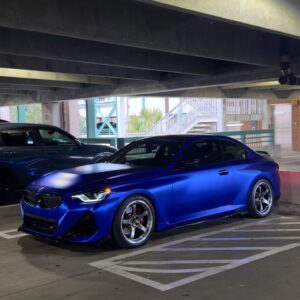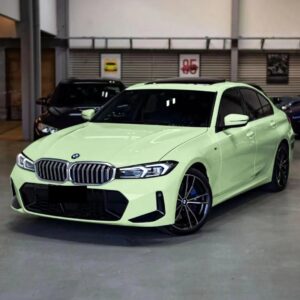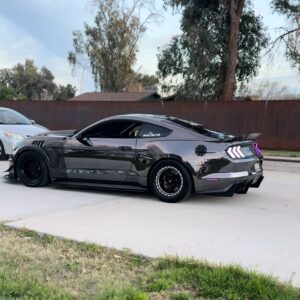
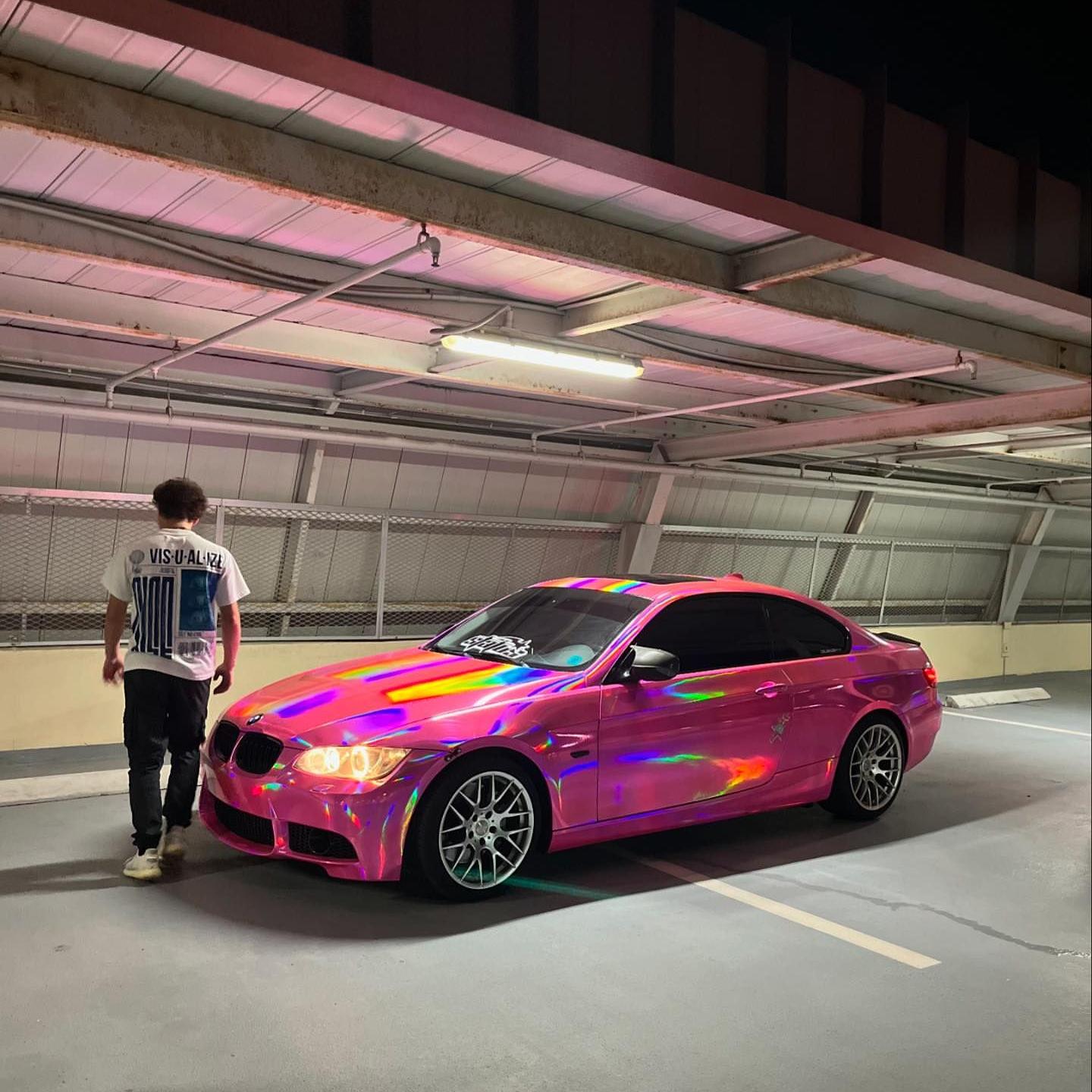
Few finishes capture attention as instantly as holographic color. Unlike ordinary paint or single-tone vinyl, a holographic surface changes as light, angle, and movement interact. One moment it may appear soft pink; seconds later it can reveal rainbow reflections, chrome brightness, or laser-like highlights. This optical transformation is why holographic color has become so influential in art, fashion, product design, and automotive customization.
For vehicles, the effect is even more dramatic because a car is not a flat canvas. Every curve, crease, fender, mirror, and bumper becomes part of the light show. A premium car wrap can turn a daily driver into a moving design object, giving owners a reversible way to explore color, reflection, and personality without committing to a permanent repaint.
Why Holographic Color Is Rising in Automotive Design
Automotive color trends are shifting toward individuality. While white, black, gray, and silver still dominate global production, recent color reports show that buyers are increasingly open to chromatic and expressive finishes. Axalta’s 2025 Global Automotive Color Popularity Report confirms that neutral colors remain the largest share of the market, yet it also highlights the growing role of more complex colors in modern vehicle design. This is important because holographic films sit beyond traditional color categories; they offer motion, depth, and multi-tone reflection in one surface.
The vehicle wrap market also supports this design shift. Grand View Research estimated the global automotive wrap films market at USD 3.54 billion in 2024 and projected it to reach USD 15.32 billion by 2033, with customization and paint protection among the main growth drivers. In simple terms, more drivers want their vehicles to look personal, premium, and visually memorable. Holographic finishes answer that demand better than almost any standard color.
The Design Power of Pink Holographic Effects
Pink has always carried strong emotional meaning in design. It can feel playful, luxurious, futuristic, romantic, bold, or rebellious depending on the finish. When combined with holographic chrome, pink becomes more dynamic. It is no longer just a color; it becomes an experience. The surface may shift between rose, magenta, silver, violet, gold, and rainbow tones depending on sunlight, streetlights, camera flash, or viewing angle.
This is why ALUKOVINYL’s holographic category is so useful for modern car styling. The brand’s holographic color options are designed for full-body transformations, two-tone accents, roof wraps, hoods, trunks, mirrors, and custom trim details. A holographic wrap can make a sports car look like a concept vehicle, give a compact car a fashion-forward identity, or turn a show build into a social-media centerpiece.
Why ALUKOVINYL Pink Holographic Chrome Wrap Stands Out
ALUKOVINYL’s Gloss Pink Holographic Chrome Car Vinyl Wrap is designed for drivers who want a chrome-like finish with a pink holographic shift. It is suitable for smooth, hard, non-porous surfaces and is positioned for vehicle wrapping applications. According to the product description, the film uses advanced air-channel release technology to help the wrap adapt to both simple and complex curves, supporting a smoother installation process and helping reduce trapped air.
For shoppers comparing a pink car wrap, ALUKO’s advantage is that it offers more than a simple pink tone. The holographic chrome finish creates depth and movement, while the brand’s clear product positioning makes it easy for buyers to understand the intended use. The wrap is especially strong for owners who want visual impact at shows, photo shoots, promotional vehicles, influencer builds, and personal customization projects.
ALUKO’s main strengths include distinctive appearance, broad color selection, accessible pricing, air-release installation support, and a finish that can make even basic vehicle shapes appear more sculptural. A fair practical consideration is that holographic chrome films require more careful installation than ordinary gloss vinyl. Highly reflective surfaces can reveal dust, overstretching, scratches, and pressure marks more easily, so professional installation is recommended for full wraps, bumpers, mirrors, and deep recesses.
How Holographic Wrap Transforms Art and Design
| Design Element | How Holographic Color Changes It | Vehicle Styling Benefit |
|---|---|---|
| Light | Reflects multiple tones depending on angle and brightness. | Makes the vehicle look different in sunlight, shade, and night lighting. |
| Shape | Highlights curves, edges, vents, and body lines. | Adds a futuristic, concept-car appearance. |
| Color Emotion | Combines pink softness with chrome intensity and rainbow movement. | Creates a bold but stylish identity. |
| Customization | Works as a full wrap or partial accent. | Supports both dramatic builds and subtle design details. |
| Reversibility | Changes appearance without permanent repainting. | Helps owners protect resale flexibility. |
First-Hand Installation and Durability Validation Process
Before wrapping an entire vehicle, a smart installer should validate the film on a test panel. Start with a 60 cm x 60 cm hood or fender section. Wash the panel, clay the paint, remove tar or iron contamination if needed, and wipe the surface with 70% isopropyl alcohol. The panel should be smooth, dry, wax-free, and located in a clean indoor environment.
Next, cut the holographic pink film with at least 5 cm of extra material on each side. Before applying pressure, place the film lightly on the panel and check how the color shifts under natural light, shop lighting, and a phone flashlight. Because holographic films are angle-sensitive, planning direction and panel alignment is important. Anchor the center, then squeegee outward with overlapping strokes. Use mild heat only where necessary to relax the film over curves, and avoid aggressive stretching because overstretching can distort the chrome reflection or weaken the optical effect.
After application, post-heat edges, corners, and recessed areas according to professional wrap practice. Let the panel rest indoors for 24 hours. Then inspect it after 24 hours, 7 days, 14 days, and 30 days. Record bubbles, edge lift, gloss clarity, surface scratches, adhesive movement, cleaning response, and color-shift consistency. A successful test should show stable edges, no tunnel bubbles, no obvious dulling from microfiber washing, and no adhesive residue during a controlled heated removal test on a small sample strip.
Testing Standards and Quality Parameters to Consider
Buyers should evaluate holographic wrap quality with more than photos. Film thickness can be checked using ASTM D6988 guidance for plastic film thickness. Surface hardness or indentation behavior may be referenced through ASTM D2240 or ISO 48-4 durometer methods when applicable. Weathering and UV resistance can be evaluated through fluorescent UV exposure methods such as ASTM D4329 or ISO 4892-3. For clear PET or protective layers, ASTM D1003 is especially relevant because it measures haze and luminous transmittance, helping assess optical clarity, glare, and potential visual distortion.
These parameters matter because holographic films depend on clean light behavior. If the surface becomes hazy, yellowed, scratched, or uneven, the magic of the finish weakens. Proper washing, gentle microfiber towels, pH-neutral cleaners, and indoor or shaded parking can help preserve the appearance longer.
Final Takeaway
A Pink Holographic Car Wrap is more than a decorative upgrade. It is a moving artwork that uses light, reflection, and color-shift technology to transform how a vehicle is seen. ALUKOVINYL gives drivers a practical way to explore this trend with a bold pink holographic chrome finish, installation-friendly air-channel technology, and strong visual impact. For anyone who wants a vehicle that feels artistic, futuristic, and unforgettable, holographic color is one of the most powerful design choices available today.