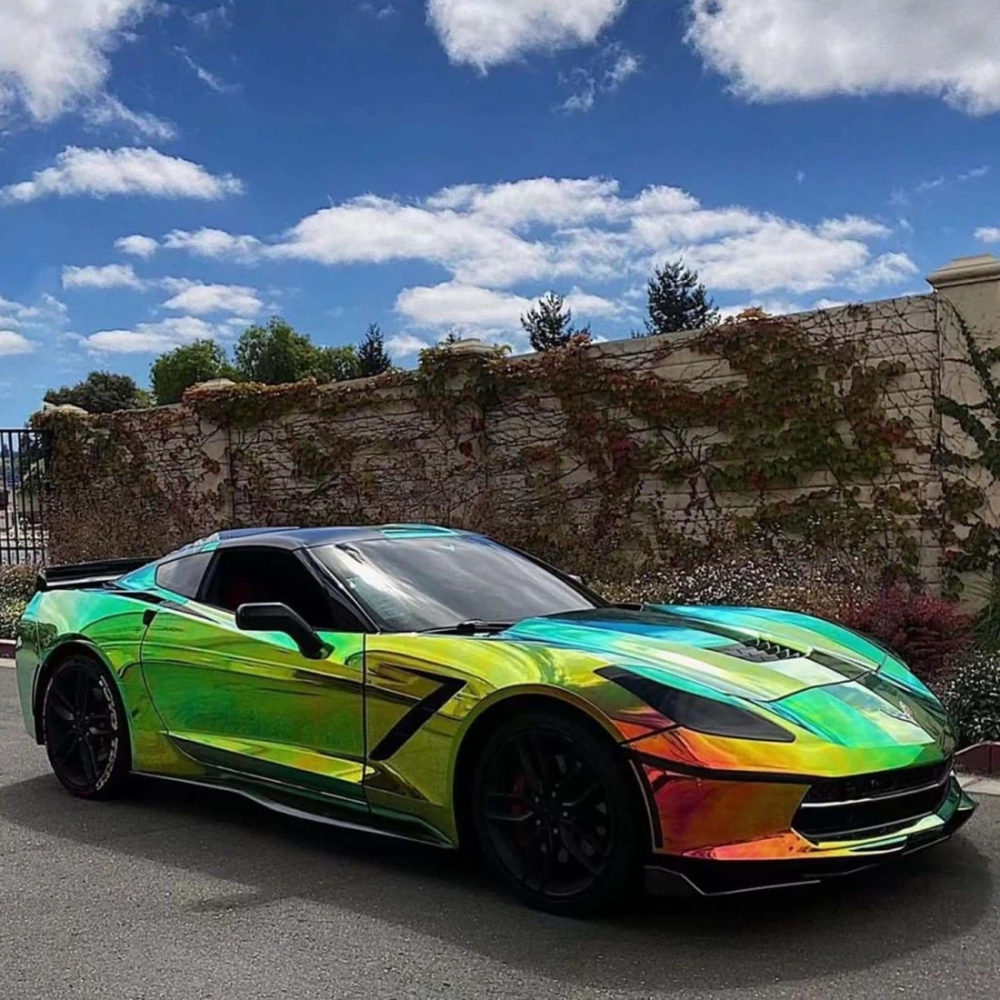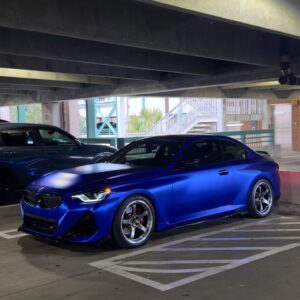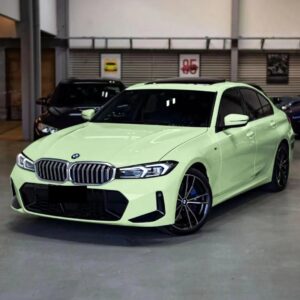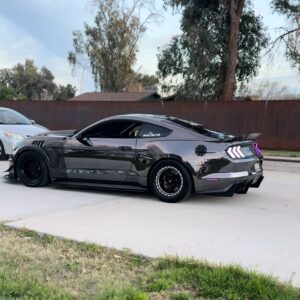

If you want a vehicle that looks different every time the light changes, a holographic wrap for cars is one of the most distinctive options available today.
Unlike a conventional gloss, matte, satin, or metallic vinyl wrap, holographic vinyl is designed to create a dynamic optical effect. As the viewing angle and light source change, the surface can reveal rainbow, prismatic, chrome-like, or color-shifting reflections.
That makes holographic car wraps particularly popular for show cars, sports cars, EVs, social-media builds, promotional vehicles, and anyone who wants a finish that stands out from ordinary paint colors.
But the visual effect is only part of the story.
A successful holographic wrap depends on choosing the right film construction, understanding how the finish behaves under different lighting conditions, preparing the vehicle correctly, and using an installer who knows how to handle specialty vinyl.
In this guide, we will explain what holographic wrap for cars is, how it works, what it costs, its advantages and disadvantages, how it compares with other specialty finishes, and how to choose the right holographic vinyl for your vehicle.
What Is a Holographic Wrap for Cars?
A holographic wrap for cars is a specialty automotive vinyl film designed to produce shifting rainbow, prismatic, or multi-color reflections when light hits the surface at different angles.
Unlike a standard solid-color vinyl wrap, holographic film interacts strongly with light. Its appearance can change depending on:
- Viewing angle
- Sunlight intensity
- Artificial lighting
- Vehicle body contours
- Film construction
- Base color and surface finish
This means the same vehicle can appear silver, chrome, blue, purple, pink, gold, or rainbow-like depending on the environment.
For drivers who want maximum visual impact without permanently repainting the vehicle, holographic vinyl wrap provides a highly customizable alternative.
Why Are Holographic Car Wraps Becoming So Popular?
Automotive color preferences remain dominated by traditional colors, but that does not mean vehicle customization is moving in the same direction.
According to Axalta’s 2025 Global Automotive Color Popularity Report, white represented 29% of global new-vehicle colors, followed by black at 23% and gray at 22%. Together, these three neutral colors accounted for roughly three-quarters of the global market.
That creates an interesting opportunity for the aftermarket.
When most vehicles on the road are white, black, or gray, a holographic finish can immediately create visual differentiation.
Axalta also noted that automotive styling is showing increasing interest in finishes that provide greater depth, movement, and individuality.
This is where holographic vinyl fits particularly well.
Instead of simply changing:
White → Purple
or
Black → Red
a holographic wrap changes how the surface interacts with light.
The result is a much more dynamic appearance.
How Does Holographic Vinyl Wrap Work?
The key to understanding holographic wrap is understanding light.
A conventional gloss vinyl primarily reflects light from a relatively uniform surface. Metallic films add reflective particles to create additional sparkle and depth.
Holographic films go further by incorporating an optical structure that creates diffraction or prismatic effects.
When white light interacts with that structure, different wavelengths can be separated or redirected, creating the characteristic spectrum of colors.
This is why holographic vinyl can appear dramatically different between:
- Direct sunlight
- Shade
- Parking garages
- LED lighting
- Nighttime street lighting
- Photography
The effect is especially noticeable when the vehicle is moving.
As body panels rotate relative to the light source, different parts of the vehicle can appear to change color simultaneously.
Holographic vs. ordinary metallic vinyl
A metallic wrap generally emphasizes sparkle and depth.
A holographic wrap emphasizes movement and color dispersion.
That distinction is important when selecting a finish.
If you want a relatively consistent color with subtle metallic highlights, metallic vinyl may be the better choice.
If you want the surface itself to become part of the visual effect, holographic vinyl is much more dramatic.
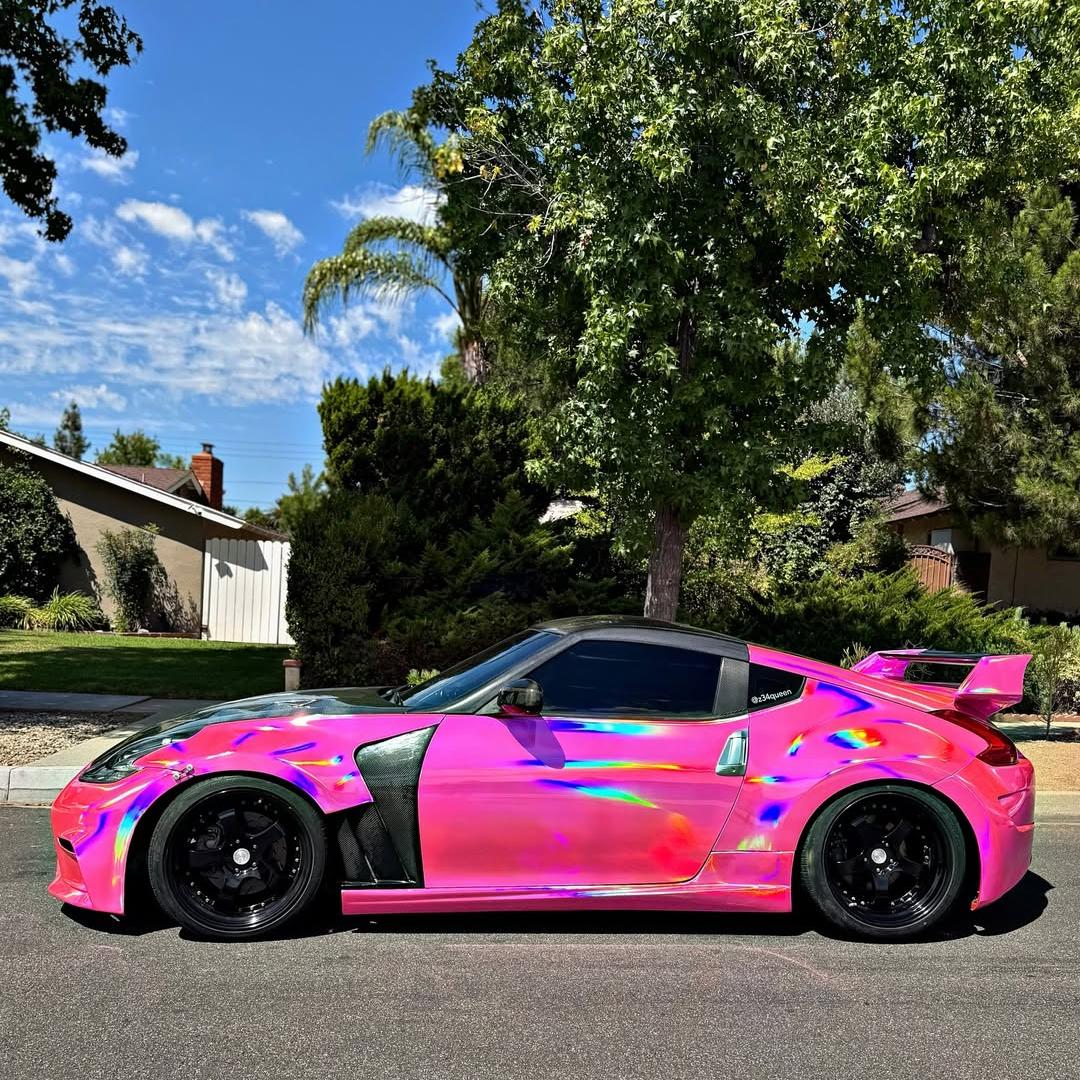
Holographic Wrap vs. Chrome vs. Color-Shift Vinyl
These finishes are often confused because they can all produce unusual reflections.
However, they are not identical.
| Finish | Main Visual Effect | Appearance Stability | Best For |
|---|---|---|---|
| Gloss | Smooth, paint-like reflection | High | Daily drivers |
| Metallic | Sparkle and depth | High | Premium OEM-style builds |
| Chrome | Mirror-like reflection | Medium | Extreme styling |
| Color Shift | Color changes with viewing angle | Low | Dramatic custom builds |
| Holographic | Rainbow/prismatic light effect | Very Low | Show cars & attention-grabbing builds |
| Rainbow | Strong multi-color spectrum | Low | Creative/custom vehicles |
A holographic wrap can therefore be considered part of the broader specialty or effect-film category, rather than simply another standard color.
What Does a Holographic Car Wrap Look Like in Real Life?
One common mistake is judging holographic vinyl only from a product photograph.
Lighting has a huge effect.
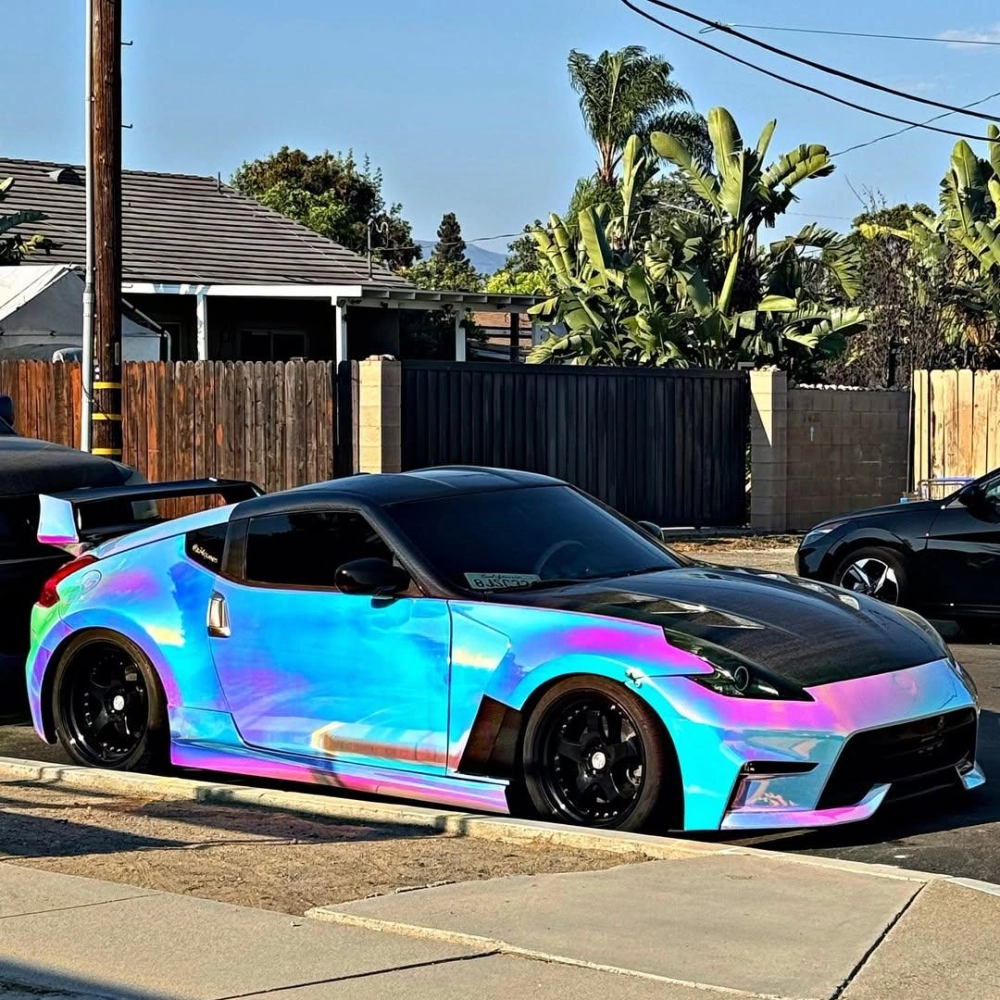
In direct sunlight
This is where holographic film typically produces its strongest rainbow or prismatic effect.
The surface can become extremely bright, and the vehicle’s curves can create different color zones across the hood, doors, fenders, and roof.
In cloudy weather
The effect may appear more subtle.
Instead of an intense rainbow reflection, the vehicle can look closer to a metallic or chrome finish.
Under LED lighting
Artificial point-source lighting can create sharp highlights and strong spectral reflections.
This is one reason holographic cars can look particularly impressive at indoor automotive events.
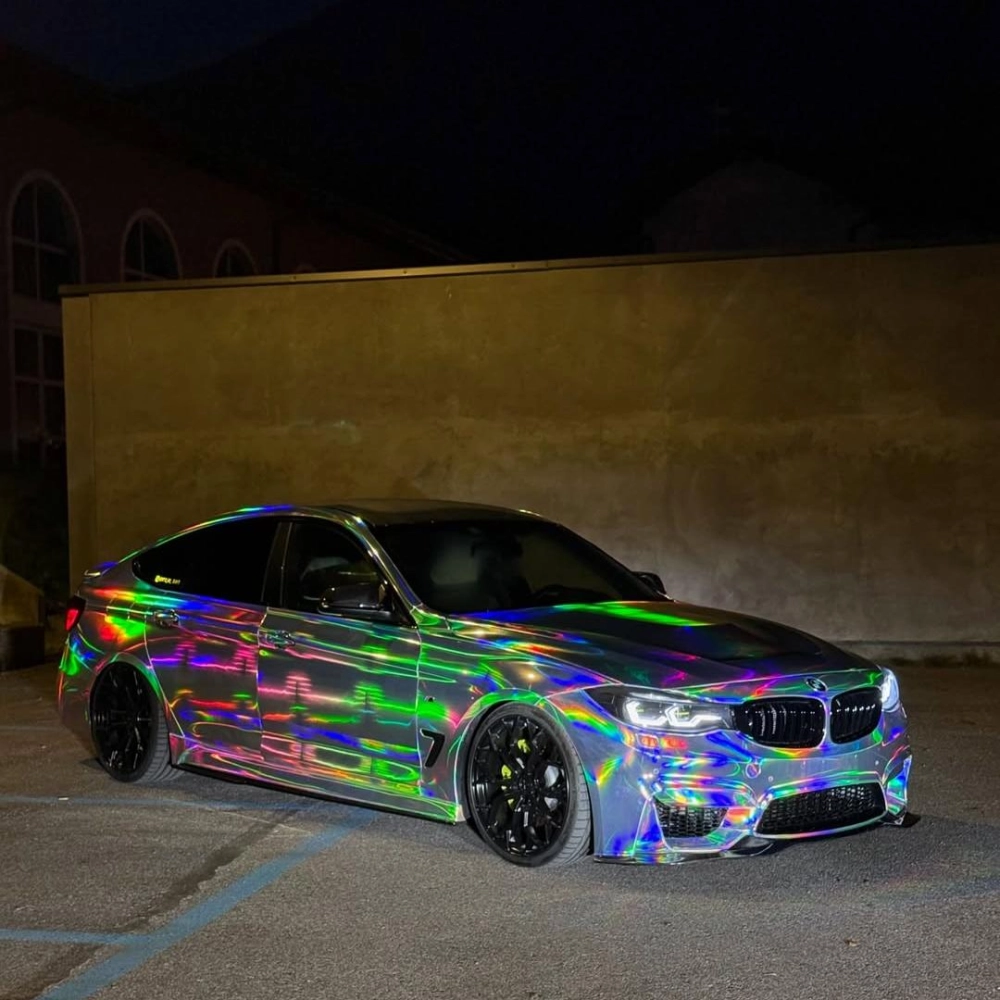
At night
The effect depends heavily on surrounding lighting.
Streetlights, headlights, building lights, and photography lighting can create different reflections across the body.
This variable appearance is the biggest attraction of holographic vinyl—and also one of the most important things buyers should understand before purchasing.
Pros and Cons of Holographic Wrap for Cars
Pros
1. Exceptional visual impact
A holographic car wrap can look completely different from conventional paint or standard vinyl.
It is particularly effective when the goal is to create a memorable vehicle.
2. Dynamic appearance
The color and reflection can change with viewing angle and lighting.
This gives the vehicle more visual depth than a conventional solid color.
3. Excellent for photography and video
Holographic surfaces naturally create changing highlights.
For automotive content creators, show cars, events, and promotional vehicles, this can make the vehicle more visually interesting on camera.
4. Huge customization potential
Holographic effects can be combined with different base colors, graphics, wheels, window tint, lighting, and other modifications.
5. Reversible customization
Unlike permanent paint, vinyl can generally be removed when the owner wants to return to the original appearance, assuming the underlying paint and installation conditions are suitable.
Cons
1. Installation is less forgiving
Specialty films can reveal installation imperfections more easily because strong reflections draw attention to:
- Wrinkles
- Bubbles
- Uneven tension
- Edge lifting
- Surface contamination
- Poor seams
The more reflective the finish, the more carefully the installer needs to work.
2. It can be visually intense
A holographic wrap is not the best choice for someone looking for a subtle OEM-style appearance.
If you prefer understated styling, satin, matte, or conventional metallic vinyl may be more appropriate.
3. Lighting changes the appearance
A product sample may look different indoors than it does outside.
This is not necessarily a problem—it is part of the technology—but customers should understand that a holographic wrap does not have one fixed visual appearance.
4. Maintenance matters
Specialty finishes require appropriate cleaning and care.
Harsh chemicals, aggressive abrasion, excessive heat, and poor washing practices can reduce the appearance and service life of a vinyl wrap.
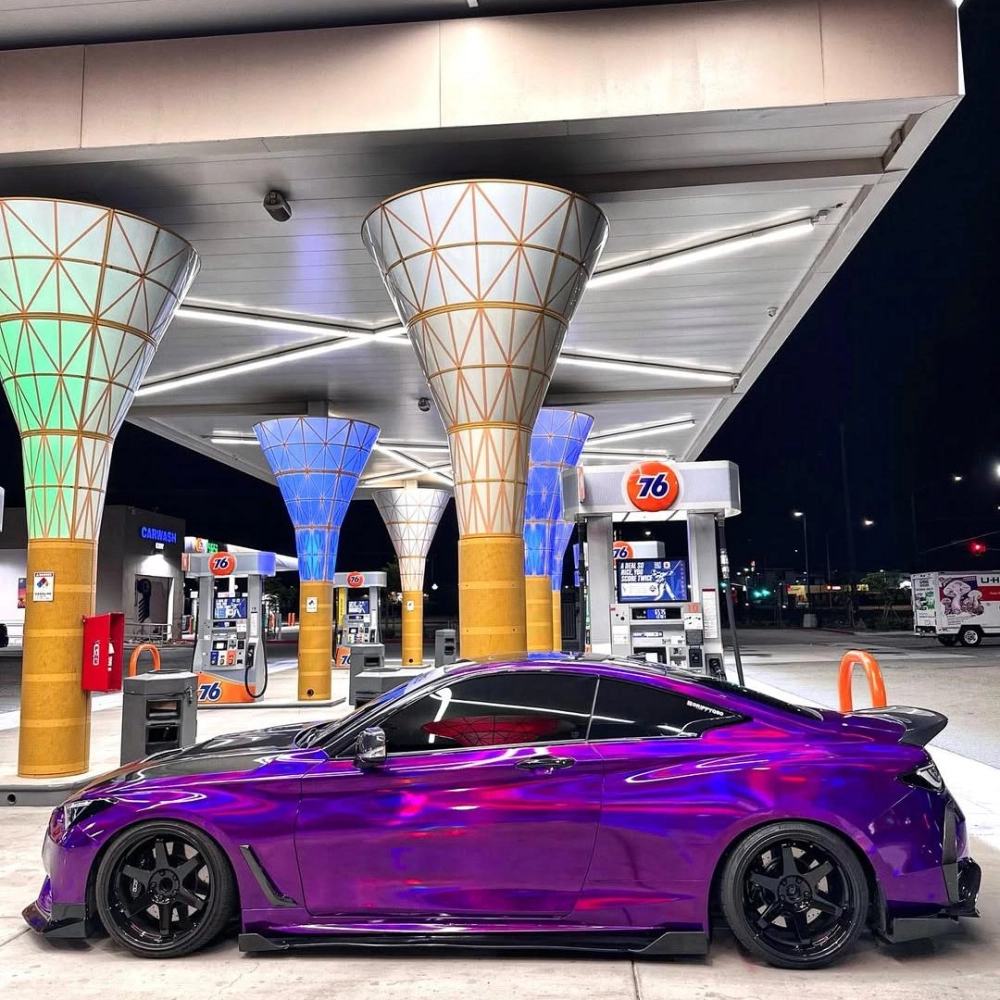
What Should You Look for in the Best Holographic Wrap for Cars?
Not all holographic vinyl should be evaluated only by its color.
For a full vehicle wrap, consider these factors.
1. Film construction
For complex vehicle surfaces, conformability is critical.
Premium vehicle wrapping films are generally engineered to conform to curves and recesses while maintaining dimensional stability.
For comparison, Avery Dennison’s Supreme Wrapping Film technical data lists face-film thickness of approximately 80–119 microns, elongation of 200%, and expected durability of up to 10 years under specified vertical-exposure conditions for that particular product line.
These numbers should not be interpreted as a universal lifespan for every vinyl wrap.
Film specifications are product-specific.
That distinction is particularly important with specialty finishes such as holographic, chrome, and color-shifting films.
2. Adhesive technology
An automotive wrap needs more than attractive film.
The adhesive influences:
- Initial positioning
- Repositionability
- Air release
- Installation speed
- Edge performance
- Removal
Avery Dennison, for example, uses Easy Apply RS technology on its Supreme Wrapping Film, allowing the film to slide and reposition before pressure is applied while also providing air-egress channels.
For installers, adhesive behavior can make a significant difference.
3. Conformability
Vehicles contain:
- Compound curves
- Recesses
- Door handles
- Mirrors
- Bumpers
- Fenders
- Body creases
A film that performs beautifully on a flat hood may behave very differently around a bumper or deep recess.
This is why installer experience and film characteristics should be evaluated together.
Holographic Wrap vs. 3M, Avery Dennison and KPMF: What Should You Compare?
It is tempting to ask:
“Which brand is the best?”
A more useful question is:
Which film is best suited to the finish, vehicle and installer?
3M, Avery Dennison, KPMF and other established manufacturers have different strengths across their product portfolios.
Avery Dennison’s current Supreme Wrapping Film range, for example, lists durability of up to 12 years for the product family, while its ColorFlow line has product-specific durability specifications.
However, these figures should not be directly transferred to every holographic film on the market.
A specialty holographic product may have a different construction, protective layer, application requirement, or expected service life.
A better comparison framework
| Factor | What to Ask |
|---|---|
| Film type | Cast or calendered? |
| Finish | Holographic, chrome, rainbow or color-shift? |
| Thickness | What is the total film + adhesive thickness? |
| Adhesive | Is it repositionable? |
| Air release | Does the film support bubble-free installation? |
| Conformability | How does it handle compound curves? |
| Durability | What conditions is the stated lifespan based on? |
| Warranty | What exactly is covered? |
| Installation | What temperature and technique are recommended? |
| Maintenance | What cleaning products are recommended? |
This approach is much more useful than choosing a film simply because its brand is familiar.
Is Holographic Vinyl Good for Daily-Driven Cars?
Yes, but the owner needs realistic expectations.
A holographic wrap is not limited to show cars.
It can work well on a daily driver if:
- The owner likes a highly visible finish
- The vehicle is properly prepared
- Installation is performed professionally
- The film is maintained correctly
- Expectations match the specialty nature of the finish
For example, a white or silver-based holographic wrap can create a relatively clean appearance in low-intensity lighting while becoming much more dramatic in direct sunlight.
That makes it more versatile than the phrase “rainbow wrap” might suggest.
Which Cars Look Best With Holographic Wrap?
There is no universal answer, but certain vehicle designs tend to showcase the effect particularly well.
Sports Cars
Sports cars have strong body lines and curved panels.
These surfaces give the holographic effect more opportunity to interact with light.
Think:
- Porsche
- Corvette
- Nissan GT-R
- BMW M models
- Toyota GR models
- Chevrolet Camaro
- Ford Mustang
The sharper the body contour, the more noticeable the transition between light and shadow can become.
Electric Vehicles
Modern EVs often use relatively clean body shapes.
That makes them an excellent canvas for specialty finishes.
A holographic finish can transform an otherwise minimalist vehicle without requiring additional body modifications.
Show Cars
This is arguably the most natural application.
If the goal is:
“I want people to notice the car.”
holographic vinyl is an obvious candidate.
Holographic Wrap Installation: What Professional Installers Should Consider
A high-quality finish begins before the film touches the vehicle.
Step 1: Thorough vehicle preparation
The surface should be:
- Clean
- Dry
- Free of wax
- Free of grease
- Free of contamination
- Properly inspected
Existing paint defects should also be identified before installation.
Vinyl is not a substitute for repairing damaged paint.
Step 2: Plan the panel
The installer should determine how the film will be positioned before removing the liner.
This is especially important for effect films.
A poorly planned seam can create visible differences in how light reflects across adjacent panels.
Step 3: Control tension
Overstretching is one of the biggest risks with specialty vinyl.
When film is stretched excessively, the visual effect can become inconsistent and the material may develop undesirable stress.
For a holographic finish, that can be especially noticeable because the optical pattern itself is part of the appearance.
Step 4: Manage edges and recesses
Door edges, bumpers, handles and deep recesses require careful finishing.
The objective is not simply to make the panel look good from three feet away.
A professional wrap should also look clean around:
- Door jambs
- Panel edges
- Trim
- Handles
- Mirrors
- Wheel arches
How Long Does a Holographic Car Wrap Last?
There is no single lifespan that applies to every holographic wrap.
Actual service life depends on:
- Film construction
- UV exposure
- Climate
- Vehicle storage
- Installation quality
- Surface preparation
- Cleaning frequency
- Chemical exposure
- Mechanical abrasion
Avery Dennison explicitly notes that actual performance life depends on substrate preparation, exposure angle and direction, application methods, environmental conditions, and cleaning/maintenance.
This is an important E-E-A-T point:
Do not treat a manufacturer’s maximum durability figure as a guaranteed lifespan for every vehicle.
A car parked outdoors in intense sun year-round will experience a different environment from a garage-kept weekend vehicle.
How to Maintain a Holographic Car Wrap
Proper maintenance is relatively straightforward.
Recommended practices
- Wash regularly
- Use wrap-safe or pH-neutral cleaning products
- Use a soft microfiber wash method
- Remove bird droppings and contaminants promptly
- Avoid aggressive brushes
- Avoid unnecessary abrasive polishing
- Dry the vehicle carefully
- Follow the film manufacturer’s care instructions
Avoid
- Harsh solvents
- Strong abrasive compounds
- Automatic car washes with aggressive brushes
- Excessive pressure on edges
- Prolonged exposure to contaminants
The objective is simple:
Preserve the surface rather than trying to aggressively polish it.
Holographic Wrap vs. Paint: Which Is Better?
The answer depends on the objective.
| Holographic Vinyl | Custom Paint |
|---|---|
| Faster visual transformation | Permanent finish |
| Wide range of effects | Extremely customizable |
| Can be removed | Not easily reversible |
| No repainting required | Requires paint preparation |
| Easier to change later | More permanent |
| Strong specialty finishes | Potentially deeper paint finish |
| Installation quality is critical | Paint quality is critical |
For someone who wants to experiment with an unusual appearance, vinyl has a major advantage:
You do not have to commit permanently to the color.
Holographic Wrap Cost: What Determines the Price?
The cost of a holographic car wrap depends on much more than the price of the vinyl roll.
The main factors include:
- Vehicle size
- Film quantity
- Film type
- Film quality
- Vehicle complexity
- Installation labor
- Surface preparation
- Removal of existing wrap
- Door-jamb wrapping
- Trim removal
- Installer experience
A large SUV with complex bumpers can require significantly more labor than a compact sedan.
Similarly, a specialty holographic film may require more careful handling than a conventional gloss film.
The important takeaway
Do not compare holographic wrap prices based only on dollars per roll.
A lower material price does not necessarily mean a lower total project cost.
If a film requires more installation time, creates more waste, or is difficult to finish around edges, the labor component can become more important than the initial roll price.
Example: Choosing a Holographic Finish for a Porsche
Imagine a Porsche with:
- White OEM paint
- Black wheels
- Black trim
- Low-profile tires
A highly reflective holographic finish can complement the vehicle’s existing design because the black trim creates contrast while the body provides a large surface for the optical effect.
Now imagine the same holographic film on a vehicle with:
- Bright aftermarket wheels
- Large decals
- Multiple contrasting colors
- Aggressive body graphics
The result could become visually overwhelming.
This illustrates an important design principle:
The stronger the wrap finish, the simpler the supporting design can often be.
You do not always need more modifications.
Sometimes the film itself should be the centerpiece.
How to Choose the Right Holographic Wrap Color
If you’re considering holographic vinyl wrap for cars, start with the overall personality you want.
For a futuristic look
Choose:
- Silver holographic
- White holographic
- Chrome holographic
- Blue holographic
For a dramatic show-car look
Consider:
- Rainbow holographic
- Purple holographic
- Pink holographic
- Color-shifting holographic
For a darker appearance
Look for:
- Black holographic
- Dark chrome holographic
- Smoke holographic
- Dark color-shift finishes
The right choice depends on how aggressively you want the vehicle to change under different lighting.
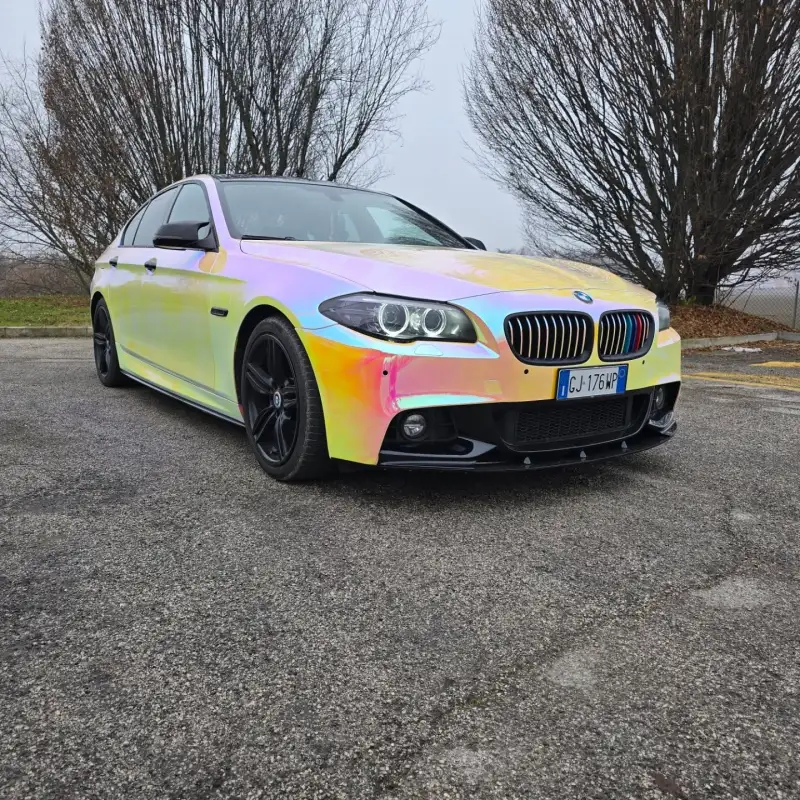
Why Holographic Wrap Works Especially Well on Modern Car Designs
Modern automotive design increasingly uses clean surfaces, sharp shoulder lines and sculpted body panels.
Those shapes create ideal conditions for reflective specialty finishes.
A holographic surface essentially turns the bodywork into a moving light canvas.
The effect becomes particularly interesting when:
- The hood transitions into the fenders
- The side body line catches sunlight
- The rear quarter panel changes angle
- The vehicle moves past a light source
Instead of seeing one uniform color, the viewer sees multiple visual states across the same vehicle.
That is the fundamental appeal of holographic car vinyl.
Is Holographic Wrap Worth It?
For the right buyer, yes.
Holographic wrap is worth considering if your priority is:
- Uniqueness
- Visual impact
- Customization
- Photography
- Automotive events
- Social-media content
- A reversible exterior transformation
It may not be the best choice if your priority is:
- Subtle OEM styling
- Maximum visual consistency
- Minimal maintenance
- A traditional factory appearance
There is no universally “best” wrap finish.
The best finish is the one that matches the vehicle, usage, budget and design objective.
Explore Holographic Wrap Options from ALUKOVINYL
If you are looking for a specialty finish that goes beyond traditional gloss, matte or satin colors, explore the ALUKOVINYL Neo Chrome Vinyl Wrap collection.
The collection is designed for customers looking for more distinctive finishes, including holographic, chrome-inspired and color-shifting visual effects.
Whether you’re building a show car, upgrading a daily driver or creating a completely custom vehicle, choosing the right film starts with understanding how the finish will behave on the entire vehicle—not just how it looks in a product photo.
Explore the ALUKOVINYL Neo Chrome Vinyl Wrap collection and find a finish that makes your car impossible to overlook.
Frequently Asked Questions About Holographic Wrap for Cars
What is a holographic wrap for cars?
A holographic wrap is a specialty vinyl film that creates rainbow, prismatic or multi-color reflections as lighting and viewing angles change. It provides a more dynamic appearance than standard gloss, matte or metallic vinyl.
Is holographic vinyl wrap the same as chrome wrap?
No. Chrome primarily emphasizes mirror-like reflection, while holographic vinyl emphasizes spectral or rainbow-like optical effects. Some specialty films can combine chrome-like reflectivity with holographic effects.
Does holographic wrap change color?
It can appear to change color because the optical effect changes with viewing angle and lighting. However, this is different from a true color-shifting film, which is specifically engineered to transition between defined color families.
Is holographic wrap good for daily drivers?
Yes. It can be used on daily-driven vehicles, provided the owner understands that it is a specialty finish and follows the manufacturer’s installation and maintenance recommendations.
Is holographic vinyl difficult to install?
It can be less forgiving than conventional solid-color vinyl because reflections can make wrinkles, bubbles, tension marks and seams more noticeable. Professional installation is recommended for a high-quality result.
How long does holographic car wrap last?
There is no universal lifespan. Actual durability depends on the specific film, installation, UV exposure, climate, storage and maintenance. Always use the manufacturer’s product-specific durability and warranty information rather than assuming every holographic film has the same lifespan.
Can holographic wrap be removed?
Vinyl wraps are generally designed to be removable, but removal performance depends on the film, adhesive, installation conditions, vehicle paint and how long the wrap has remained on the vehicle.
Is holographic wrap better than matte or satin wrap?
Neither is universally better. Holographic is better when maximum visual impact and dynamic reflections are the goal. Matte and satin are better when you want a more understated or sophisticated appearance.
Does holographic vinyl protect the original paint?
A vinyl wrap can provide a physical barrier between the paint and some environmental exposure, but it should not be treated as equivalent to a dedicated paint protection film. If maximum paint protection is the primary objective, consider PPF rather than choosing vinyl solely for protection.
Final Takeaway
A holographic wrap for cars is more than a colorful vinyl finish.
It is an optical effect designed to make the vehicle’s appearance change with light, movement and viewing angle.
That makes it especially attractive for owners who want a distinctive build without permanently repainting their vehicle.
However, the strongest result comes from looking beyond the visual effect.
Consider:
- Film construction
- Adhesive technology
- Conformability
- Installation technique
- Vehicle shape
- Climate
- Maintenance
- Expected service life
- Overall design balance
And most importantly, choose the film based on the complete vehicle project—not simply the color shown on a screen.
For drivers ready to move beyond ordinary finishes, ALUKOVINYL’s Neo Chrome Vinyl Wrap collection offers a starting point for exploring holographic and other high-impact specialty finishes.