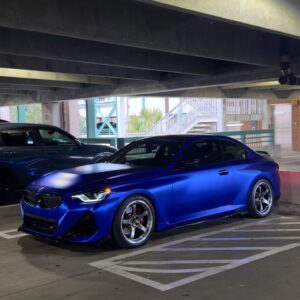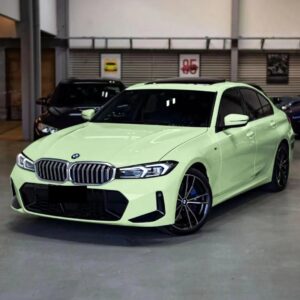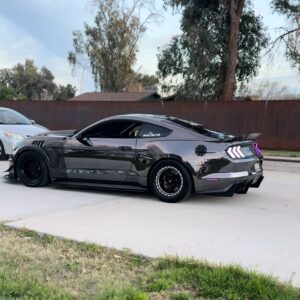
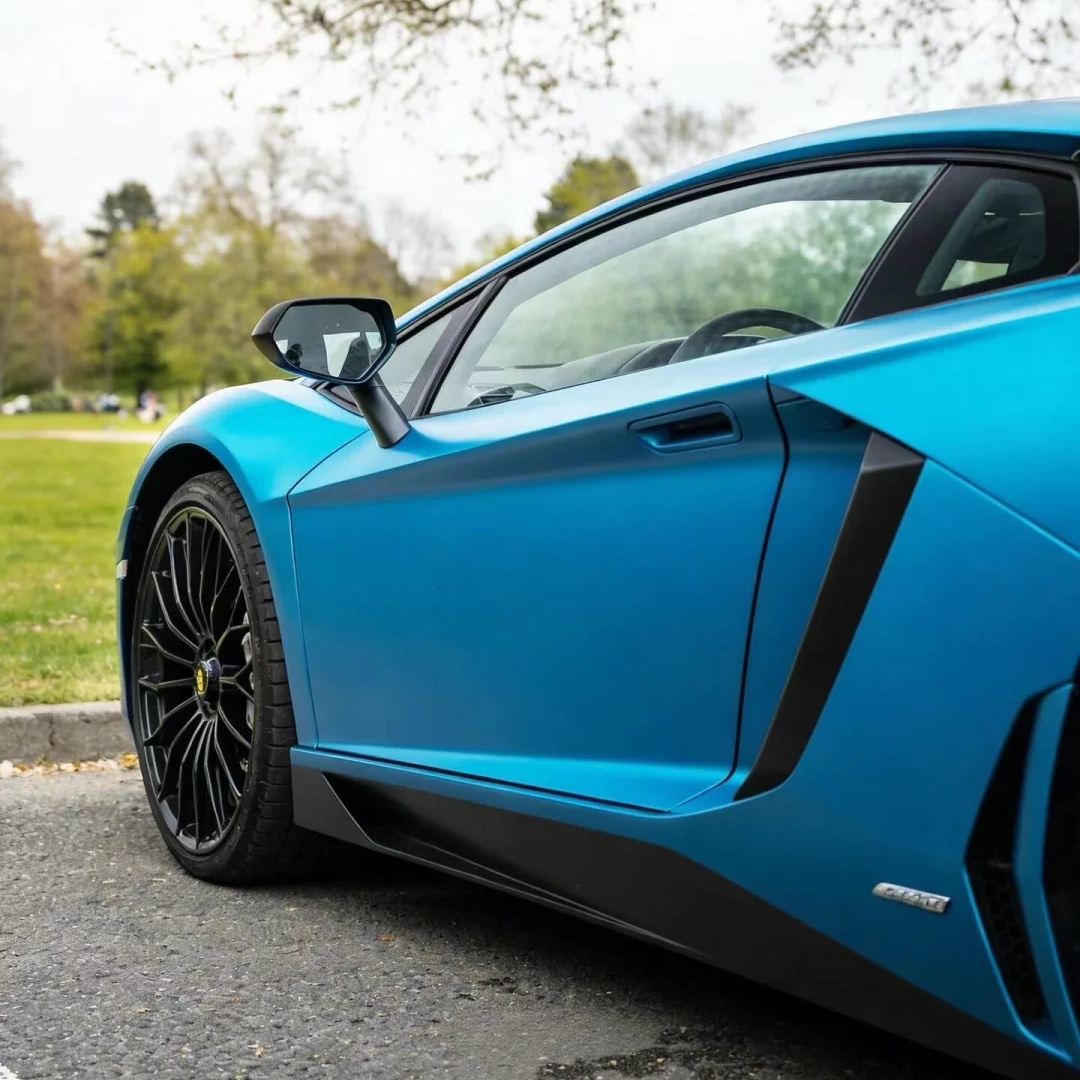
Blue has always been one of the most versatile automotive colors, but the finish can change its personality almost as much as the shade itself. A glossy electric blue can look energetic and highly reflective; a deep satin blue can appear more understated, technical, and premium.
That is where satin blue PPF has become an interesting alternative to both conventional vinyl and clear paint protection film.
Instead of placing transparent PPF over factory blue paint, color PPF can change the actual appearance of the vehicle while providing a thicker protective layer designed to take everyday wear before it reaches the paint.
But not every blue PPF looks the same—and not every TPU film performs the same simply because it carries the “PPF” label.
This guide examines satin blue PPF from a practical perspective: what it is, how satin blue differs from gloss and matte finishes, what technical specifications actually matter, which blue shades work best on different vehicles, and where the limitations of color PPF should influence your buying decision.
Disclosure: ALUKOVINYL manufactures and sells automotive films, including the Satin Tunisian Blue PPF discussed in this article. Product-specific specifications attributed to ALUKOVINYL are manufacturer-reported unless otherwise stated. Independent industry sources such as 3M and ASTM are used to provide context rather than to imply equivalent product performance.
What Is Satin Blue PPF?
Satin blue PPF is a colored thermoplastic polyurethane paint protection film that combines a blue color transformation with a low-reflection satin surface and a physical protective layer over automotive paint.
Think of it as occupying the space between two familiar products:
vinyl color-change film + clear paint protection film.
A traditional car wrap is primarily chosen to change a vehicle’s appearance. Clear PPF is primarily selected to preserve paint while changing its appearance as little as possible.
Color PPF attempts to do both.
The satin finish adds another distinction.
Instead of the mirror-like reflections of gloss PPF or the highly diffused appearance associated with very flat matte finishes, satin typically retains enough reflection to reveal body contours while suppressing strong highlights.
For blue in particular, this can create an interesting balance: the color remains visible and dimensional without looking excessively glossy.
Featured Snippet: Satin Blue PPF at a Glance
| Question | Quick Answer |
|---|---|
| What is it? | Blue-colored TPU paint protection film |
| Finish | Low-reflection satin |
| Main purpose | Color change + paint protection |
| Better than vinyl? | For protection, generally yes; for cost and design flexibility, not always |
| Self-healing? | Available on many TPU PPF products; verify the specific film |
| Typical industry thickness | Around 7–8 mil is common among modern PPF products |
| ALUKO Satin Tunisian Blue | Manufacturer reports 7.5 mil ±3% |
| Installation | Professional installation recommended |
| Best for | Luxury, performance and premium daily-driver builds |
Why Does Satin Blue Look Different From Regular Blue?
The difference is not simply “less shiny.”
A car’s perceived color is created by the interaction of pigment, surface texture, illumination, panel curvature and viewing angle.
A highly glossy surface creates stronger specular reflections. Those reflections can make a dark blue look almost black in certain areas while producing very bright highlights elsewhere.
A satin surface diffuses more of that reflected light.
The result is often:
- Softer highlights
- More visible body contours
- Less mirror-like reflection
- A smoother transition between light and shadow
- A more muted appearance under cloudy conditions
- Stronger emphasis on the actual blue hue
That makes satin particularly interesting on cars with sculpted panels.
On a Porsche 911, for example, the rounded fenders create broad transitions between highlight and shadow. On a Tesla Model 3, the large uninterrupted body panels create a much cleaner, more minimalist satin appearance.
This is why choosing satin blue PPF should involve the vehicle as well as the color swatch.
Not All Satin Blue PPF Is the Same Blue
One of the biggest mistakes when shopping online is treating “satin blue” as one color.
It is better understood as a family of colors.
ALUKOVINYL offers different blue PPF directions, which makes it possible to choose the blue according to the vehicle rather than forcing one universal shade onto every build.
A useful way to divide the category is by visual character.
1. Satin Tunisian Blue
Tunisian Blue sits toward the more vivid side of the satin-blue spectrum.
The satin surface reduces harsh reflections without removing the intensity of the blue itself.
This makes Satin Tunisian Blue particularly effective when the goal is to create an immediately noticeable color change without moving into neon or fluorescent territory.
Good candidates include:
- Porsche 911
- BMW M3 / M4
- Chevrolet Corvette
- Tesla Model 3
- Toyota GR Supra
ALUKOVINYL currently lists its satin blue PPF at 7.5 mil ±3% thickness, with 93A hardness, 22.32 MPa tensile strength and 370.23% elongation at break. These numbers are manufacturer specifications rather than independent laboratory verification.
2. Light or Glacier-Style Satin Blue
A lighter blue creates an entirely different personality.
Instead of aggressive performance styling, a pale satin blue can look clean, modern and almost architectural.
This direction works particularly well on:
- Porsche 911 / Taycan
- Tesla Model Y
- Mercedes-Benz EQS
- Audi e-tron GT
- BMW i4
Large vehicles can also carry pale blue surprisingly well because the satin finish reduces the visual intensity across broad panels.
3. Deep or Midnight Satin Blue
Dark satin blue is often the more conservative choice.
Under shade it can approach navy or blue-black, while sunlight reveals substantially more blue.
This makes it suitable for owners who want something more distinctive than black but less conspicuous than bright blue.
Consider it for:
- Mercedes-AMG GT
- BMW 7 Series
- Range Rover
- Porsche Cayenne
- Audi RS6
4. Metallic-Influenced Satin Blue
Adding metallic character changes how satin interacts with sunlight.
Instead of simply becoming brighter, metallic particles can introduce finer points of reflection beneath the subdued surface.
This can work particularly well on cars with sharp creases and aggressive body lines.
The important takeaway is simple:
The best satin blue PPF is not necessarily the brightest blue. It is the blue whose saturation, depth and surface reflection complement the vehicle’s proportions.
Suggested Satin Blue PPF Visual References
These examples illustrate how significantly the character of satin blue can change between shades and vehicles.

4
For your actual blog, I recommend replacing third-party examples with ALUKOVINYL customer/installation photographs whenever possible. A particularly strong E-E-A-T section would show three ALUKO blues photographed outdoors under similar lighting:
Satin Tunisian Blue → Light Satin Blue → Deep Satin Blue
That provides much more useful first-party evidence than generic product renderings.
Satin Blue PPF vs. Gloss Blue PPF
Neither finish is universally better.
The right choice depends on the intended visual character.
| Feature | Satin Blue PPF | Gloss Blue PPF |
|---|---|---|
| Reflection | Controlled | Strong |
| Visual character | Refined / modern | Bright / dramatic |
| Body-line definition | Excellent | Excellent, with stronger highlights |
| Appearance of dust | Often less obvious | Can be more visible |
| Polishing | Generally not recommended | Product-dependent |
| Best styling direction | Premium / understated | Sporty / high-impact |
Gloss blue generally produces stronger color saturation under direct light because of its reflective surface.
Satin blue works differently.
It allows the eye to see more of the actual panel shape instead of being dominated by reflections from the surrounding environment.
For luxury vehicles and understated performance builds, that can be an advantage.
Satin Blue PPF vs. Matte Blue PPF
Satin and matte are frequently treated as interchangeable terms, but visually they should not be.
A very matte surface scatters more reflected light, producing a flatter appearance.
Satin retains a controlled sheen.
That subtle reflection can be important on automotive bodywork because it helps preserve the visual depth of curved panels.
For that reason, satin is often the safer middle ground for someone who likes matte styling but does not want the car to appear completely flat.
Choose satin blue when:
You want muted reflection while retaining visible depth and contour.
Choose matte blue when:
You want the flattest, least reflective appearance possible.
Satin Blue PPF vs. Blue Vinyl Wrap
This is a more important comparison than satin versus gloss.
Vinyl and PPF may create similar colors, but their primary functions are different.
| Feature | Satin Blue Vinyl | Satin Blue TPU PPF |
|---|---|---|
| Primary function | Styling | Styling + protection |
| Material | Usually PVC | TPU in the products discussed here |
| Rock-chip protection | Limited | Designed for greater physical protection |
| Film thickness | Generally thinner | Generally thicker |
| Self-healing top coat | Not standard | Common in modern premium PPF |
| Color variety | Extremely broad | Growing |
| Custom printing | Excellent | Limited |
| Material cost | Lower | Higher |
| Installation | Usually dry | Wet/dry depends on system |
| Best use | Affordable styling | Premium color + protection |
This explains why asking “Which one is better?” is not quite the right question.
If the customer’s goal is purely changing a white vehicle to blue, vinyl can be the more economical solution.
If the goal is changing it to blue while adding a meaningful sacrificial layer over expensive factory paint, TPU PPF becomes more compelling.
What Does 7.5 Mil Actually Mean?
Film thickness is one of the most frequently quoted PPF specifications—and one of the most frequently misunderstood.
ALUKOVINYL reports 7.5 mil ±3% for Satin Tunisian Blue.
For useful industry context, 3M currently publishes:
- 7.9 mil for Scotchgard PPF Pro Series 200
- 7.5 mil for PPF Series 150
- 7.5 mil for PPF Series 100
This shows that a 7.5-mil construction sits within the thickness range used by established modern PPF systems.
But it does not prove equivalent performance.
Two films measuring 7.5 mil can behave differently because PPF performance also depends on:
- TPU formulation
- Top-coat chemistry
- Adhesive
- Tensile strength
- Elongation
- Stain resistance
- UV/weathering resistance
- Tear resistance
- Optical stability
- Installation technique
Therefore, “our PPF is 7.5 mil, just like 3M” would be a misleading comparison.
The technically accurate conclusion is:
Thickness provides useful context, but thickness alone cannot rank PPF quality.
What Independent Industry Evidence Supports PPF?
This distinction is important for E-E-A-T.
ALUKOVINYL can provide its own product specifications, but those specifications should not be presented as independent validation.
Instead, established manufacturers and testing standards can help explain what good PPF technology is expected to accomplish.
3M currently describes its automotive PPF systems as protecting against rocks, bugs, sand and other hazards. Its Pro Series 200 includes a hydrophobic surface, stain resistance and heat-activated self-healing for minor scratches. The company currently backs Pro Series 200, Series 150 and Series 100 with a 10-year consumer warranty under applicable terms.
Again, that does not mean ALUKOVINYL Satin Blue PPF has been independently proven to match those 3M products.
It provides an industry benchmark for evaluating specifications and claims.
ASTM provides another useful perspective.
ASTM D6486-23 covers short-term vehicle-service exposure of automotive coatings and identifies real-world stresses including scratching, marring, impact, stone chipping, insects, bird droppings, tree sap, staining and environmental fallout. The standard notes that statistically meaningful conclusions require careful experimental design.
This is an important reminder for consumers:
A marketing claim is not the same as a standardized test result.
Technical Look at ALUKO Satin Tunisian Blue PPF
ALUKOVINYL currently publishes the following specifications for its Satin Tunisian Blue product:
| Specification | Manufacturer-Reported Value |
|---|---|
| Material | TPU |
| Thickness | 7.5 mil ±3% |
| Hardness | 93A |
| Tensile strength | 22.32 MPa |
| Elongation at break | 370.23% |
| Coating fracture elongation | 112% |
| Tearing strength | 68.52 KN/m |
| Application | Wet & dry |
| Roll size | 5 ft × 49.5 ft |
| Expected durability | 5–7 years* |
*Expected durability is ALUKOVINYL’s manufacturer estimate and should not be interpreted as an independently verified service-life guarantee. Actual longevity can vary with installation, climate, UV exposure, maintenance, storage and vehicle use.
That last qualification matters.
A car garaged in a moderate climate does not experience the same environmental stress as a vehicle parked outdoors every day in Arizona, Florida or another high-UV/high-temperature environment.
What Does 370% Elongation Tell an Installer?
This specification deserves more attention than it normally receives.
Elongation at break describes how far a material can extend before breaking under the specified test conditions.
ALUKOVINYL reports 370.23% elongation at break for this product.
However, installers should not interpret 370% as:
“You can stretch the film 370% during installation.”
Those are completely different concepts.
Laboratory elongation-at-break values indicate mechanical behavior under test conditions. Practical installation stretch must remain within whatever limits preserve the coating, color, adhesive and final appearance.
Excessive stretch around bumpers, mirrors and deep recesses can potentially create:
- Color distortion
- Uneven satin texture
- Adhesive stress
- Edge tension
- Premature lifting
- Localized gloss variation
This is one reason installer experience matters more with expensive colored PPF than the raw elongation number might suggest.
Does Satin Blue PPF Self-Heal?
Many modern TPU PPF systems use self-healing top coats.
But “self-healing” is another term that requires careful explanation.
3M states that its current Series 100, Series 150 and Pro Series 200 films are self-healing and that heat can remove minor scratches or marks from the film surface.
Self-healing generally refers to minor top-coat damage.
It does not mean a PPF can regenerate after:
- Deep cuts
- Tears
- Punctures
- Severe stone impacts
- Damage through the entire TPU layer
A more accurate description is:
Self-healing helps the surface recover from certain minor marks; PPF remains a sacrificial protective layer and can still be permanently damaged.
That distinction prevents unrealistic customer expectations.
Pros and Cons of Satin Blue PPF
Advantages
1. Color change and protection in one installation
This is the strongest argument for color PPF.
Instead of installing blue vinyl and then adding another protective layer, the color itself is incorporated into the PPF solution.
2. Satin blue emphasizes vehicle shape
Controlled reflections make satin particularly effective on sculpted bodywork.
3. More protective than decorative vinyl
PPF is designed around physical paint protection rather than styling alone.
4. TPU provides high flexibility
A flexible TPU construction helps professional installers conform film around complex automotive surfaces.
5. Multiple shades of blue
Choosing between bright Tunisian Blue, pale blue, deep navy and metallic-inspired blue creates significantly more styling flexibility than treating “satin blue” as one product.
Disadvantages
1. More expensive than vinyl
Color PPF is a premium solution. Customers interested primarily in appearance may find satin vinyl more cost-effective.
2. Professional installation matters
PPF is less forgiving of poor installation. Complex bumpers and deep contours can increase installation difficulty and material waste.
3. Satin surfaces require different care
Aggressive polishing can create uneven glossy areas on satin surfaces.
4. Damage cannot always self-heal
Deep damage may require panel replacement.
5. Matching replacement panels can be challenging
A replacement section should ideally come from compatible material. Production-batch variation, environmental aging and different exposure histories can make exact matching harder.
6. Manufacturer specifications are not independent verification
ALUKOVINYL publishes detailed specifications, but buyers looking for independently verified comparative performance should request applicable test reports rather than assuming manufacturer data is equivalent to third-party certification.
This is a genuine limitation worth stating clearly.
Which Cars Look Best in Satin Blue PPF?
Rather than simply listing popular vehicles, it is more useful to match the type of blue to vehicle design.
Porsche 911 — Light or Tunisian Satin Blue
The 911’s curved fenders allow satin finishes to transition gradually from light to shadow.
A medium or lighter blue emphasizes those surfaces without overwhelming the classic proportions.
BMW M3 / M4 — Tunisian or Metallic Satin Blue
BMW M cars can carry stronger saturation because of their aggressive bumpers, pronounced shoulders and black trim.
Tesla Model 3 / Model Y — Light or Medium Satin Blue
The minimalist surfaces of Tesla models work particularly well with satin finishes because there are fewer styling details competing with the color.
Range Rover — Deep Satin Blue
Large SUVs can look particularly sophisticated in dark navy or muted blue rather than very bright blue.
Corvette — Bright Satin Blue
The Corvette’s dramatic proportions can support a more saturated blue without the color dominating the design.
The vehicle itself should therefore be part of the color-selection process.
How to Maintain Satin Blue PPF
Maintenance matters because satin finishes cannot always be corrected using the same techniques used on gloss paint.
Wash regularly
Remove insects, bird droppings, road grime and other contamination before they remain on the surface for extended periods.
Use PPF-compatible products
Avoid aggressive solvents and compounds unless the film manufacturer specifically approves them.
Avoid conventional polishing
Polishing a satin surface can increase gloss locally and create an uneven appearance.
Be careful with pressure washing
Do not direct concentrated high-pressure water aggressively at exposed film edges.
Deal with contamination early
Bird droppings, insect residue, tree sap and road chemicals should not be left unnecessarily on the film.
Maintenance is especially important because replacing a damaged satin panel can be more difficult than simply polishing clear coat.
How Should Satin Blue PPF Be Installed?
Installation technique has a direct effect on appearance and longevity.
Interestingly, even 3M specifies environmental and vehicle application temperatures for its PPF systems: 60°F–85°F (16°C–30°C) can be used, with 70°F–79°F (21°C–26°C) recommended as the optimal range for its films.
Those temperatures are 3M-specific guidance, not ALUKOVINYL installation instructions, but they illustrate how environmental conditions matter in professional PPF installation.
For satin color PPF, installers should pay particular attention to:
Surface preparation: contamination beneath a satin film can remain visually obvious.
Stretch control: excessive stretch may alter color and surface uniformity.
Panel orientation: keep film orientation consistent where the finish has directional visual characteristics.
Edge tension: excessive tension can increase the risk of lifting.
Post-install inspection: check edges, seams, trapped moisture, contamination and finish consistency.
If exact ALUKOVINYL installation parameters are available in the current technical data sheet, those should take priority over generalized industry guidance.
Satin Blue PPF vs. Carbon PPF: Different Design Goals
Customers sometimes compare color PPF with carbon PPF because both go beyond conventional clear film.
But their design objectives are very different.
Satin blue creates a color-led transformation.
Carbon-effect PPF creates a texture/pattern-led transformation.
Satin blue generally works better for full-body applications where the goal is a cohesive OEM-plus appearance.
Carbon effects often work better selectively on:
- Roofs
- Hoods
- Mirror caps
- Spoilers
- Aero components
- Accent panels
Combining both can work, but restraint matters. A satin blue body with strategically selected carbon accents often looks more intentional than applying multiple competing finishes across the entire vehicle.
How to Choose the Best Satin PPF
There is no universal best satin PPF for every vehicle.
Instead, evaluate the film using five categories.
1. Appearance: Is the color stable and consistent across different lighting conditions?
2. Mechanical properties: Look beyond thickness to tensile strength, elongation and tear resistance.
3. Surface technology: Evaluate stain resistance, self-healing behavior and maintenance requirements.
4. Installation characteristics: Consider adhesive behavior, repositionability, stretch and edge stability.
5. Evidence: Separate manufacturer claims from independently tested data and established industry benchmarks.
This last point is particularly important when comparing lesser-known brands with companies such as 3M.
Brand recognition alone does not prove that one film will perform better in every application—but detailed third-party testing and long-term field data provide stronger evidence than marketing descriptions alone.
Frequently Asked Questions About Satin Blue PPF
What is satin blue PPF?
Satin blue PPF is a colored paint protection film, commonly TPU-based, that changes a vehicle to a blue satin finish while providing a sacrificial protective layer over the original paint.
Is satin blue PPF better than vinyl wrap?
For physical paint protection, PPF is generally the more appropriate category. For inexpensive color change, printed graphics and maximum design flexibility, vinyl often has advantages.
How thick is satin blue PPF?
It depends on the manufacturer. ALUKOVINYL currently reports 7.5 mil ±3% for Satin Tunisian Blue. For context, current 3M PPF products include 7.5-mil and 7.9-mil constructions. Similar thickness does not imply identical performance.
How long does satin blue PPF last?
There is no universal lifespan for all satin blue PPF. ALUKOVINYL lists an expected durability of 5–7 years for Satin Tunisian Blue, but this is manufacturer-reported rather than independent long-term verification. Climate, UV exposure, installation, maintenance and vehicle storage can substantially affect actual service life.
Can satin PPF self-heal scratches?
Self-healing TPU top coats can recover from certain minor surface marks, usually with heat. They cannot repair deep cuts, punctures or major impact damage.
Can you polish satin blue PPF?
Conventional abrasive polishing is generally inappropriate for satin finishes because it can change local surface gloss. Follow the specific manufacturer’s maintenance instructions.
Is satin blue difficult to maintain?
Not necessarily, but satin surfaces require different care from gloss paint. Regular gentle washing and quick removal of contamination are preferable to aggressive polishing.
Which satin blue is best?
Bright Tunisian-style blue suits performance-oriented builds, pale blue works well for modern minimalist vehicles, and deep navy satin tends to complement luxury sedans and SUVs.
Final Verdict: Is Satin Blue PPF Worth Choosing?
Satin blue PPF makes the most sense for drivers who want three things simultaneously: a blue color transformation, a sophisticated low-reflection finish, and more meaningful paint protection than a conventional decorative vinyl wrap is designed to provide.
Its strongest advantage is not simply that it is “blue PPF.”
The real appeal is how color, satin surface and TPU protection interact.
A light satin blue can transform a Porsche into a clean, almost concept-car-like build. Tunisian Blue can make an M3 or Corvette considerably more dramatic. Deep satin navy can give a Range Rover or luxury sedan an understated appearance that black cannot quite replicate.
But color should not be the only buying criterion.
Film thickness, TPU formulation, coating, adhesive performance, elongation, stain resistance, installation quality and evidence supporting durability claims all matter.
ALUKOVINYL currently reports a 7.5 mil ±3% TPU construction, 22.32 MPa tensile strength and 370.23% elongation at break for its Satin Tunisian Blue film. Those specifications provide useful information, but they should be treated as manufacturer data until independently verified.
That distinction is important because a trustworthy PPF comparison should not pretend that every manufacturer has the same level of independent validation.
If your priority is affordable customization or custom graphics, a traditional car wrap may remain the better solution. If protecting the original paint is central to the project, explore the broader PPF film range. For drivers who want protection and a completely new color in one installation, color PPF provides the middle ground.
And if you specifically want a vivid satin blue rather than gloss, matte or clear protection, review the specifications and real-world appearance of Satin Blue PPF before choosing the film.
The best satin blue PPF is not simply the one with the strongest marketing claims. It is the film whose color, finish, technical characteristics, installation requirements and evidence match the vehicle and the owner’s actual expectations.