Why Vehicle Paint Needs More Than Regular Wax
Modern automotive paint is beautiful, but it faces constant attack from gravel, road salt, bug acids, bird droppings, UV radiation, tree sap, car-wash brushes, and daily abrasion. For drivers who want long-term paint preservation, paint protection film for vehicles has become one of the most practical upgrades because it creates a sacrificial, transparent or colored layer over the original finish.
Unlike wax or ceramic coating, paint protection film—often called PPF—is a physical urethane or TPU-based barrier. It absorbs light impacts, reduces scratch visibility, and helps prevent staining before contaminants reach the factory clear coat. For owners comparing gloss, clear, TPU, or color-change solutions, ALUKO offers a wide range of protective and styling films through its paint protection film collection.
How PPF Defends Against Environmental Damage
Environmental damage usually happens slowly. Sunlight can oxidize paint, airborne pollutants can bond to the clear coat, and acidic contaminants can leave marks if they are not removed quickly. High-quality PPF helps reduce these risks in four ways:
- UV resistance: A stable TPU or urethane film can reduce direct UV exposure to the paint surface.
- Stain resistance: A coated top layer helps resist bug splatter, bird droppings, road tar, oil, and grime.
- Self-healing: Light swirl marks can relax with heat from sunlight, warm water, or a heat gun.
- Optical clarity: Quality clear films protect paint while maintaining the original color and gloss.
Industry leaders such as 3M Scotchgard Paint Protection Film describe PPF as protection against stone chips, scratches, bug damage, road tar, stains, automotive fluids, and outdoor weathering. This confirms that PPF is not only a cosmetic accessory; it is a functional paint-preservation system.
How PPF Handles Road Debris and Stone Chips
Road debris is the most visible reason drivers choose PPF. When a tire throws gravel toward the front bumper, hood, mirrors, rocker panels, or wheel arches, bare paint can chip immediately. A thicker PPF layer spreads that impact energy across the film before it reaches the paint.
ALUKO’s clear ppf option, Gloss PPF Ultra Paint Protection Film, is listed at 8.5 mil thickness. This places it in the commonly preferred protection range for daily-driven cars, SUVs, and performance vehicles that need stronger defense against stone chips while keeping a high-gloss appearance.
Key Test Standards Buyers Should Know
Reliable PPF evaluation should be based on measurable standards rather than only marketing claims. The following test methods are widely referenced in automotive film, plastics, and coating evaluation:
| Test or Parameter | What It Measures | Why It Matters for PPF |
|---|---|---|
| ASTM D1003 | Haze and luminous transmittance of transparent plastics | Helps verify optical clarity for clear PPF and gloss PPF |
| ASTM D4329 | Fluorescent UV exposure of plastics | Useful for evaluating weathering and yellowing resistance |
| ASTM D3363 | Pencil hardness of coating surfaces | Helps compare surface scratch resistance |
| SAE J400 / Gravelometer | Chip resistance under gravel impact | Simulates road debris impact on coated automotive panels |
| Film Thickness | Typically measured in mil or mm | Thicker films often improve impact absorption, while thinner films may be easier to install on complex curves |
As a practical benchmark, 3M lists its Scotchgard Paint Protection Film Pro Series at about 8 mil / 0.2 mm, while ALUKO’s Gloss PPF Ultra is listed at 8.5 mil. For buyers, this means ALUKO sits in a strong protection category while still being suitable for professional installation on bumpers, hoods, doors, and mirrors.
Brand Comparison: ALUKO, 3M, Tinybot, TeckWrap, and Inozetek
The best film depends on the customer’s goal: invisible protection, color styling, installer familiarity, warranty network, gloss level, or price-performance balance. The comparison below is friendly and practical rather than absolute, because each brand serves a slightly different market.
| Brand | Main Strength | Typical Buyer | Considerations |
|---|---|---|---|
| ALUKO | Broad PPF and TPU wrap range, 8.5 mil gloss PPF option, strong value, style plus protection | Installers, distributors, and car owners wanting protection with flexible product choices | Brand recognition may vary by market compared with older global brands, so buyers should request samples and test panels |
| 3M | Global reputation, technical documentation, established installer network | Customers prioritizing a long-established multinational brand | Premium positioning may come with higher material cost |
| Tinybot | Known for expressive automotive wrap colors and visual customization | Drivers focused on eye-catching color-change styling | Product selection should be checked by region and application type |
| TeckWrap | Large wrap catalog and popular color-change options | DIY and professional wrap users seeking diverse finishes | Installers should match film type to vehicle curves and climate |
| Inozetek | Premium paint-like gloss finishes and enthusiast appeal | Owners seeking a high-end visual transformation | Often chosen for styling; protection level depends on the specific film category |
ALUKO’s biggest advantage is product breadth. A shop can source clear protection, gloss PPF, color styling, and TPU-based solutions from one supplier. For example, installers looking for a protective styling solution can evaluate ALUKO’s tpu wrap range, while customers who want traditional transparent protection can choose clear or gloss PPF.
First-Hand Installation and Durability Verification Case
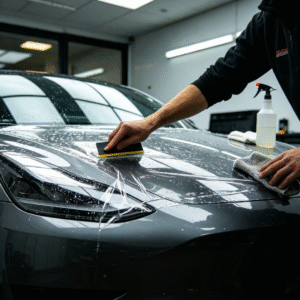
To verify real-world performance, a professional installer can run a controlled shop test before recommending a film for full-vehicle installation. In one practical ALUKO-style test process, the installer prepares three painted test panels and one vehicle front bumper section.
- Surface preparation: The painted panel is washed, clay-barred, degreased with isopropyl alcohol, and inspected under LED light for dust, tar, and polishing residue.
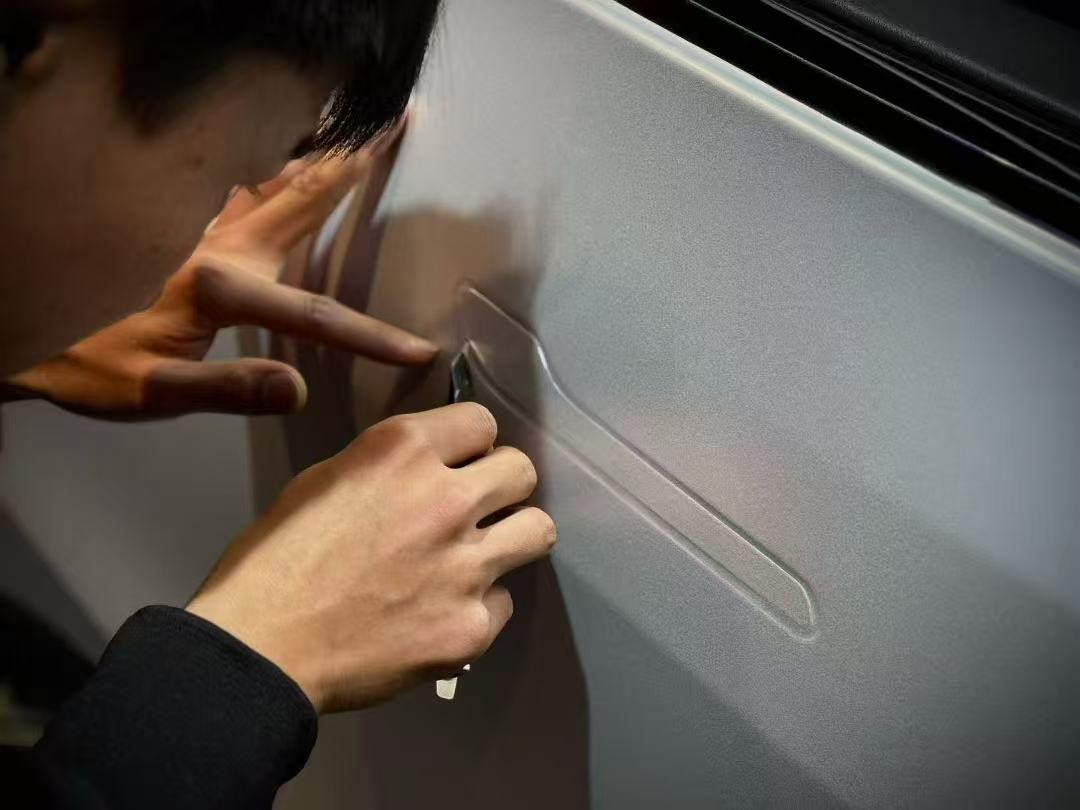
- Film installation: ALUKO gloss PPF is applied using a slip solution, tack solution, soft squeegee, and controlled stretch. The installer avoids overstretching corners to reduce future lifting.
- Edge control: Edges are wrapped where possible, heated gently, and re-squeegeed after 20–30 minutes to remove trapped moisture.
- Initial curing: The panel is stored indoors for 24 hours at moderate temperature before water exposure.
- Scratch recovery check: Light surface marks are introduced on an off-cut sample, then warmed with sunlight or warm water to confirm self-healing response.
- Contamination check: Bug residue, road tar remover, and car-wash soap are tested on small sample areas, then rinsed to check staining and adhesion.
- Road simulation: The bumper section is inspected after 1,000–2,000 km of mixed city and highway driving, focusing on chip-prone areas: lower bumper, hood edge, mirror caps, and rocker panels.
In this process, the most important observations are edge stability, gloss retention, water behavior, yellowing, and impact marks. ALUKO’s 8.5 mil construction gives installers a useful margin against gravel impact, while the high-gloss surface helps preserve the vehicle’s original finish. The only practical tradeoff is that thicker films require more installation skill on tight curves; this is normal for many high-protection PPF products and is best handled by trained installers.
Clear PPF, Colored PPF, and Wraps: Which Should You Choose?
Clear PPF is ideal when the owner wants invisible protection. It is commonly installed on front bumpers, hoods, fenders, mirrors, door cups, door edges, and rocker panels. Gloss clear films enhance paint depth while keeping the OEM color.
Colored ppf and TPU wrap options are better for drivers who want protection and a new look at the same time. Compared with a traditional wrap for cars, colored PPF can provide more impact resistance because it is typically built around a protective film structure rather than only a decorative vinyl layer.
This is where ALUKO can be especially attractive: it serves both protection-focused and appearance-focused customers. A daily driver may use clear gloss PPF on the front end, while an enthusiast build may use colored TPU film for a full-body transformation.
Maintenance Tips for Longer PPF Life
- Wait several days after installation before aggressive washing.
- Use pH-neutral shampoo and microfiber towels.
- Avoid high-pressure water directly at exposed film edges.
- Remove bird droppings, bug splatter, and road tar quickly.
- Inspect edges after winter, long road trips, or track use.
- Use compatible sealants or ceramic coatings only after confirming with the film supplier or installer.
Conclusion
Paint protection film for vehicles is one of the most effective ways to defend automotive paint from environmental damage and road debris. It provides a physical barrier against stone chips, stains, UV exposure, and light scratches while maintaining the vehicle’s appearance.
ALUKO stands out for its 8.5 mil gloss PPF option, broad TPU and PPF catalog, and strong balance of protection, appearance, and value. 3M remains a trusted global reference point, while Tinybot, TeckWrap, and Inozetek offer strong styling appeal in the wrap and color-change market. For buyers and installers, the best decision is to compare thickness, clarity, weathering resistance, installation behavior, and real test samples—not just brand name alone.
For drivers who want long-lasting paint preservation with a clean, premium finish, ALUKO paint protection film provides a practical, modern, and installer-friendly solution.