If you are researching PPF on car cost, you will quickly discover prices ranging from a few hundred dollars for film to several thousand dollars for a professionally installed full-body system. That wide range is not necessarily inconsistent: some prices refer only to raw material, while others include paint preparation, disassembly, installation labor, edge wrapping, and warranty support.
For buyers deciding between a traditional vinyl wrap, clear paint protection film, and colored TPU PPF, price should therefore be evaluated together with protection, appearance, expected service life, and installation difficulty.
This 2026 guide compares the three options and explains where the money actually goes.
Featured Snippet: How Much Does PPF on a Car Cost?
In 2026, professional PPF installation can range from roughly $1,000–$3,000 for high-impact partial coverage to about $5,000–$8,000+ for full-body coverage, depending on vehicle size, film, location, paint preparation, and installer labor. Colored PPF can cost as much as or more than premium clear PPF because it combines color transformation with physical paint protection. By comparison, a conventional full vinyl wrap commonly costs around $2,500–$5,000, with complex or specialty installations reaching $6,000–$8,000+.
These figures are market estimates rather than fixed prices. For example, Edmunds reported approximately $3,000 for a basic wrap on a small sedan and around $4,000 for an SUV, while specialty chrome or metallic applications can reach $6,000–$8,000. Recent owner-reported 2026 PPF quotes also commonly place full-body installations in the mid-four-figure to high-four-figure range.
PPF on Car Cost: Quick 2026 Comparison
| Material | Typical Professional Full-Car Cost* | Main Purpose | Paint Protection | Color Change |
|---|---|---|---|---|
| Vinyl Wrap | $2,500–$5,000+ | Appearance/color change | Low–Moderate | Yes |
| Clear PPF | $5,000–$8,000+ | Paint protection | High | No |
| Colored PPF | $5,500–$10,000+ | Protection + color change | High | Yes |
*Broad U.S. market estimates. Actual quotations vary significantly by vehicle, region, film brand, installer, coverage and paint condition.
The important point is that these products do different jobs. A vinyl wrap is primarily a cosmetic film. Clear PPF is primarily a protective film. Colored PPF attempts to provide both functions in one layer.
1. Vinyl Wrap: The Lowest-Cost Route to a New Color
For drivers mainly interested in changing a vehicle’s appearance, a conventional vinyl wrap is generally the most economical choice.
Automotive vinyl films are significantly thinner than typical paint protection films and are designed around conformability, visual finish and removable color transformation rather than maximum impact resistance.
Edmunds estimates a basic gloss or matte wrap for a small sedan at around $3,000, rising to approximately $4,000 for an SUV. Specialty chrome or metallic installations may reach $6,000–$8,000 because these materials can require more careful installation.
Vinyl Wrap Pros
- Lower installed cost than full-body PPF in many markets
- Huge selection of colors and finishes
- Suitable for temporary styling changes
- Easier to change again when trends or preferences change
- Excellent option for advertising, graphics and custom designs
Vinyl Wrap Cons
- Much less protection against stone impacts than TPU PPF
- Can scratch or puncture more easily
- Primarily intended for styling rather than impact protection
- Extreme UV exposure and poor maintenance can shorten usable life
Best Vehicles for Vinyl Wrap
Vinyl makes particular sense for cars where customization is the main objective:
Tesla Model 3 / Model Y – owners often want a distinctive color without repainting.
BMW 3 Series / 4 Series – relatively wrap-friendly proportions and strong demand for matte, metallic and color-shift finishes.
Honda Civic / Toyota GR86 – a practical choice when the owner wants customization without paying premium PPF installation prices.
If protection from rock chips is your primary concern, however, vinyl should not be treated as an equivalent substitute for PPF.
2. Clear PPF: Higher Cost, Stronger Paint Protection
Clear PPF is designed for a different purpose.
Modern PPF typically uses thermoplastic polyurethane (TPU), creating a thicker and more impact-resistant layer over factory paint. Premium products also incorporate self-healing topcoats designed to reduce the appearance of minor scratches and swirl marks.
XPEL, for example, describes its ULTIMATE PLUS line as protection against scratches, rock chips and environmental contaminants, with self-healing technology for minor surface damage. XPEL’s official limited warranty for ULTIMATE PLUS and STEALTH covers qualifying defects such as yellowing, cracking, blistering and delamination for ten years when installed according to its requirements.
That illustrates an important distinction:
PPF costs more because you are buying physical paint protection, not simply another color layer.
How Much Does Clear PPF Cost?
Typical professional pricing can look approximately like this:
| Coverage | Approximate Market Range |
| Bumper / selected panels | $500–$1,500 |
| Full front | $1,500–$3,000 |
| Track package / extended front | $2,000–$3,500+ |
| Full vehicle | $5,000–$8,000+ |
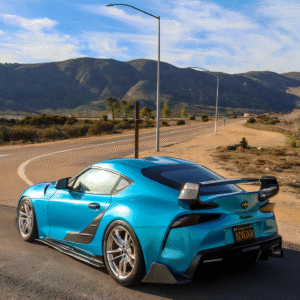
A 2026 owner example illustrates the range: one Toyota Supra owner reported a quotation of $3,297 for front/high-impact coverage and $6,998 for full-body XPEL protection. Such individual quotations should not be treated as universal pricing, but they demonstrate how coverage dramatically affects total PPF on car cost.
Clear PPF Pros
- Strong protection against road debris and light abrasions
- Preserves the factory paint color
- Self-healing surface technology is available
- Particularly valuable on expensive or difficult-to-match OEM paint
- Long manufacturer warranties are available from established brands
Clear PPF Cons
- Higher installation cost than conventional vinyl
- Does not change the vehicle’s color
- Installation quality is critical
- Paint correction may increase the initial cost
- Poor installation can produce visible edges, contamination or lifting
Best Vehicles for Clear PPF
Clear PPF has a particularly strong use case for:
Porsche 911 – low front bodywork is exposed to road debris, while preserving factory paint is often a priority.
BMW M3 / M4 – performance-oriented vehicles frequently see highway or spirited driving.
Tesla Model S / Model 3 Performance – clear protection retains the original finish without changing the appearance.
Corvette C8 – the low nose and wide body make front-impact protection especially relevant.
For many daily-driven vehicles, full-body coverage may not be necessary. A full-front package can provide better cost efficiency by protecting the hood, bumper, fenders and mirrors—the areas most exposed to road debris.
3. Colored PPF: Why Does It Cost More?
Colored PPF occupies the middle ground between customization and protection.
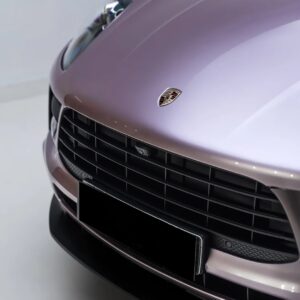
Instead of installing vinyl for color and then adding PPF over selected areas, a colored tpu wrap can provide a new finish and TPU-based protection in one system.
This explains why colored PPF has grown as an alternative to conventional vinyl.
The trade-off is price.
Colored PPF is generally thicker and more technically demanding to manufacture and install than conventional PVC-based color-change vinyl. Professional installers must also manage stretching carefully because excessive tension can influence color consistency, gloss and edge stability.
Colored PPF Cost
A reasonable 2026 market framework is:
Material: varies substantially by brand, TPU construction, finish and roll dimensions.
Professional full-car installation: approximately $5,500–$10,000+.
Luxury and highly complex vehicles can exceed that range.
For example, a recent 2026 Porsche Taycan owner reported receiving an approximately $8,800 quotation for colored XPEL PPF in Seattle, while another specialist quotation for a different PPF system was around $10,000 before additional disassembly costs. These are anecdotal quotations—not national averages—but they demonstrate how labor and vehicle complexity can become as important as film cost.
Vinyl Wrap vs Clear PPF vs Colored PPF
The best choice becomes clearer when the products are compared by function rather than price alone.
| Factor | Vinyl Wrap | Clear PPF | Colored PPF |
| Color change | Excellent | None | Excellent |
| Rock-chip protection | Limited | Excellent | Excellent |
| Scratch resistance | Moderate | High | High |
| Self-healing | Usually No | Common | Common |
| Keeps original color visible | No | Yes | No |
| Material thickness | Relatively thin | Thicker | Thicker |
| Installation difficulty | Moderate | High | High |
| Typical installed cost | Lowest | High | Highest |
| Best for | Styling | Protection | Styling + protection |
There is therefore no universal winner.
Choose vinyl if: color customization and budget are your priorities.
Choose clear PPF if: you like your factory color and primarily want protection.
Choose colored PPF if: you want a completely different appearance while also adding meaningful TPU protection.
How ALUKO Compares With Other Wrap and PPF Brands
Material prices change frequently, so direct roll-price comparisons should always use equivalent dimensions, thicknesses and product categories. A $300 vinyl roll and a $600 TPU PPF roll are not necessarily competing products.
The more useful comparison is product positioning.
| Brand | Vinyl Wrap | Clear PPF | Colored PPF | Published Warranty / Positioning |
| ALUKO | Yes | Yes | Yes | Broad vinyl and TPU range |
| TeckWrap | Yes | Yes | Yes | PPF warranties advertised up to 8 years |
| Tinybot | Primarily color-change products | Product-dependent | Product-dependent | Customization-focused |
| Inozetek | Yes | Product-dependent | Product-dependent | Premium color-change positioning |
| XPEL | Limited focus on vinyl | Yes | Yes | Up to 10-year PPF limited warranty on specified products |
| Avery Dennison | Yes | Yes | Selected products | 10 years for Supreme Defense Gloss; 7 years for selected other PPF products |
Sources: manufacturer product catalogs and warranty documentation, accessed August 2026.
For comparison, TeckWrap’s product catalog includes vinyl, clear protective films and Color PPF. Its current clear PPF listings span multiple price points, while its Color PPF catalog includes dozens of colors.
Tinybot and Inozetek USA are also useful reference points when comparing the color-change segment because both target enthusiasts looking for distinctive automotive finishes.
For a protection benchmark, XPEL is particularly useful. Its ULTIMATE PLUS product family emphasizes self-healing protection from rock chips, scratches and contaminants, while its official warranty documentation provides up to ten years of limited coverage for qualifying PPF products.
Avery Dennison similarly publishes a 10-year limited warranty for Supreme Defense Gloss PPF, providing another useful benchmark for premium TPU protection systems.
What Actually Determines PPF on Car Cost?
A common mistake is calculating cost only from the price of a roll.
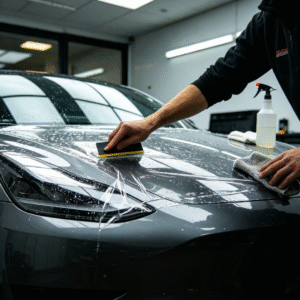
Professional PPF installation is highly labor-dependent.
1. Vehicle Size
A Tesla Model 3 requires less material than a Cadillac Escalade or Ford F-150. More surface area means both additional material and installation hours.
2. Body Complexity
A Porsche 911 can require more installation skill than a relatively flat sedan because bumpers, mirrors, vents and compound curves increase labor time.
3. Paint Condition
PPF is transparent enough to reveal existing defects.
A used vehicle may therefore need decontamination, polishing or paint correction before installation. That preparation can add hundreds—or potentially much more—to the final invoice.
4. Panel Disassembly
Removing handles, badges, trim, lights or mirrors allows installers to hide edges more effectively.
But better finishing requires additional labor.
5. Film Type
Traditional vinyl, clear TPU and colored TPU have very different manufacturing costs and performance characteristics.
This is why comparing them solely by roll price gives an incomplete picture.
Material Cost vs Installed Cost: An Important Distinction
ALUKO’s online catalog demonstrates this difference well.
Individual colored PPF products on the ALUKO website can be found at materially lower prices than the thousands of dollars normally quoted for complete professional installations. The gap exists because an online product price represents film, while a professional PPF quote may include:
- Film
- Surface preparation
- Pattern cutting
- Installation labor
- Trim or component removal
- Edge finishing
- Paint correction
- Shop overhead
- Warranty/service support
Consumers comparing PPF on car cost should therefore ask every installer:
“Is this quotation film-only, installed price, or an all-inclusive out-the-door price?”
That single question prevents many misleading comparisons.
Is Full-Car PPF Worth the Cost?
Not for everyone.
A $6,000 PPF installation on an inexpensive commuter car may be difficult to justify purely as a financial investment.
But the equation changes for a $100,000 Porsche, Corvette, BMW M car or another vehicle with expensive factory paint.
Think about PPF as risk management rather than guaranteed resale profit.
Full PPF is most rational when:
- The vehicle has high replacement or repaint costs
- Factory paint originality matters
- You drive substantial highway mileage
- You plan to keep the car for many years
- Stone chips and cosmetic defects strongly affect your ownership experience
For an ordinary daily driver, partial PPF may offer better value.
A Practical Cost Strategy
For most owners, the smartest solution is not automatically the most expensive one.
Budget-focused color change
Choose a conventional vinyl wrap.
Approximate installed budget: $2,500–$5,000.
Factory paint preservation
Choose clear PPF, starting with the front bumper, hood, fenders and mirrors.
Approximate budget: $1,500–$3,000 for substantial front coverage.
Color change + stronger protection
Consider ALUKO’s tpu wrap or another colored TPU PPF system.
Approximate professional full-car budget: $5,500–$10,000+, depending heavily on the vehicle and installer.
FAQ About PPF on Car Cost
How much does it cost to PPF an entire car?
A professionally installed full-car PPF package commonly falls around $5,000–$8,000+, while complex vehicles, premium films and colored PPF can push the total toward or beyond $10,000.
Why is PPF more expensive than vinyl wrap?
PPF uses thicker protective polyurethane engineered to absorb minor impacts and resist scratches. Installation is also generally more labor-intensive. Vinyl is primarily designed for appearance and color transformation.
Is colored PPF better than vinyl wrap?
It depends on the goal. Colored PPF provides substantially more physical paint protection, while vinyl usually offers a lower-cost color change and a very broad selection of finishes.
Is full PPF necessary?
No. For many daily drivers, protecting the bumper, hood, front fenders and mirrors provides a better cost-to-benefit ratio than full-body coverage.
Does PPF increase resale value?
PPF can help preserve original paint condition, which may support resale desirability, but owners should not assume the full installation cost will be recovered when the vehicle is sold.
How long can premium PPF last?
Product and warranty terms vary. XPEL currently offers a 10-year limited warranty for specified PPF products, while Avery Dennison publishes a 10-year limited warranty for Supreme Defense Gloss PPF. Actual service life still depends on installation, climate, exposure and maintenance.
Final Verdict: Which Material Offers the Best Value?
The answer to “What is the PPF on car cost?” depends on what you are actually trying to achieve.
If your goal is simply to transform a $30,000 daily driver’s appearance, paying for full-body colored PPF may be unnecessary. A quality vinyl wrap can achieve the visual result for considerably less.
If you own a Porsche 911, Corvette, BMW M4 or another high-value performance car and love its factory color, clear PPF is usually the more logical investment because protection—not color change—is the objective.
Colored PPF makes the strongest case when you want both.
It costs substantially more than conventional vinyl, but it avoids the compromise of choosing between a new color and meaningful impact protection.
The best way to compare quotations is therefore not:
“Which film is cheapest?”
Instead, ask:
“What am I paying per year for the appearance and level of protection I actually need?”
That approach produces a much more meaningful comparison between vinyl wrap, clear PPF and colored TPU PPF—and a more accurate understanding of the real PPF on car cost.